

There is something almost magical about the way a humble chicken transforms when it spends a few slow hours braising in red wine. Coq au Vin — literally “rooster in wine” — is one of those timeless French classics that has earned its place in the global comfort food canon not because it is fussy or intimidating, but because it is simply, profoundly delicious. The deep, wine-rich sauce clings to every piece of tender chicken, the mushrooms absorb all that savory complexity, and the whole pot fills your kitchen with an aroma that makes it genuinely difficult to wait for dinner. This is French peasant cooking at its most glorious, and it belongs on your table.
What I love most about Coq au Vin from a health and wellness perspective is that it is one of those dishes that genuinely earns its richness. Unlike cream-heavy sauces that deliver calories without much nutritional return, this braise is built on a foundation of real, whole ingredients — bone-in chicken (a fantastic source of protein and collagen), aromatic vegetables, herbs, and wine that reduces into something far greater than the sum of its parts. Yes, it takes a little time. Yes, you will open a bottle of wine for cooking. But this is exactly the kind of “worth-it moment” we celebrate here at Eating Happiness — a dish that nourishes deeply and satisfies completely, leaving you feeling indulged without feeling weighed down.
Whether you are cooking this for a cozy Sunday dinner, a dinner party that you want to look effortlessly impressive, or simply because you deserve a proper sit-down meal this week, this Coq au Vin recipe will not let you down. I have streamlined the classic technique so it is approachable for a home cook while preserving everything that makes the dish extraordinary. If you love hearty, feel-good chicken dinners, you might also enjoy our Million Dollar Chicken Casserole — another worthy comfort-food centerpiece for nights when only something deeply satisfying will do.
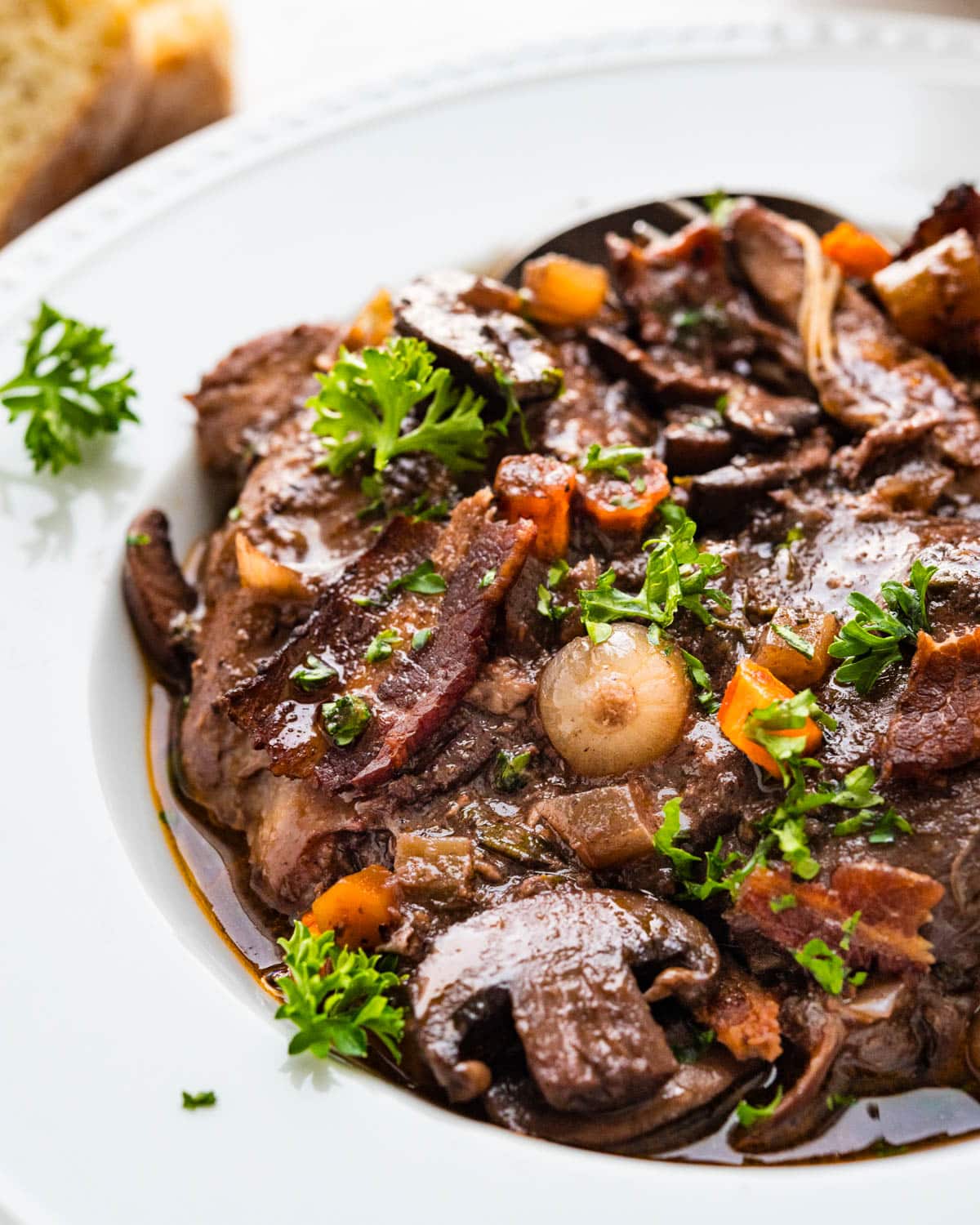
Why You’ll Love This Recipe
- Deeply nourishing and satisfying — bone-in chicken provides protein, collagen, and rich flavor that keeps you full and energized.
- Clean, whole ingredients — no processed shortcuts, no mystery additives. Just real food doing what real food does best.
- Impressive without being stressful — the oven does most of the work once you have done the initial prep.
- Better the next day — Coq au Vin is one of those rare dishes where leftovers are genuinely more delicious than the first serving.
- Naturally gluten-free adaptable — a simple swap makes it accessible for many dietary needs.
- A true worth-it moment — the kind of meal that makes a Tuesday feel like a celebration.
Key Ingredients
The soul of a great Coq au Vin starts with the chicken itself. Bone-in, skin-on chicken thighs and drumsticks are the traditional choice, and for good reason — the bones contribute collagen that thickens the sauce naturally as it braises, and the dark meat holds up beautifully to long cooking without drying out. Thighs in particular are rich in iron, zinc, and B vitamins, making them a genuinely nutritious protein anchor for this dish.
The wine you choose matters more here than in almost any other recipe, because it is not just background flavoring — it is the braising liquid. A solid, drinkable Burgundy or Pinot Noir is traditional, and Serious Eats has an excellent breakdown of which wines work best for braising. The rule of thumb is simple: if you would not drink it, do not cook with it. As the wine reduces and melds with the chicken stock and aromatics, it develops a complexity and depth that is the defining characteristic of the dish. Importantly, most of the alcohol cooks off during the long braise, leaving behind the wine’s fruit, tannin, and body.
Lardons — small pieces of thick-cut bacon or salt pork — are rendered at the very beginning of the recipe to create the fat base in which everything else cooks. Beyond flavor, they provide a savory, smoky counterpoint to the wine’s acidity. Cremini or button mushrooms are added later and act like little sponges, soaking up the braising liquid and delivering an earthy, umami-rich bite in every forkful. Pearl onions, often added whole, become silky and sweet as they braise alongside the chicken, and they are a source of quercetin, a powerful antioxidant. Finally, a classic bouquet garni — fresh thyme, bay leaves, and parsley — ties the entire pot together with herbal brightness that keeps the dish from feeling too heavy.
Pro Tips & Variations
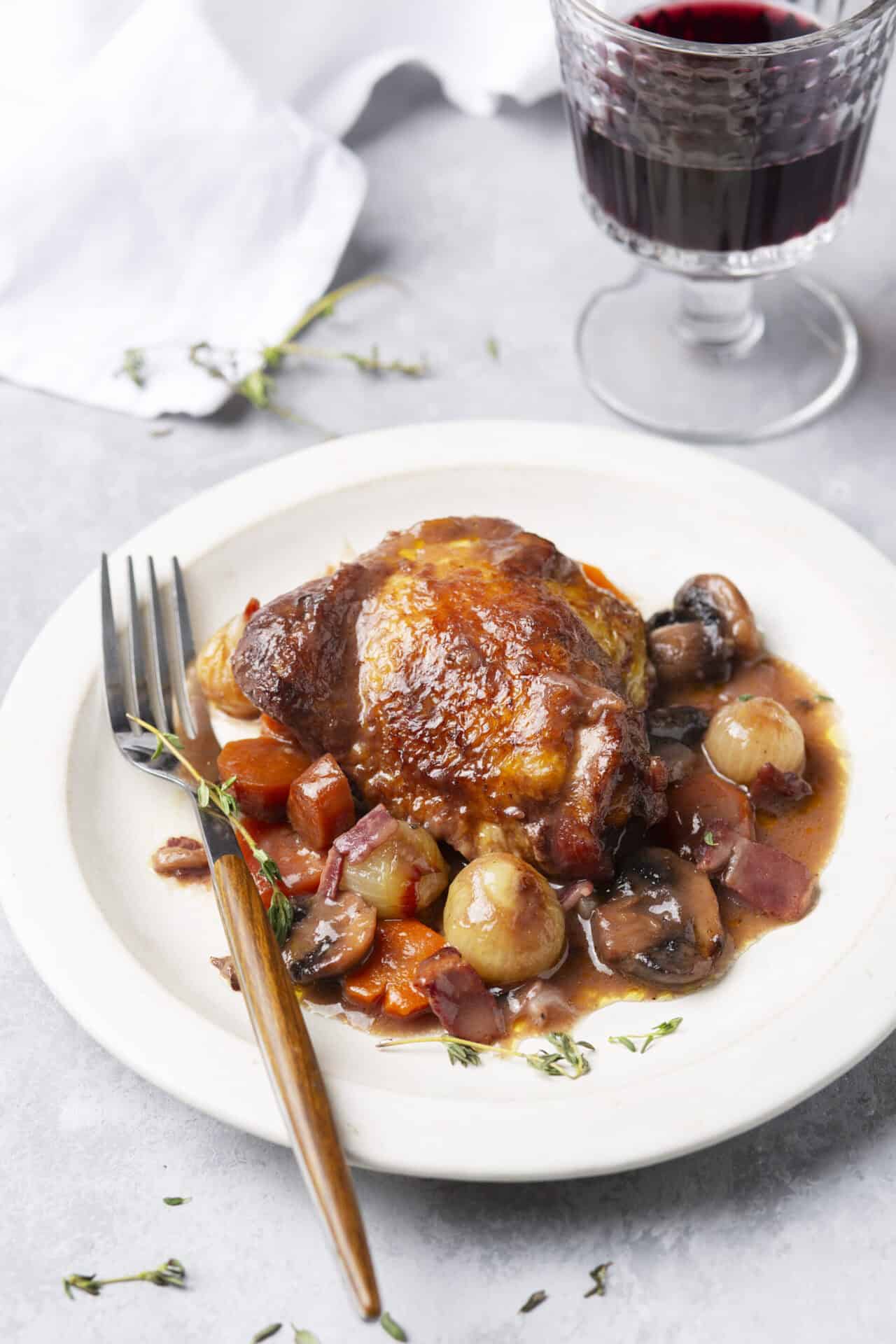
- Pat your chicken bone dry. This is the single most important tip. Moisture is the enemy of a good sear. Dry the chicken thoroughly with paper towels before it goes anywhere near the hot pan. A deep, golden-brown crust on the chicken adds enormous flavor to the final sauce through the Maillard reaction.
- Do not rush the sear. Leave the chicken undisturbed in the pan for at least 4-5 minutes per side. If it resists when you try to lift it, it is not ready. When it releases easily, it has formed a proper crust.
- Use a Dutch oven or heavy braiser. Even heat distribution is critical for a braise. A Dutch oven is ideal because it can go from stovetop to oven seamlessly, and the heavy lid traps moisture perfectly.
- Marinate overnight for deeper flavor. If you have the time, marinating the chicken in the wine with the aromatics overnight in the refrigerator produces a noticeably richer result. Bon Appétit recommends this step for maximum depth of flavor.
- Make it gluten-free. If you need a gluten-free version, simply skip the flour dusting step and instead make a small cornstarch slurry (1 tablespoon cornstarch mixed with 2 tablespoons cold water) to stir into the sauce in the final 10 minutes of cooking to achieve the same glossy, thickened consistency.
- Vegetable variations. While traditional Coq au Vin uses pearl onions and mushrooms, you can add carrots, parsnips, or celery root to the braise for additional nutrients and heartiness. They soften beautifully over the long cook time.
- Make it ahead. This is one of the best make-ahead dinner party dishes you will ever encounter. Prepare the entire dish the day before, refrigerate it, and gently reheat on the stovetop before serving. The flavors deepen overnight and the sauce tightens further as it chills and reheats.
- Serving suggestions. Coq au Vin is traditionally served over buttery egg noodles, mashed potatoes, or with crusty bread to soak up the sauce. For a lighter, vegetable-forward spread, consider serving it alongside our Broccoli Salad with Bacon, Cheddar, and Sunflower Seeds — the creamy, crunchy contrast is genuinely perfect against the rich, wine-braised chicken.
Nutritional Highlights
Coq au Vin is proof that indulgent and nourishing are not mutually exclusive. Each serving delivers approximately 38 grams of high-quality protein from bone-in chicken, which supports muscle repair, satiety, and sustained energy. The long braising process actually draws collagen from the bones into the sauce, contributing to gut health and joint support — something you simply do not get from boneless, skinless convenience cuts. The mushrooms add B vitamins including riboflavin and niacin, as well as selenium and immune-supporting beta-glucans. Pearl onions and garlic bring prebiotic fiber and potent antioxidants to the pot. The tomato paste used to deepen the sauce is rich in lycopene, a carotenoid linked to reduced inflammation. And while yes, there is bacon and a full bottle of wine in this recipe, both are used as flavor builders rather than dietary foundations — by the time this dish is done, you are getting all the richness and depth with a genuinely balanced nutritional profile. This is the kind of meal that makes you feel cared for from the inside out.
Frequently Asked Questions
Can I make Coq au Vin ahead of time?
Absolutely — in fact, we strongly encourage it. Coq au Vin is one of the very best make-ahead dishes in the French culinary repertoire. The flavors deepen and meld as the dish sits, and the sauce tightens to an even more luxurious consistency when chilled and reheated. Prepare the entire dish up to two days in advance, let it cool completely, then store it covered in the refrigerator. When ready to serve, gently reheat it over medium-low heat on the stovetop, adding a small splash of chicken stock if the sauce has thickened too much during refrigeration. It is genuinely better on day two.
What wine should I use for Coq au Vin?
The traditional choice is a Burgundy-style Pinot Noir, which is what the dish was historically made with in the Burgundy region of France. However, any good, drinkable dry red wine will work beautifully. A Côtes du Rhône, a Merlot, or even a modest Cabernet Sauvignon will all produce excellent results. The key principle is simple: use wine you would happily drink in a glass. Avoid anything labeled “cooking wine” — these products contain added salt and preservatives that will throw off the balance of your sauce. You will use most of a standard 750ml bottle, so choose something in the $12-$18 range that you enjoy drinking and you will not go wrong.
Can I make Coq au Vin without alcohol?
Yes, with some adjustments. The wine serves three purposes in this dish: it contributes acidity, tannins for depth, and fruity complexity. To replicate this without alcohol, you can use a combination of unsweetened grape juice (about 1.5 cups) mixed with 2 tablespoons of red wine vinegar and 1 cup of additional chicken stock. The result will be somewhat lighter and less complex than the wine-based original, but still deeply savory and satisfying. You can also add a tablespoon of tomato paste and a splash of balsamic vinegar to deepen the color and flavor profile of the sauce.
A Dish Worth Saving, Sharing, and Coming Back To
Coq au Vin is not a weeknight shortcut recipe, and it was never meant to be. It is a dish that asks you to slow down, commit to the process, and trust that the time you invest will come back to you tenfold in flavor, nourishment, and the simple pleasure of sitting down to something truly special. This is the kind of cooking that Eating Happiness was built around — food that tastes indulgent but is grounded in clean, whole ingredients and a genuine respect for what good food can do for your body and your mood.
If this recipe resonates with you, I would love for you to save it to your Pinterest boards, share it with someone who deserves a beautiful meal, and leave a comment below telling me how it turned out. And if you are looking for a fresh, light side dish to serve alongside it for a balanced plate, our Cucumber Tomato Salad brings a bright, vinegary contrast that cuts through the richness of the braise perfectly. Happy cooking — and as always, eating happiness.
Find the complete recipe card below ↓
Coq au Vin
Ingredients
- 3.5 lbs bone-in, skin-on chicken pieces thighs and drumsticks preferred
- 1 tsp kosher salt plus more to taste
- 0.5 tsp black pepper freshly ground
- 2 tbsp all-purpose flour for dusting chicken; use cornstarch for gluten-free
- 6 oz thick-cut bacon or lardons cut into 1-inch pieces
- 2 tbsp olive oil divided
- 1 cup pearl onions fresh or frozen, peeled
- 3 cloves garlic smashed
- 2 medium carrots cut into 1-inch pieces
- 2 stalks celery cut into 1-inch pieces
- 8 oz cremini mushrooms halved or quartered if large
- 2 tbsp tomato paste
- 1 bottle dry red wine 750ml; Burgundy or Pinot Noir preferred
- 1.5 cups chicken stock low-sodium
- 4 sprigs fresh thyme
- 2 bay leaves
- 4 sprigs fresh flat-leaf parsley plus more for garnish
- 1 tbsp unsalted butter for finishing the sauce
- 1 tsp fresh thyme leaves for garnish

Instructions
- Preheat your oven to 325°F (165°C). Pat the chicken pieces completely dry with paper towels — this is essential for a good sear. Season generously on all sides with salt and pepper, then lightly dust each piece with flour, shaking off any excess.
- In a large Dutch oven or heavy braiser, cook the bacon pieces over medium heat until the fat is rendered and the bacon is lightly golden, about 6-8 minutes. Remove the bacon with a slotted spoon and set aside, leaving the fat in the pot.
- Increase heat to medium-high. Working in batches so as not to crowd the pan, sear the chicken pieces skin-side down in the bacon fat (adding 1 tbsp olive oil if needed) until deep golden brown, 5-6 minutes per side. Do not move the chicken — let it release naturally. Transfer seared chicken to a plate and set aside.
- Reduce heat to medium. Add the pearl onions, carrots, and celery to the pot and cook, stirring occasionally, until lightly softened and beginning to color, about 4 minutes. Add the smashed garlic and cook 1 minute more until fragrant.
- Add the tomato paste and stir to coat the vegetables. Cook for 2 minutes, stirring, until the tomato paste darkens slightly — this step adds significant depth of flavor.
- Pour in the entire bottle of red wine, scraping up any browned bits from the bottom of the pot with a wooden spoon. Add the chicken stock. Tie the thyme sprigs, bay leaves, and parsley sprigs into a bundle with kitchen twine (bouquet garni) and nestle it into the pot.
- Return the seared chicken and reserved bacon to the pot. The liquid should come about two-thirds of the way up the chicken; add more stock if needed. Bring to a gentle simmer.
- Cover the Dutch oven with its lid and transfer to the preheated 325°F oven. Braise for 60-75 minutes, until the chicken is completely tender and pulling away from the bone. The internal temperature should reach at least 175°F for dark meat.
- While the chicken braises, heat the remaining 1 tbsp olive oil in a skillet over medium-high heat. Sauté the mushrooms with a pinch of salt until golden brown, about 5-6 minutes. Set aside.
- Remove the pot from the oven. Carefully transfer the chicken pieces to a plate and cover loosely with foil. Remove and discard the bouquet garni.
- Place the Dutch oven over medium-high heat on the stovetop. Bring the braising liquid to a boil and cook, stirring occasionally, until the sauce has reduced and thickened enough to coat the back of a spoon, about 10-15 minutes.
- Reduce heat to low. Stir in the butter until melted and glossy. Add the sautéed mushrooms. Taste and adjust seasoning with salt and pepper. Return the chicken to the pot and gently spoon the sauce over each piece to coat.
- Serve immediately, garnished with fresh parsley and thyme leaves, over egg noodles, creamy mashed potatoes, or with crusty bread. Enjoy.