

The Bowl That Changed the Way I Think About Healthy Eating
There are certain meals that stop you mid-bite and make you genuinely reconsider everything you thought you knew about eating well. The Hawaiian poke bowl is one of those meals. The first time I tasted an authentic poke bowl — not the fast-casual imitation, but the real thing, sitting at a tiny counter spot in Honolulu with the ocean breeze drifting through — I understood immediately why this dish has become a global obsession. It was bright, cold, deeply savory, and satisfying in a way that never once felt heavy. It was proof that nourishing your body and experiencing genuine food joy are not competing goals.
Poke (pronounced poh-KAY) has been a staple of Hawaiian cuisine for centuries, rooted in Native Hawaiian traditions of seasoning freshly caught reef fish with sea salt, seaweed, and kukui nut. The modern version evolved beautifully with Japanese immigrant influences — soy sauce, sesame oil, and rice entered the picture — and the result is something genuinely magical. Today, the Hawaiian poke bowl is celebrated worldwide, and for good reason: it brings together lean, high-quality protein, fiber-rich vegetables, healthy fats, and complex carbohydrates in one beautiful, colorful assembly that is as nourishing as it is stunning to look at.
What I love most about making poke bowls at home is the creative freedom. You control every ingredient, every quality decision, every flavor layer. There is no mystery oil, no hidden sugar in the sauce, no sad wilted greens. Just clean, whole ingredients that come together in about 30 minutes and taste like something you would happily pay $18 for at a restaurant. This is the kind of recipe that earns a permanent place in your weekly rotation — and once you make it yourself, you will never look at takeout the same way again.
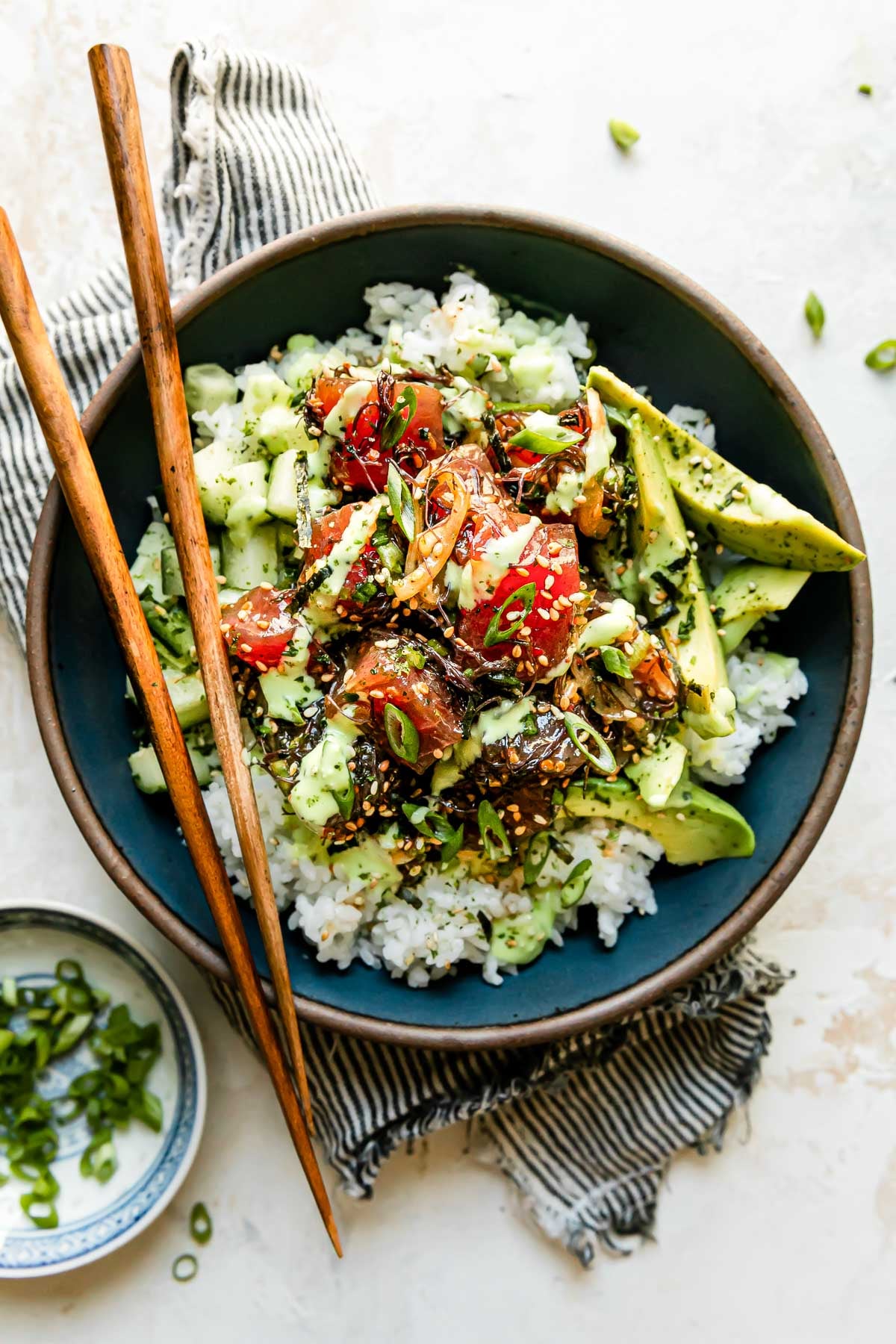
Why You’ll Love This Hawaiian Poke Bowl
- Genuinely wholesome and nourishing — sushi-grade tuna is one of the leanest, most protein-dense ingredients you can put in a bowl, and everything else in this recipe pulls its nutritional weight.
- Ready in about 30 minutes — most of that time is just cooking rice. The actual hands-on prep is closer to 15 minutes.
- Endlessly customizable — swap proteins, switch up the base, load it with whatever vegetables you love or have on hand.
- Meal-prep friendly — prep the components ahead and assemble fresh bowls all week long.
- Impressive enough for guests — the presentation is naturally stunning, and everyone gets to customize their own bowl.
- Clean ingredients you can feel good about — no processed sauces, no mystery ingredients, just real food that happens to taste extraordinary.
Key Ingredients That Make This Bowl Shine
At the heart of every great Hawaiian poke bowl is the fish, and here, sushi-grade ahi tuna is the star. The term “sushi-grade” signals that the fish has been handled and frozen in a way that makes it safe to eat raw — always buy from a trusted fishmonger or market and confirm it is appropriate for raw consumption. The tuna brings a clean, buttery flavor and a silky texture that forms the soul of the bowl. Equally important is the marinade: tamari or low-sodium soy sauce provides that deep umami backbone, while toasted sesame oil adds a warm, nutty richness that ties everything together. These two ingredients are non-negotiable for authentic poke flavor, and together they transform simple cubed fish into something genuinely crave-worthy.
The base of steamed short-grain sushi rice is more than just filler — its slightly sticky, subtly sweet character is the ideal partner for the bold marinade, and it provides the complex carbohydrates that make this bowl a complete, satisfying meal. If you love what rice brings to bowl dishes, you might also enjoy our Crispy Rice Salad — The Crunchy, Fresh Bowl You’ll Make on Repeat for another rice-forward recipe that delivers big on texture and flavor. Beyond the protein and base, the toppings are where you express yourself: creamy ripe avocado adds healthy monounsaturated fats and a lush richness that balances the acidity of the marinade, while edamame contributes plant-based protein, fiber, and a satisfying pop of color and texture. Finally, a drizzle of sriracha mayo — just a touch of heat whisked with a little clean mayo — brings a creamy, spicy finish that elevates the entire bowl from great to unforgettable.
Pro Tips & Variations
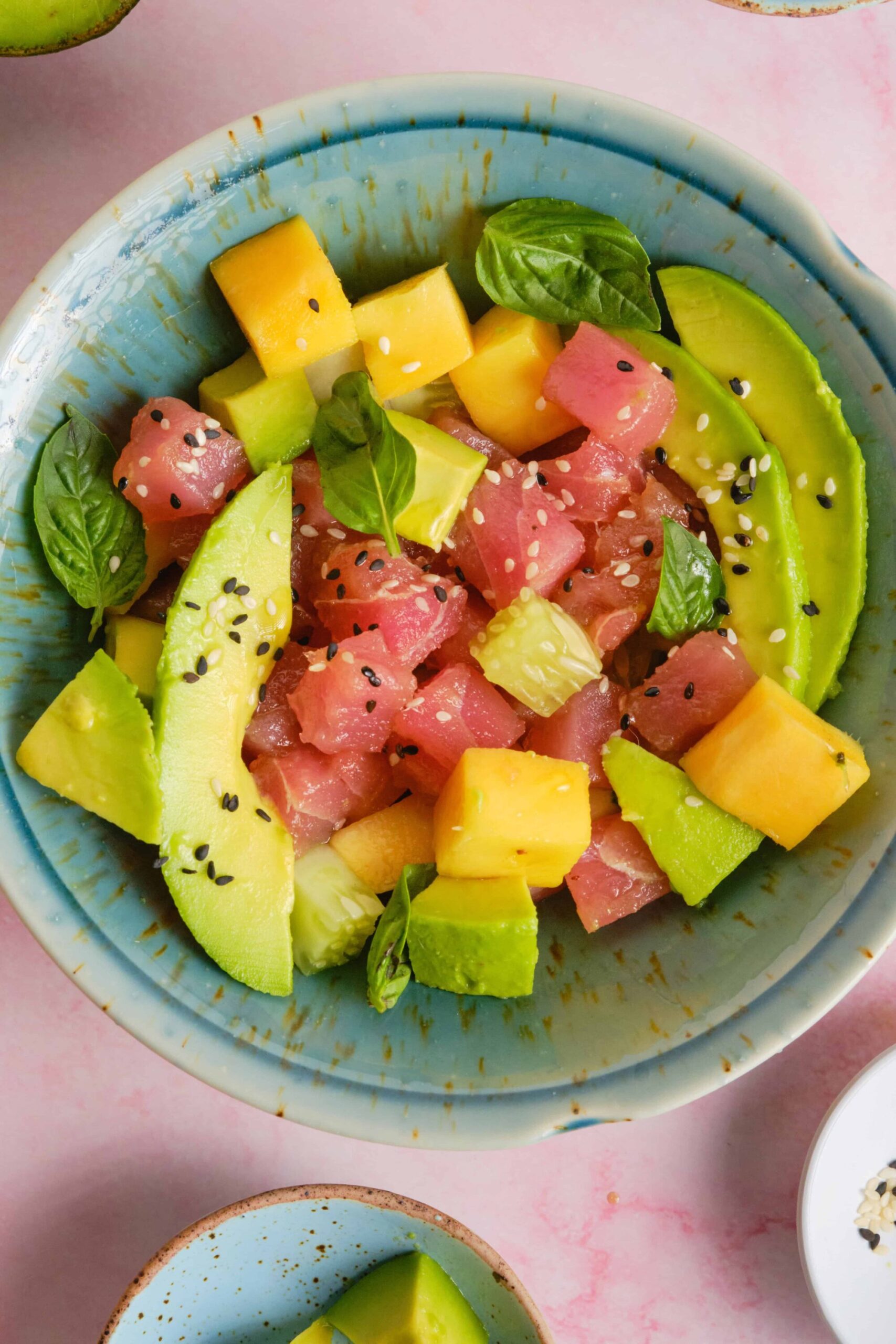
Buy the best tuna you can find. This is not the place to cut corners. The quality of your fish is the single biggest factor in how good your poke bowl will taste. Visit a reputable fish counter and specifically ask for sushi-grade ahi tuna. Serious Eats has an excellent breakdown of how to handle and cut fish for poke that is worth reading before you start.
Do not over-marinate the fish. A common mistake is letting the tuna sit in the marinade too long. Fifteen to twenty minutes is ideal. Much longer than that and the soy sauce begins to cure the fish, changing both the texture and the flavor profile in ways that drift away from authentic poke.
Season your rice properly. A small splash of rice vinegar and a pinch of salt stirred into freshly cooked rice makes a meaningful difference. It gives the base a gentle brightness that plays beautifully against the savory tuna.
Make it your own with these variations:
- Salmon poke: Sushi-grade salmon is a beautiful substitute or addition. Its higher fat content gives a slightly richer flavor.
- Vegetarian poke: Swap the fish for pressed and cubed extra-firm tofu marinated in the same sauce, or use cooked shrimp for a different protein profile.
- Cauliflower rice base: For a lower-carb option, cauliflower rice works surprisingly well and keeps the bowl light and bright.
- Brown rice or quinoa: Both add extra fiber and a nuttier flavor while boosting the nutritional profile even further.
- Toppings to try: Pickled ginger, shredded purple cabbage, radish slices, mango chunks, crispy shallots, furikake seasoning, or a drizzle of ponzu sauce all work beautifully.
If you love building fresh, colorful bowls and salads, our Cucumber Tomato Salad makes a wonderful light side alongside this poke bowl — the vinegary brightness is a natural complement to the rich sesame-soy flavors.
Nutritional Highlights
This Hawaiian poke bowl is a genuinely exceptional choice from a nutritional standpoint, and that is not marketing language — it is just what happens when you build a meal from high-quality whole ingredients. Sushi-grade ahi tuna is one of the best lean protein sources available, delivering around 25 grams of protein per three-ounce serving with very little saturated fat. It is also a rich source of omega-3 fatty acids, selenium, and B vitamins — nutrients that support cardiovascular health, brain function, and energy metabolism. The avocado contributes heart-healthy monounsaturated fats along with potassium and folate, while edamame adds plant-based protein and fiber to keep you genuinely full and satisfied. The sesame oil, used in small quantities, provides additional healthy fats and a dose of antioxidants. Even the sriracha mayo, used as a light drizzle, keeps the calorie contribution minimal while delivering satisfying flavor. As Bon Appétit notes in their exploration of poke bowl nutrition, when built thoughtfully with quality proteins, healthy fats, and fiber-rich vegetables, a poke bowl is one of the most balanced single-dish meals you can eat. Each serving in this recipe comes in at approximately 480 calories with a strong protein and healthy fat profile — exactly the kind of satisfying, energizing meal that fits naturally into a health-conscious lifestyle without ever feeling like a compromise.
Frequently Asked Questions
Is it safe to eat raw fish in a poke bowl at home?
Yes, absolutely — with one important caveat: you must use fish that has been specifically labeled or confirmed as sushi-grade or sashimi-grade. This designation means the fish has been commercially frozen at temperatures that eliminate parasites, making it safe for raw consumption. Always buy from a trusted source, such as a reputable fishmonger or high-quality grocery store with a dedicated fish counter, and tell them explicitly that you plan to eat it raw. Once home, keep it refrigerated and use it the same day you purchase it for the best safety and quality. If you have any uncertainty about the source, it is always better to cook the fish lightly than to consume it raw.
Can I make a Hawaiian poke bowl ahead of time for meal prep?
Yes, and poke bowls are actually ideal for meal prepping — with one key strategy. Store all the components separately in airtight containers in the refrigerator, and do not marinate the tuna until about 15-20 minutes before you are ready to eat. The rice can be made 3-4 days ahead and reheated gently, the vegetables can be prepped and stored for 2-3 days, and the sauce can be mixed and refrigerated for up to a week. The only ingredient that should not be stored pre-marinated is the tuna — raw fish should always be consumed fresh on the day it is purchased, so while the bowl components are very meal-prep friendly, plan to buy the tuna the same day you intend to eat it.
What can I use instead of sushi-grade tuna?
There are several excellent alternatives depending on your preferences and what is available to you. Sushi-grade salmon is the most popular substitute and brings a slightly richer, more buttery flavor. Cooked shrimp is a great option if you prefer to avoid raw fish entirely and still keeps the bowl feeling light and fresh. For a plant-based version, extra-firm tofu that has been pressed, cubed, and marinated in the same soy-sesame sauce is surprisingly delicious and absorbs the flavors beautifully. Some people also use cooked, seasoned crab or imitation crab for a more accessible and budget-friendly variation that still captures the essence of the bowl.
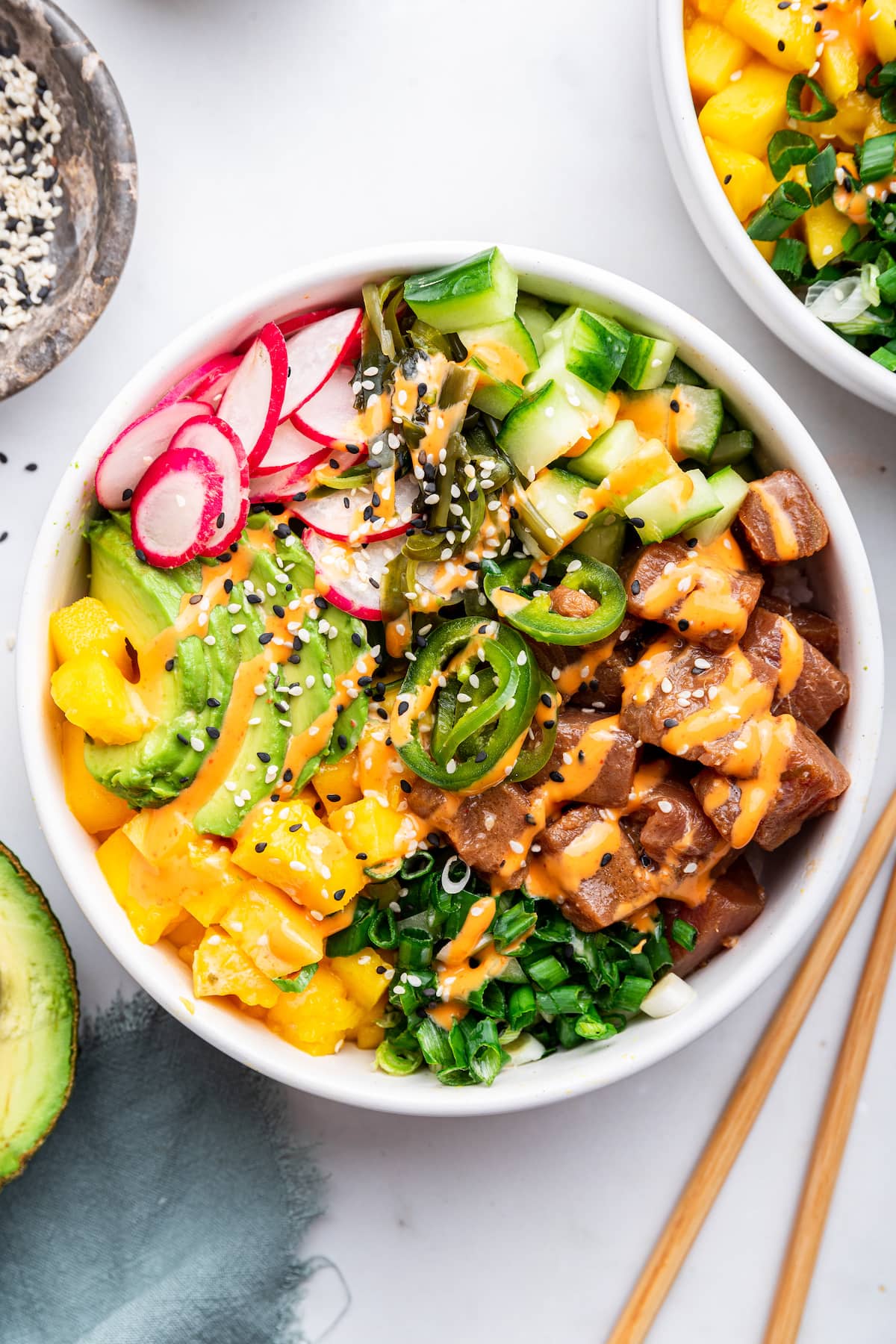
Bring a Little Aloha Into Your Kitchen
There is something genuinely special about a dish that makes healthy eating feel like an event rather than an obligation. The Hawaiian poke bowl does exactly that — it is vibrant, satisfying, deeply flavorful, and built entirely from ingredients you can feel proud of. Whether you are making it for a quick weeknight dinner, prepping components for a week of clean, energizing lunches, or setting up a poke bowl bar for friends and family on a weekend afternoon, this recipe delivers every single time. The combination of lean protein, healthy fats, fiber-rich vegetables, and a bold, clean marinade creates something that is more than the sum of its parts — it is a complete, joyful meal that honors both your taste buds and your body.
If you make this Hawaiian poke bowl, I would love to see it. Share your bowl on Instagram and tag @EatingHappiness, or leave a comment below telling me what toppings you used and how it turned out. Save this recipe for your next meal prep day, pin it to your healthy dinner board, and send it to that friend who always says eating well is boring — this bowl is the most convincing argument I know.
Find the complete recipe card below ↓
Hawaiian Poke Bowl
Ingredients
- 1.5 lbs sushi-grade ahi tuna cut into 3/4-inch cubes
- 3 tbsp low-sodium soy sauce or tamari tamari for gluten-free
- 1 tbsp toasted sesame oil
- 1 tbsp rice vinegar
- 1 tsp fresh ginger finely grated
- 1 tsp honey or maple syrup
- 2 tsp sriracha adjust to taste
- 2 green onions thinly sliced
- 1 tbsp sesame seeds white or black
- 2 cups short-grain sushi rice uncooked, yields about 4 cups cooked
- 2.5 cups water for cooking rice
- 2 tbsp rice vinegar for seasoning cooked rice
- 1 tsp fine sea salt for rice
- 2 ripe avocados halved, pitted, and sliced
- 1 cup shelled edamame thawed if frozen
- 1 English cucumber thinly sliced or diced
- 1 cup shredded purple cabbage
- 1 cup shredded carrots
- 4 sheets nori seaweed cut into thin strips, optional
- 2 tbsp pickled ginger optional
- 1 tbsp sesame seeds for garnish
- 3 tbsp mayonnaise or Greek yogurt for lighter option
- 1.5 tsp sriracha adjust to taste
- 1 tsp fresh lime juice

Instructions
- Rinse the sushi rice in a fine mesh strainer under cold water until the water runs clear, about 1-2 minutes. This removes excess starch for a better texture.
- Combine the rinsed rice and 2.5 cups water in a medium saucepan. Bring to a boil over medium-high heat, then reduce heat to low, cover tightly, and cook for 18 minutes. Remove from heat and let steam, covered, for 5 additional minutes.
- Fluff the rice with a fork and stir in 2 tablespoons rice vinegar and 1 teaspoon sea salt. Set aside to cool slightly.
- In a medium mixing bowl, whisk together the soy sauce, toasted sesame oil, rice vinegar, grated ginger, honey, and sriracha until well combined.
- Add the cubed ahi tuna and sliced green onions to the marinade. Gently fold to coat all pieces evenly. Sprinkle in the sesame seeds.
- Let the tuna marinate at room temperature for 15-20 minutes maximum. Do not over-marinate, as the soy sauce will begin to cure the fish and alter its texture.
- In a small bowl, whisk together the mayonnaise, sriracha, and lime juice until smooth. Taste and adjust sriracha for desired heat level. Transfer to a squeeze bottle or small spouted bowl for easy drizzling.
- Divide the seasoned rice evenly among four serving bowls as the base.
- Arrange the marinated tuna in the center of each bowl. Working in sections around the tuna, add the sliced avocado, edamame, cucumber, shredded cabbage, and shredded carrots.
- Top each bowl with nori strips and pickled ginger if using. Drizzle generously with sriracha mayo and finish with a sprinkle of sesame seeds and extra sliced green onions.
- Serve immediately while the rice is still slightly warm and the tuna is cold and fresh.