

There’s a particular kind of dinner magic that happens when a handful of simple, clean ingredients hit a screaming-hot pan and transform into something that tastes like it came straight from a Bangkok street stall. Thai Basil Chicken — known in Thailand as Pad Krapow Gai — is that dish. It’s fiercely aromatic, deeply savory, just a little bit spicy, and finished with a waterfall of fresh holy basil that perfumes the entire kitchen. The first time I made it at home, I genuinely couldn’t believe something this satisfying could come together in under 20 minutes on a Tuesday night.
What I love most about this recipe from a wellness standpoint is how unprocessed and intentional every single ingredient is. Lean ground chicken, real garlic, fresh chilies, a short hit of fish sauce and oyster sauce for umami depth, and a generous pile of basil. There are no mystery additives, no heavy cream, no shortcuts that compromise nutrition. You’re building layers of flavor the traditional way — high heat, good technique, and quality ingredients. It’s the kind of meal that genuinely fuels your body while making your taste buds feel like they just went on vacation.
Whether you’re meal prepping for the week, feeding a hungry family, or just craving something bold after a long day, Thai Basil Chicken delivers every single time. It pairs beautifully with steamed jasmine rice, cauliflower rice if you’re keeping things lower-carb, or even tucked into lettuce cups for a lighter presentation. This recipe is a permanent fixture in my weeknight rotation — and once you make it, I have a feeling it’ll become one in yours too.
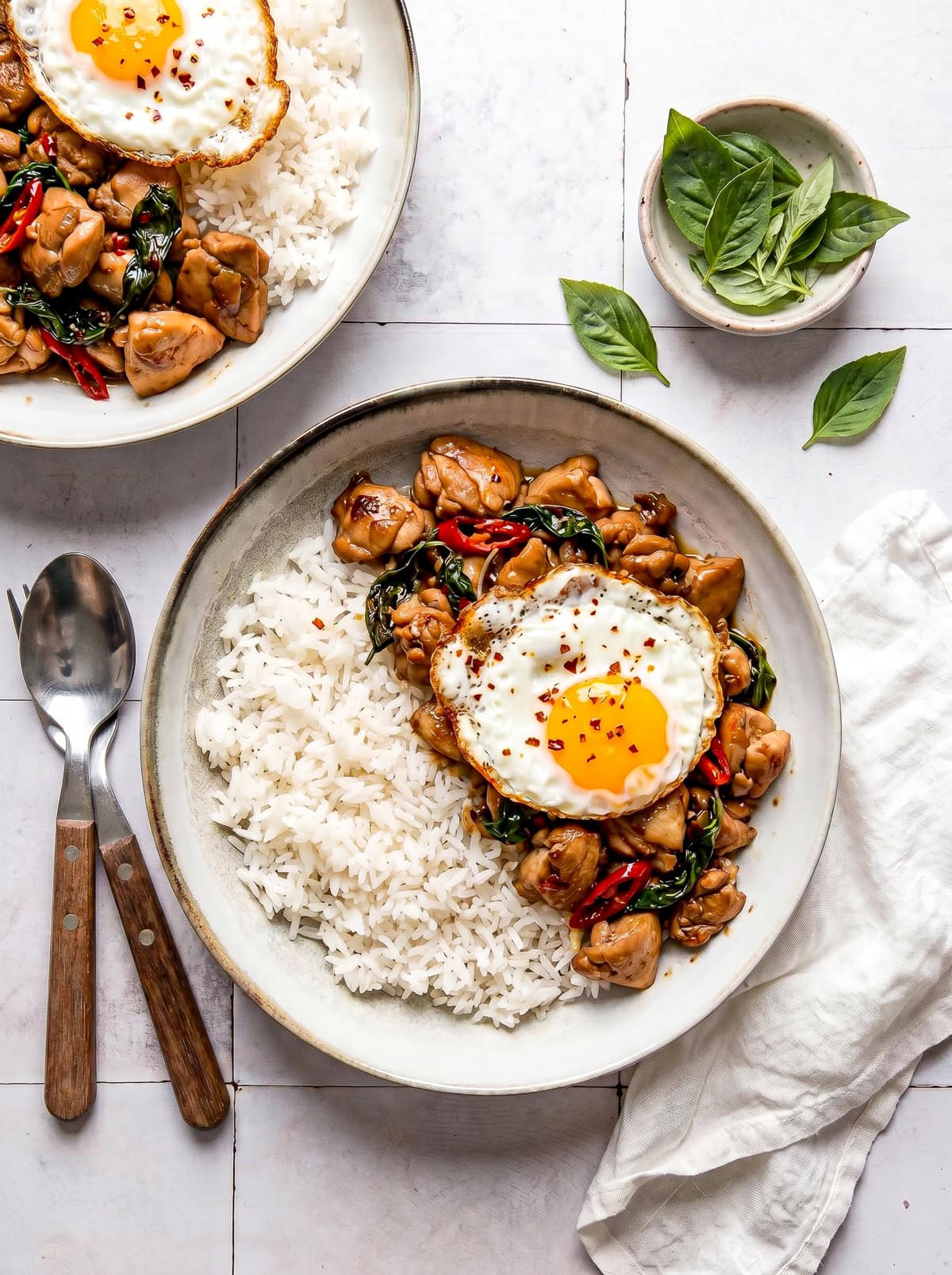
Why You’ll Love This Recipe
- Ready in 20 minutes flat. From fridge to table faster than takeout delivery, no compromises.
- High-protein and naturally clean. Lean ground chicken delivers serious protein with minimal saturated fat, and every other ingredient is whole and recognizable.
- Endlessly customizable. Dial the heat up or down, swap proteins, or serve it a dozen different ways — it always works.
- Restaurant-quality flavor at home. The combination of fish sauce, oyster sauce, and fresh basil creates a depth of flavor that tastes like it took hours.
- One pan, minimal cleanup. Everything happens in a single skillet or wok, which means more time enjoying dinner and less time at the sink.
- Naturally gluten-adaptable. Swap regular oyster sauce for a gluten-free version and you have a completely gluten-free meal without changing anything else.
Key Ingredients
The star of this dish is ground chicken, which cooks lightning fast, absorbs the sauce beautifully, and keeps things lean without sacrificing any satisfaction. If you want slightly more richness and juiciness, ground chicken thighs (rather than breast) are the move — they have just enough natural fat to stay tender under high heat. Flanking the chicken is an unapologetically generous amount of garlic — we’re talking six to eight cloves — which forms the aromatic backbone of the entire dish. Don’t be shy here; in Thai cooking, garlic isn’t a subtle background note, it’s a featured player.
The Thai chilies (also called bird’s eye chilies) bring the heat, and their intensity is what gives this dish its characteristic punch. If you can’t find them, serrano peppers work in a pinch, though the flavor profile shifts slightly. The sauce trio of fish sauce, oyster sauce, and a touch of soy sauce is what ties everything together into that deeply savory, slightly sweet, umami-rich coating that makes Pad Krapow Gai so addictive. Fish sauce in particular is one of those ingredients that sounds intimidating but simply adds a fermented, salty depth that you absolutely cannot replicate. Finally, the fresh holy basil — or Thai basil if you can’t source holy basil — goes in at the very end, wilting just slightly from the residual heat and releasing the most intoxicating, slightly peppery, anise-forward fragrance. It’s not garnish; it’s essential. Serious Eats has a brilliant deep-dive on the difference between holy basil and Thai basil if you want to geek out on the nuances before you shop.
Pro Tips & Variations
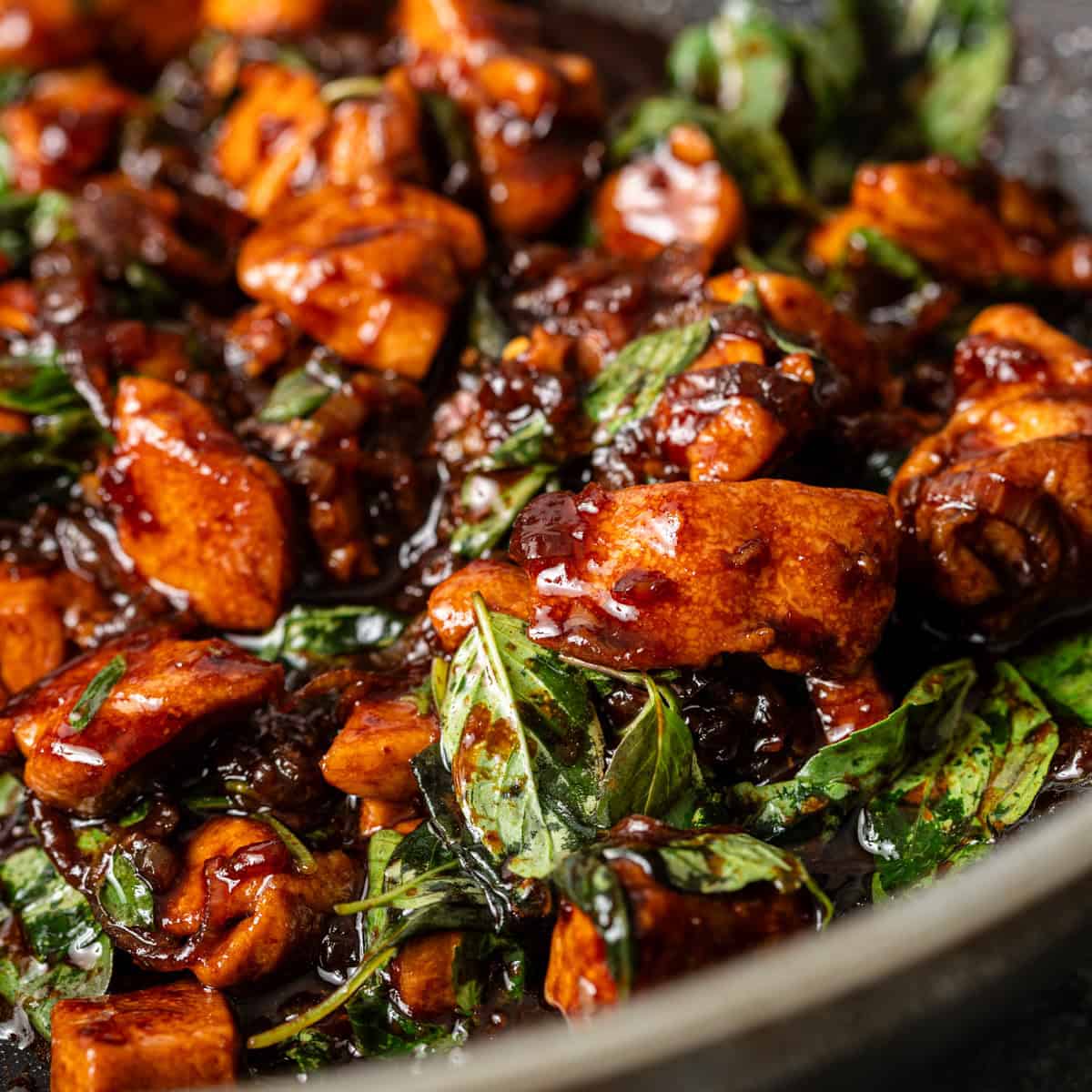
- Use the highest heat you can safely manage. Traditional Thai stir-frying happens in a wok over an extremely powerful flame. At home, get your skillet or wok as hot as possible before the chicken goes in. That sear is what gives you those slightly charred, caramelized bits that make the dish extraordinary rather than just good.
- Don’t overcrowd the pan. If you’re doubling the recipe, cook in two batches. Crowding drops the pan temperature and steams the chicken instead of searing it — you’ll end up with a grey, watery result instead of those gorgeous browned bits.
- Add the basil off the heat (or just barely on it). Basil wilts and blackens fast. Pull the pan off the flame, toss the basil in, and let the residual heat do the work. You want it just wilted, still vivid green, and deeply fragrant.
- Top it with a fried egg. This is completely non-negotiable in Thailand and I’m firmly in that camp. A crispy-edged, runny-yolked fried egg on top of Thai Basil Chicken over rice is one of the great simple pleasures in food. The yolk runs into the sauce and creates something transcendent.
- Variations to try: Swap ground chicken for ground turkey for a slightly leaner option, or use thinly sliced chicken breast or thigh for a different texture. Shrimp works beautifully too for a pescatarian spin. For a low-carb serving option, pair it with cauliflower rice or scoop it into butter lettuce cups — similar to how we approach our Crispy Rice Salad, where the base you choose completely transforms the eating experience.
- Balance the saltiness. Fish sauce and oyster sauce are both salty, so taste before you add any extra salt. The sauce should taste almost aggressively seasoned on its own — it mellows considerably once tossed with the chicken and served over plain rice.
- Make it a complete balanced plate. Serve alongside a crisp, acidic side to cut through the richness of the stir-fry. A Cucumber Tomato Salad is one of my favorite pairings — the light, vinegary brightness plays off the bold, savory chicken in the best possible way.
Nutritional Highlights
Thai Basil Chicken is one of those dishes that earns its place in a health-conscious kitchen not by being “diet food” but by being genuinely nourishing. Ground chicken breast is an excellent lean protein source, delivering roughly 35–38 grams of protein per serving to support muscle maintenance, sustained energy, and satiety. The garlic isn’t just flavor — it’s a legitimate wellness ingredient, rich in allicin, which has been studied for its anti-inflammatory and immune-supporting properties. Fresh Thai basil contributes antioxidants including beta-carotene and vitamin K, while the chilies deliver capsaicin, a compound linked to metabolism support and cardiovascular health. The overall dish is low in refined carbohydrates (especially if you’re mindful of your rice portion), moderate in healthy fats, and completely free of the preservatives and excess sodium that come with restaurant or takeout versions. Bon Appétit has explored the wellness case for Thai basil if you want more on the herb’s impressive nutritional profile. This is weeknight eating that serves your body as generously as it serves your appetite.
Frequently Asked Questions
Can I use regular Italian basil instead of Thai basil or holy basil?
You can, but the flavor will be noticeably different. Italian basil is sweeter and more delicate, while Thai basil has a peppery, slightly anise-like bite that’s central to the dish’s character. Holy basil — the most authentic choice — has an even more pungent, clove-like intensity. If you can find either Thai or holy basil at an Asian grocery store, it’s absolutely worth the trip. In a true pinch, Italian basil still makes a delicious stir-fry, it’ll just taste more generic and less distinctly Thai.
What can I substitute for fish sauce?
Fish sauce is genuinely hard to replicate perfectly, but if you need an alternative due to allergies or dietary preferences, a combination of soy sauce and a tiny splash of Worcestershire sauce gets you reasonably close in terms of that salty, fermented umami depth. For a fully vegan version, coconut aminos plus a small amount of miso paste is another workable swap. Keep in mind that any substitute will shift the flavor profile somewhat — fish sauce has a very specific funky-salty-savory quality that’s part of what makes this dish taste authentically Thai.
How do I store and reheat leftovers?
Store leftover Thai Basil Chicken in an airtight container in the refrigerator for up to 4 days. It reheats beautifully — just warm it in a skillet over medium heat with a tiny splash of water or chicken broth to loosen the sauce, or microwave it in 60-second increments, stirring between each. The basil will darken and soften further after storing, which is completely fine — the flavor actually deepens overnight, making leftovers arguably better than the original. This also makes it an excellent meal prep option: cook a big batch on Sunday and have ready-made protein for rice bowls, wraps, or lettuce cups throughout the week.
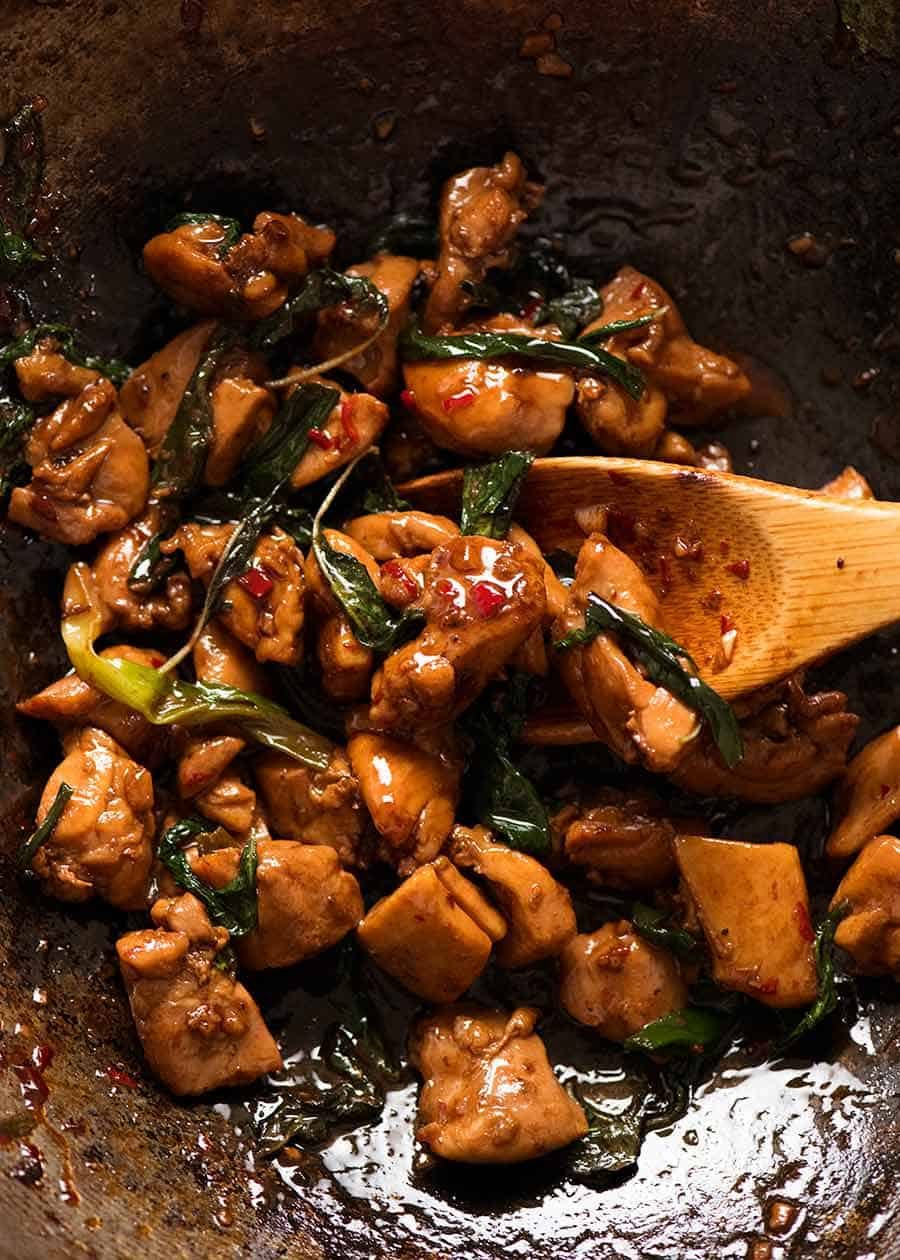
Ready to Make Thai Basil Chicken Tonight?
This is the kind of recipe that makes you feel like a genuinely capable, intentional cook — not because it’s complicated, but because it delivers so much flavor with such focused, clean technique. Thai Basil Chicken proves that healthy weeknight eating doesn’t have to be boring, bland, or time-consuming. Twenty minutes, one pan, real ingredients, and you have a dinner that rivals anything you’d order from your favorite Thai restaurant.
If you make this recipe, I’d love to hear how it went! Leave a comment below, rate the recipe, and share a photo — tag us on Instagram so we can see your beautiful bowl. And if you’re building out your weeknight rotation with more bold, nourishing meals, be sure to browse around — there’s so much good eating to be found here at Eating Happiness. Save this recipe to Pinterest for the next time a craving hits, and don’t forget to share it with a friend who could use a 20-minute dinner win.
Find the complete recipe card below ↓
Thai Basil Chicken
Ingredients
- 1.5 lbs ground chicken preferably ground thigh meat for juiciness
- 8 cloves garlic minced
- 4 Thai bird's eye chilies thinly sliced, adjust to heat preference
- 2 tablespoons neutral oil avocado oil or vegetable oil
- 1.5 cups fresh Thai basil leaves or holy basil if available; packed
- 4 large eggs optional, for serving — fried crispy-edged
- 2 tablespoons oyster sauce use gluten-free oyster sauce if needed
- 1.5 tablespoons fish sauce
- 1 tablespoon soy sauce or tamari for gluten-free
- 1 teaspoon dark soy sauce for color depth; optional
- 1 teaspoon sugar coconut sugar or white sugar
- 2 tablespoons water
- 3 cups cooked jasmine rice or cauliflower rice for low-carb
- sliced cucumber (optional, for serving alongside)

Instructions
- In a small bowl, whisk together the oyster sauce, fish sauce, soy sauce, dark soy sauce (if using), sugar, and water until the sugar is dissolved. Set aside.
- Heat a large wok or heavy skillet over the highest heat your stove allows. Add the oil and let it get very hot — it should shimmer and nearly smoke.
- Add the minced garlic and sliced chilies. Stir-fry for 30 to 45 seconds until fragrant and just beginning to turn golden. Do not let the garlic burn.
- Add the ground chicken to the pan. Break it up with a wooden spoon or spatula and spread it out across the surface. Let it cook undisturbed for 1 to 2 minutes to develop a sear, then stir and continue breaking it up.
- Cook for 5 to 7 minutes total, stirring occasionally, until the chicken is fully cooked through and you have some golden-brown caramelized bits.
- Pour the prepared sauce over the chicken and stir well to coat. Cook for 1 to 2 more minutes, letting the sauce reduce slightly and cling to the chicken.
- Remove the pan from heat. Add the fresh basil leaves and toss to combine. The residual heat will wilt the basil perfectly while keeping it vibrant green and fragrant.
- In a separate small skillet, heat a thin layer of oil over medium-high heat. Crack in an egg and fry until the edges are lacy and crispy and the whites are set but the yolk is still runny, about 2 to 3 minutes. Repeat for remaining eggs.
- Divide the Thai Basil Chicken over bowls of jasmine rice. Top each bowl with a fried egg if using. Serve immediately with sliced cucumber on the side if desired.