

The Bowl That Does It All
If there is one dish that perfectly captures the idea of eating for both pleasure and wellness, it is Bibimbap. This iconic Korean rice bowl — whose name literally translates to “mixed rice” — is one of those rare meals that manages to be deeply satisfying, visually stunning, and genuinely good for you all at once. Every time I make it, I am reminded of how food can be both medicine and joy on the same plate. The warm rice forms a nourishing base, a gorgeous rainbow of sautéed and seasoned vegetables piles on top, a perfectly fried egg crowns the whole thing, and then comes the drizzle of gochujang sauce that ties it all together into something truly magical.
I first fell in love with Bibimbap at a tiny Korean restaurant tucked into a strip mall — the kind of place where the menu is laminated and the food is extraordinary. What struck me immediately was how intentional every component felt. Nothing was an afterthought. Each vegetable was seasoned individually, cooked to its ideal texture, and arranged with care. The dish is a celebration of the idea that whole, clean ingredients, treated with respect and a little technique, become something far greater than the sum of their parts. That philosophy feels very at home here on Eating Happiness.
The wonderful news is that Bibimbap is completely achievable at home, even on a weeknight. Yes, there are a few components to prepare, but most of the vegetables cook quickly, and the whole process is deeply satisfying — almost meditative — as you prep each colorful element. The result is a bowl so loaded with fiber, vitamins, lean protein, and complex carbohydrates that it genuinely qualifies as one of the most nutritionally complete meals you can put on the table. Let me show you how to make it right.
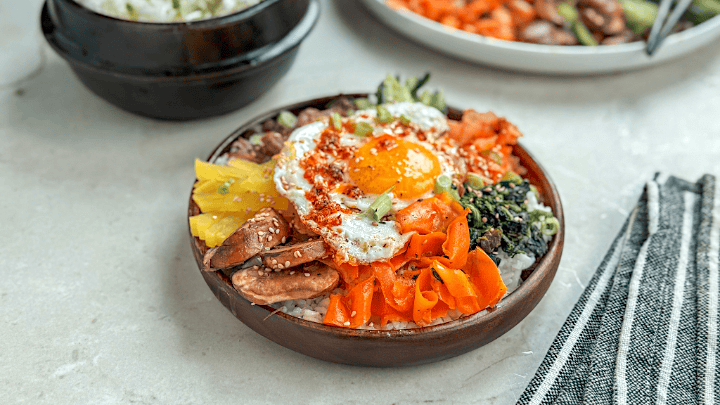
Why You’ll Love This Bibimbap Recipe
- Nutritionally complete in one bowl. Lean protein, complex carbs, healthy fats, and a full spectrum of vegetables — this is genuinely balanced eating without any sacrifice.
- Endlessly customizable. Use whatever vegetables are in season, swap the protein, or make it fully plant-based. Bibimbap is a framework, not a formula.
- Meal-prep friendly. The vegetable components and sauce keep beautifully in the fridge for several days, making weeknight assembly lightning fast.
- Bold, satisfying flavor. The gochujang sauce delivers deep, complex heat and umami that makes every bite feel like a treat — without any processed ingredients or hidden junk.
- A true crowd-pleaser. This dish is as impressive as it looks. Set up a Bibimbap “bar” and let everyone assemble their own bowl for an easy, interactive dinner.
Key Ingredients and Why They Matter
The beauty of Bibimbap lies in how each ingredient pulls its weight both nutritionally and flavor-wise. Short-grain white rice (or brown rice if you prefer more fiber) is the warm, slightly sticky foundation that holds everything together and provides steady, satisfying energy. Spinach is blanched and lightly seasoned with sesame oil and garlic — it wilts down beautifully and delivers a concentrated hit of iron, folate, and vitamins A and C. Shiitake mushrooms bring a deeply savory, meaty flavor along with immune-supporting beta-glucans; they sauté quickly and add incredible depth. Ground beef or tofu — seasoned with soy sauce, garlic, and a touch of sesame oil — is the protein anchor of the bowl, providing the amino acids and staying power that make this a true meal rather than a snack. The gochujang sauce is arguably the soul of the dish: this fermented Korean chili paste is rich in probiotics, capsaicin, and antioxidants, and when balanced with a little honey, rice vinegar, and sesame oil, it becomes an irresistible, metabolism-supporting condiment. Finally, a fried egg on top is not just tradition — it is a source of choline, B vitamins, and healthy fats, and when that golden yolk breaks and runs through the bowl, it creates a naturally rich, creamy sauce that elevates everything underneath it.
For more inspiration on building colorful, nutritious bowls with seasonal produce, the team at Serious Eats has excellent deep-dives into Korean cooking techniques that are well worth exploring. And if you love leaning on wholesome whole-food ingredients the way we do here, you might also enjoy our Healthier Chicken and Rice Casserole — another rice-based meal that proves clean comfort food is absolutely possible.
Pro Tips & Variations
Use a dolsot (stone bowl) for the crispy rice experience. If you have a Korean stone bowl, heat it on the stovetop with a little sesame oil before adding your rice. Let the rice sit undisturbed for a few minutes and you will develop nurungji — the glorious, crispy scorched rice crust that is one of Bibimbap’s greatest pleasures. It adds a wonderful textural contrast and a nutty, toasty flavor.
Swap the protein to suit your needs. Ground turkey, sliced chicken breast, or marinated tofu all work beautifully in place of beef. For a fully plant-based bowl, use crumbled firm tofu seasoned with tamari, garlic, and a touch of gochujang. The dish is just as satisfying and keeps the nutrition profile excellent.
Go brown or grain-forward. Substituting brown rice, cauliflower rice, or even quinoa for the white rice boosts fiber content significantly and lowers the glycemic load of the bowl. If you use brown rice, simply add about 15 minutes to the cooking time.
Prep the vegetables ahead. Each vegetable component can be made 3–4 days in advance and stored in individual containers in the fridge. On busy weeknights, all you need to do is cook fresh rice, fry an egg, and assemble — dinner is on the table in under 15 minutes. This is one of our favorite meal-prep strategies at Eating Happiness.
Control the heat level. Gochujang ranges from mild to very spicy depending on the brand. Start with less sauce, taste, and add more. For a gentler version, cut the gochujang with extra honey and a splash of water. For those who love heat, add a pinch of gochugaru (Korean chili flakes) on top.
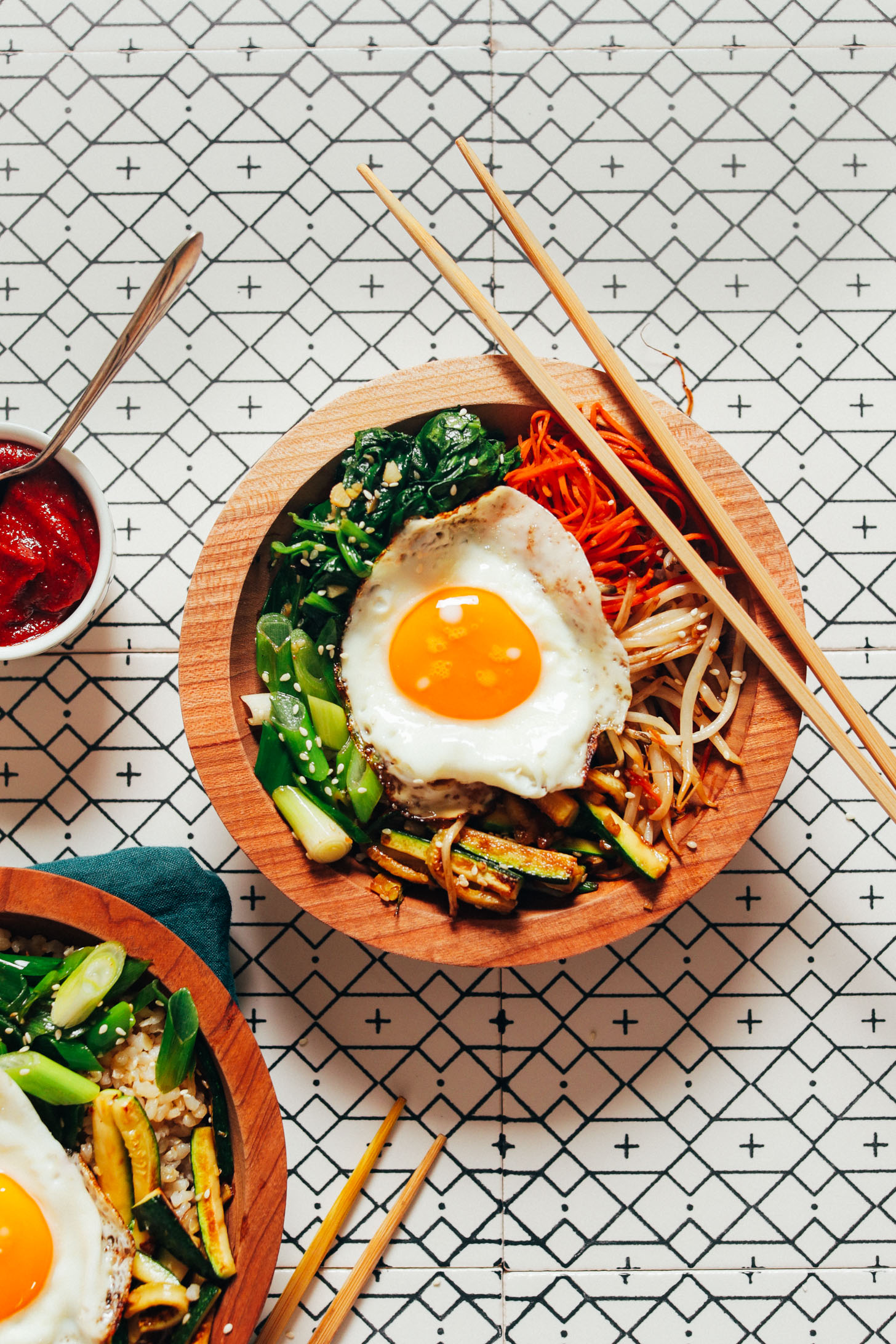
Load up on vegetables. Traditional Bibimbap often includes zucchini, fernbrake (gosari), and cucumber in addition to the core vegetables. Feel free to add whatever is fresh and seasonal — thinly sliced zucchini sautéed with garlic, blanched bean sprouts with sesame, or even roasted sweet potato are all incredible additions. If you love crispy vegetable sides, our Air Fryer Butternut Squash Fries would make a delightful accompaniment to a Bibimbap spread.
According to the culinary experts at Bon Appétit, the key to great Bibimbap is treating each component with individual care rather than rushing the whole dish — a little attention to seasoning at each stage makes an enormous difference in the final flavor.
Nutritional Highlights
Bibimbap is genuinely one of the most nutritionally well-rounded dishes in the world — and that is not an overstatement. A single bowl delivers an impressive mix of complex carbohydrates from the rice, high-quality protein from the egg and seasoned beef, and a wide spectrum of micronutrients from the rainbow of vegetables. Spinach contributes iron and folate. Carrots bring beta-carotene and antioxidants. Shiitake mushrooms offer immune-supporting compounds and B vitamins. The sesame oil used throughout the dish is rich in heart-healthy monounsaturated and polyunsaturated fats, and the gochujang sauce — made from fermented chili paste — provides beneficial probiotics that support gut health. A serving comes in at approximately 520 calories, making it a genuinely satisfying, complete meal that will keep you full and energized for hours. For those monitoring sodium, using reduced-sodium soy sauce and going lighter on the gochujang sauce brings the numbers down meaningfully while preserving all the flavor. This is balanced eating in its most delicious form — and if you love the idea of nourishing, wholesome meals that feel anything but boring, you might also want to check out our Healthy October Harvest Salad for another colorful, nutrient-packed option.
Frequently Asked Questions
See the FAQ section below for detailed answers to the most common Bibimbap questions.
Make It, Mix It, Love It
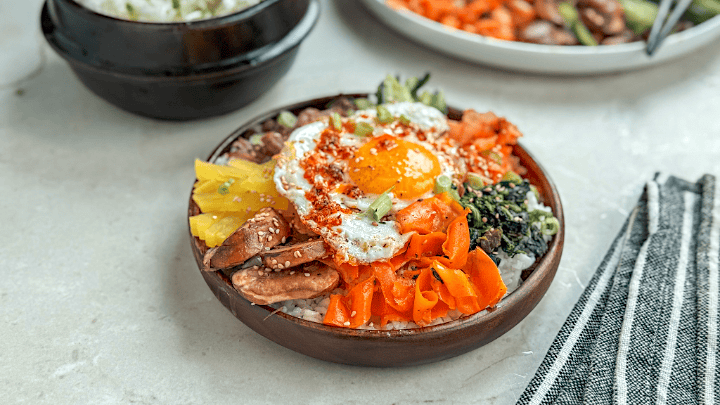
Bibimbap is one of those rare recipes that rewards you on every level — it is nourishing, beautiful, deeply flavorful, and endlessly adaptable. Once you have made it at home and experienced the joy of mixing that gorgeous bowl together, it will absolutely become a regular in your rotation. Whether you make it for a solo weeknight dinner, a weekend meal-prep session, or an interactive family dinner where everyone builds their own bowl, it delivers every single time. We would love to see your creations — tag us when you make it, leave a comment below, and save this recipe to your boards so you can come back to it again and again.
Find the complete recipe card below ↓
Bibimbap
Equipment
- Large skillet or wok
- Medium saucepan
- Stone bowl (dolsot) optional
- Small mixing bowl
- Tongs
- Measuring spoons
Ingredients
Rice
- 2 cups short-grain white rice or brown rice for more fiber
- 3 cups water
Gochujang Sauce
- 3 tablespoons gochujang Korean fermented chili paste
- 1 tablespoon sesame oil
- 1 tablespoon honey or maple syrup
- 1 tablespoon rice vinegar
- 1 tablespoon low-sodium soy sauce
- 2 cloves garlic minced
- 2 tablespoons water to thin sauce
Seasoned Ground Beef
- 12 oz lean ground beef 90/10; or substitute firm tofu for plant-based
- 2 tablespoons low-sodium soy sauce
- 1 teaspoon sesame oil
- 2 cloves garlic minced
- 1 teaspoon honey
Vegetables
- 5 oz fresh baby spinach
- 2 medium carrots julienned or cut into thin matchsticks
- 8 oz shiitake mushrooms stems removed, sliced
- 2 cups bean sprouts
- 1 medium zucchini julienned
- 3 cloves garlic minced, divided for vegetables
- 2 tablespoons sesame oil divided
- 1 tablespoon low-sodium soy sauce
- salt to taste
Toppings
- 4 large eggs fried sunny-side up
- 2 tablespoons sesame seeds toasted
- 3 stalks green onions thinly sliced
- 1 teaspoon sesame oil for finishing
Cooking
- 2 tablespoons neutral oil such as avocado oil or light olive oil, for sautéing

Instructions
Cook the Rice
- Rinse the rice in cold water until the water runs mostly clear. Combine rice and water in a medium saucepan. Bring to a boil over high heat, then reduce heat to the lowest setting, cover, and cook for 15 minutes. Remove from heat and let steam, covered, for 10 more minutes. Fluff with a fork.
- Alternatively, cook rice in a rice cooker according to manufacturer instructions.
Make the Gochujang Sauce
- In a small bowl, whisk together gochujang, sesame oil, honey, rice vinegar, soy sauce, minced garlic, and water until smooth. Taste and adjust heat or sweetness as preferred. Set aside.
Cook the Seasoned Beef
- Heat a large skillet over medium-high heat. Add the ground beef and cook, breaking it apart, for 5–6 minutes until cooked through and slightly caramelized.
- Add soy sauce, sesame oil, garlic, and honey. Stir to coat and cook for another 1–2 minutes until fragrant. Transfer to a bowl and set aside.
Prepare the Vegetables (one at a time)
- Blanch spinach: Bring a pot of lightly salted water to a boil. Add spinach and blanch for 30 seconds. Drain, squeeze out excess water, and toss with a pinch of garlic, a drizzle of sesame oil, and a pinch of salt.
- Sauté carrots: In the same skillet, heat ½ tablespoon neutral oil over medium-high heat. Add julienned carrots and a pinch of salt. Sauté for 3–4 minutes until just tender but still with a slight bite. Remove and set aside.
- Sauté zucchini: Add another ½ tablespoon oil to the skillet. Add julienned zucchini with a pinch of salt and sauté for 2–3 minutes until softened. Remove and set aside.
- Sauté mushrooms: Add ½ tablespoon oil to the skillet. Add shiitake mushrooms and cook for 4–5 minutes until golden and tender. Add a splash of soy sauce and a minced garlic clove in the last minute. Remove and set aside.
- Blanch bean sprouts: Quickly blanch bean sprouts in boiling water for 1 minute. Drain and toss with a few drops of sesame oil and a pinch of salt.
Fry the Eggs
- In a nonstick skillet, heat a small amount of neutral oil over medium-low heat. Fry eggs sunny-side up until the whites are just set but the yolk remains runny, about 3–4 minutes. Season with a pinch of salt.
Assemble the Bibimbap
- Divide warm rice among four large bowls (or heated stone bowls). Arrange portions of spinach, carrots, zucchini, mushrooms, and bean sprouts in sections around the bowl.
- Place the seasoned beef in the center. Top with a fried egg. Drizzle with gochujang sauce, sprinkle with sesame seeds and green onions, and finish with a few drops of sesame oil.
- Serve immediately. To eat, mix everything together vigorously until the egg yolk breaks and coats the rice and vegetables.
Optional: Dolsot (Crispy Rice) Method
- To achieve crispy rice, lightly coat the inside of a stone bowl (dolsot) with sesame oil. Heat the stone bowl on the stovetop over medium heat for 2–3 minutes. Add a portion of cooked rice and press it against the sides. Let it cook undisturbed for 3–4 minutes to form a crispy crust, then assemble toppings as above.