

When Street Food Becomes a Soul-Warming Ritual
There is something almost magnetic about a bubbling pot of tteokbokki. If you have ever wandered through a Korean street market — or even just scrolled through food videos late at night — you already know that pull. The deep brick-red sauce, the glossy, pillowy rice cakes, the rising steam carrying a scent that is equal parts savory, sweet, and fiery. Tteokbokki (pronounced roughly as ddeok-bo-kki) is South Korea’s most beloved street food, and once you make it at home, it is nearly impossible to stop. It is the kind of dish that greets you with warmth and sends you off feeling genuinely nourished — which is exactly the spirit behind everything we make here at Eating Happiness.
What makes tteokbokki so special from a wellness perspective is that it starts from an incredibly clean foundation. The base is garaetteok — cylindrical rice cakes made from just pounded short-grain rice. No preservatives, no mystery ingredients. The sauce is built on gochujang, a fermented Korean chili paste that has been used for centuries and is increasingly recognized for its probiotic and antioxidant properties. Fish cakes, broth, and a touch of sweetness round everything out into a sauce so layered and complex that it tastes like it took hours — but realistically comes together in under 30 minutes. This is the kind of weeknight win that also happens to be genuinely good for you.
I started making tteokbokki at home after realizing that the takeout version I loved was often swimming in excess sodium and sugar that clouded what should be a vibrant, balanced dish. By making it yourself, you control every element — the heat level, the sweetness, the quality of the broth. You can keep it traditional and utterly satisfying, or riff on it based on what is in your fridge. Either way, this recipe is a celebration: of bold flavor, of Korean culinary tradition, and of the idea that eating well and eating with joy are not opposing forces.
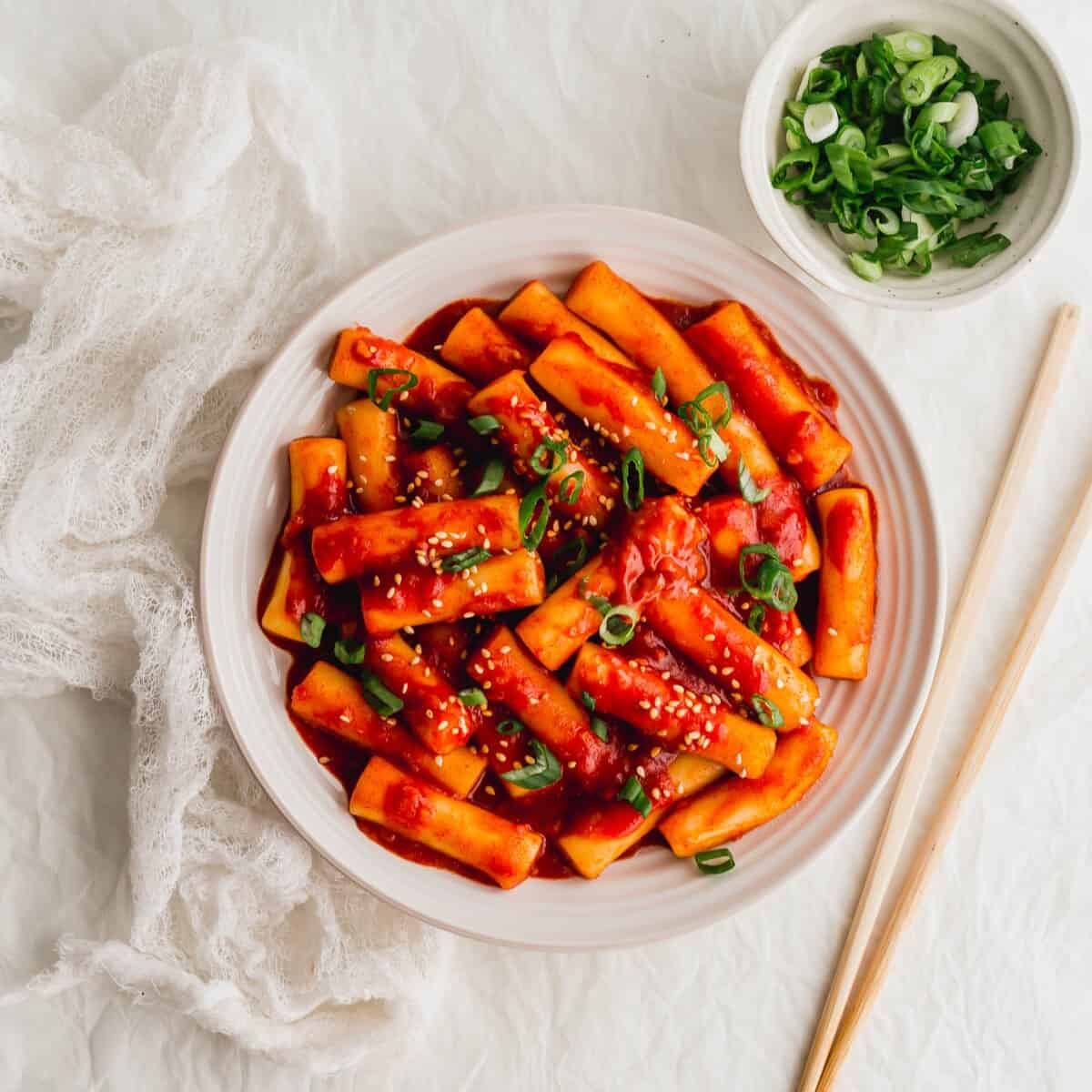
Why You’ll Love This Recipe
- Ready in under 30 minutes — faster than delivery and infinitely more satisfying.
- Clean, whole-food ingredients — rice cakes, fermented chili paste, anchovy broth. Real food with real flavor.
- Deeply customizable heat level — dial the gochugaru up or down depending on your spice comfort zone.
- Naturally gluten-adaptable — swap the fish cakes and use tamari instead of soy sauce for a GF-friendly version.
- A worthy indulgent moment — bold, spicy, chewy, and absolutely the kind of dish that makes a tough week disappear.
- One-pan, minimal cleanup — the entire sauce and cooking process happens in a single wide skillet or wok.
Key Ingredients
The soul of tteokbokki lives in its garaetteok rice cakes — those cylindrical, chewy tubes made from short-grain rice flour. They have a satisfying bite that is completely unique in the food world: not quite pasta, not quite dumpling, something entirely their own. Look for them fresh or refrigerated at any Korean or Asian grocery store, though frozen ones work beautifully after a brief soak in warm water. The texture you are chasing is tender on the outside with just a little resistance at the center — the rice cake equivalent of al dente.
The sauce would be nothing without gochujang, the fermented Korean red chili paste that anchors the entire dish. Unlike raw chili heat, gochujang brings a rounded, almost smoky depth that has been developed through fermentation — which also means it carries beneficial bacteria similar to other fermented foods like miso. Paired with gochugaru (Korean red pepper flakes), which adds a brighter, fruitier heat, the two together create a sauce with genuine complexity. If you are new to Korean cooking, Serious Eats has an excellent primer on cooking with gochujang that is worth bookmarking.
The broth base here is a quick anchovy kelp stock (or myeolchi yuksu), which is one of the most underrated flavor builders in Korean cooking. It adds an umami backbone without heaviness — think of it as the Korean equivalent of a well-made vegetable or chicken stock. If you want to keep things simple, a high-quality store-bought seafood or vegetable broth works as a substitute. Eomuk (Korean fish cakes) are the next major player — they absorb all that spicy-sweet sauce as they cook, becoming little flavor sponges threaded onto skewers or sliced into strips. And finally, a measured tablespoon of sugar or honey does important work here, balancing the fermented heat of the gochujang without making the dish feel candy-sweet. It is the kind of seasoning decision that separates a flat sauce from one that makes you scrape the pan clean.
Pro Tips & Variations
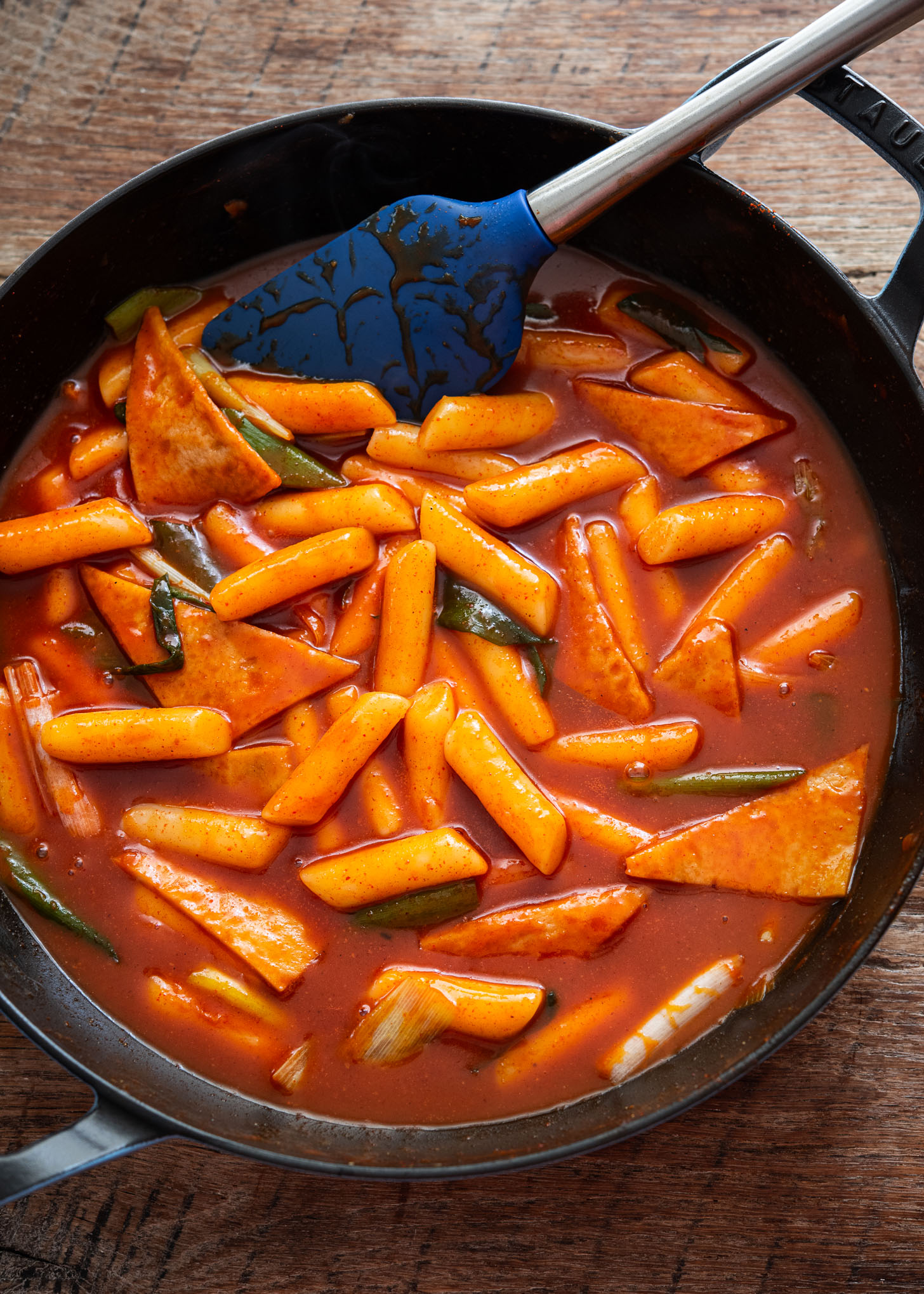
- Soak refrigerated or frozen rice cakes. If your rice cakes have been in the fridge or freezer, soak them in cold water for 20–30 minutes before cooking. This prevents them from splitting or turning gummy in the sauce.
- Don’t rush the sauce reduction. Let the sauce bubble and thicken at medium heat — this is where the flavors meld and the rice cakes absorb that gorgeous color. Rushing it at high heat risks scorching the gochujang.
- Add protein for a more filling meal. Sliced boiled eggs (a classic addition), tofu cubes, or even shrimp fold in beautifully. For a heartier version, thin-sliced beef (bulgogi-style) is incredible. If you love building balanced bowls, you might also enjoy our Crispy Rice Salad — The Crunchy, Fresh Bowl You’ll Make on Repeat as a lighter counterpart.
- Make it creamy (rosé tteokbokki). Stir in 2–3 tablespoons of heavy cream or full-fat coconut milk in the final 2 minutes of cooking. The sauce becomes silkier and the heat is gently mellowed — this variation has gone viral for good reason.
- Cheese tteokbokki. A popular Korean street food upgrade: pull the pan off heat and layer sliced mozzarella or a handful of shredded cheese over the top. Cover for 1 minute to melt. It sounds unexpected and tastes outrageous.
- Adjust sweetness thoughtfully. Corn syrup is traditional for the glossy sheen it gives the sauce, but honey or maple syrup work just as well and bring a slightly more complex sweetness with trace minerals.
- Vegetarian/vegan swap. Skip the fish cakes, use kombu-only broth (no anchovies), and add extra firm tofu or mushrooms. The dish remains deeply satisfying and the gochujang carries all the umami weight you need.
- Serve with a cooling side. Tteokbokki’s heat calls for something refreshing alongside it. A simple Cucumber Tomato Salad is a perfect, palate-cleansing partner — the light acidity cuts right through the richness of the sauce.
Nutritional Highlights
Tteokbokki is a genuinely balanced dish when made at home with quality ingredients. Rice cakes are naturally gluten-free and low in fat, providing a clean source of complex carbohydrates for sustained energy. Gochujang is the star from a wellness standpoint — this fermented paste contains capsaicin (shown in research to support metabolism and circulation), beneficial bacteria from the fermentation process, and a meaningful amount of vitamin C and beta-carotene from the chili peppers. Bon Appétit has explored the growing culinary and health case for gochujang in depth, and it is a compelling read. The anchovy broth adds minerals like calcium and iodine without adding calories. A single serving of this tteokbokki lands around 380–420 calories with a solid balance of carbohydrates, protein from the fish cakes and eggs, and minimal saturated fat. For a wellness-conscious meal that also happens to feel like a complete treat, it checks every box.
Frequently Asked Questions
Can I find rice cakes at a regular grocery store?
Fresh or refrigerated garaetteok rice cakes are most reliably found at Korean grocery stores or well-stocked Asian supermarkets. However, many larger mainstream grocery chains now carry frozen rice cakes in their international or frozen Asian food aisles. You can also order them online through retailers like H Mart’s website or Amazon. In a genuine pinch, some people use gnocchi as a substitute — the texture is softer and the flavor is different, but it absorbs the sauce in a similar way and makes for a fun fusion experiment.
How spicy is tteokbokki, and can I control the heat?
Traditional tteokbokki is genuinely spicy — this is not a mild dish. The heat level in this recipe lands at a medium-high for most palates, which is intentional. However, you have full control. To dial down the heat, reduce the gochugaru (or omit it entirely) and use a mild gochujang, which comes in varying spice levels clearly labeled on the package. Adding a splash of cream, coconut milk, or even a tablespoon of peanut butter to the sauce significantly mellows the heat while adding richness. To go hotter, add extra gochugaru or a small amount of Korean dried chili peppers. The sauce is remarkably flexible.
How do I store and reheat leftover tteokbokki?
Store leftovers in an airtight container in the refrigerator for up to 2 days. Be aware that rice cakes continue to absorb the sauce as they sit, so the texture will be denser and the sauce thicker when reheated. To reheat, add a splash of water or broth to a skillet over medium-low heat, add the tteokbokki, and stir gently until warmed through and saucy again. Avoid microwaving if possible — the rice cakes can turn rubbery. Tteokbokki is best eaten fresh, so if you are meal-prepping, consider making the sauce base ahead and cooking fresh rice cakes to order, which takes less than 15 minutes.
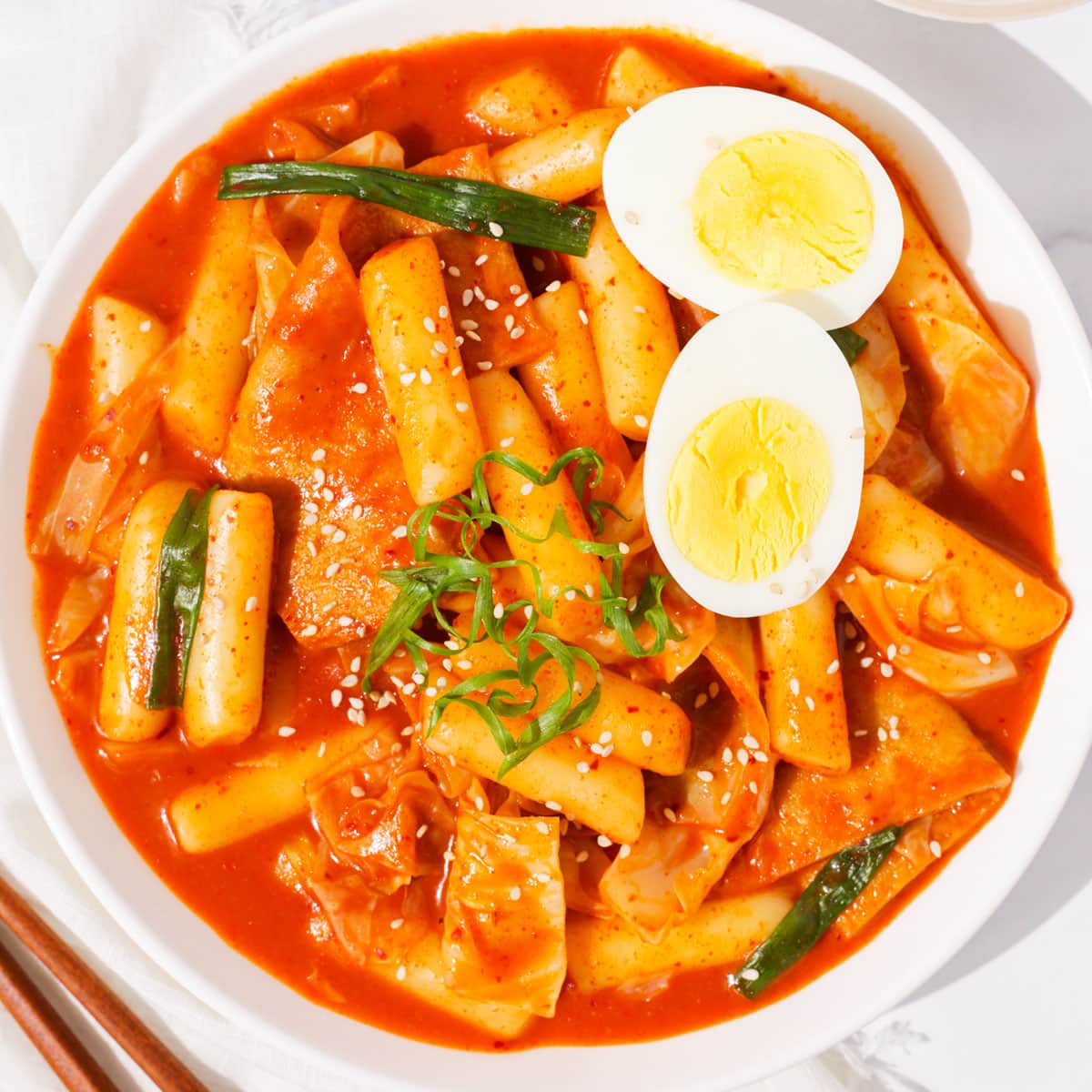
Make It, Share It, Save It
Tteokbokki is one of those recipes that genuinely earns a permanent spot in your rotation — not just because it tastes incredible, but because it connects you to a centuries-old Korean culinary tradition in a very immediate and joyful way. Every time you make it, you get a little better at reading the sauce, adjusting the heat, perfecting the rice cake texture. It rewards attention and generosity. Make it for yourself on a quiet weeknight, or make a big pot for friends and watch it disappear in minutes. Either way, share this recipe with someone who needs a little spice in their life, pin it for your next Korean food night, and leave a comment below telling us how you made it your own. We love hearing from you. If you are building out a Korean-inspired spread or simply want to explore more bold, satisfying meals that do not compromise on nourishment, you will find plenty of inspiration right here at Eating Happiness. Also check out our Pasta Primavera for another vibrant, veggie-forward dish that celebrates bold flavor without heaviness.
Find the complete recipe card below ↓
Tteokbokki
Ingredients
- 3 cups water
- 5 dried anchovies heads and guts removed
- 1 piece dried kelp kombu) (about 4 inches
- 1 lb garaetteok rice cakes fresh, refrigerated, or frozen and thawed; soaked in cold water 20 min if cold
- 6 oz Korean fish cakes eomuk) (sliced into triangles or strips
- 3 tablespoons gochujang Korean red chili paste
- 1 tablespoon gochugaru Korean red pepper flakes; reduce for less heat
- 1 tablespoon soy sauce or tamari for gluten-free
- 1 tablespoon sugar or honey or maple syrup
- 1 teaspoon sesame oil toasted
- 3 cloves garlic minced
- 3 green onions cut into 2-inch pieces
- 2 large eggs hard or soft boiled, halved, optional
- 1 teaspoon sesame seeds for garnish

Instructions
- Combine the water, dried anchovies, and kelp in a medium saucepan. Bring to a boil over medium-high heat, then reduce to a simmer and cook for 10 minutes. Remove the anchovies and kelp and discard. You should have about 2½ cups of broth. Set aside.
- In a wide, deep skillet or wok, combine the anchovy broth, gochujang, gochugaru, soy sauce, sugar, and minced garlic. Stir well to dissolve the gochujang completely. Bring to a boil over medium-high heat.
- Add the soaked and drained rice cakes and the sliced fish cakes to the boiling sauce. Stir to coat everything evenly. Cook at a steady boil, stirring frequently, for 8–10 minutes until the rice cakes are tender and chewy and the sauce has thickened and become glossy. If the sauce reduces too quickly, add a splash of water or broth.
- Add the green onions in the final 2 minutes of cooking and stir to combine.
- Remove from heat and drizzle with sesame oil. Taste and adjust seasoning — add more gochujang for heat, more sugar for sweetness, or a splash of soy sauce for saltiness.
- Divide among bowls and top with halved boiled eggs (if using), sesame seeds, and extra sliced green onions. Serve immediately.