
There is something almost ceremonial about making Spanish Paella. The wide, shallow pan. The slow pour of golden saffron-laced broth. The gentle, deliberate layering of proteins and vegetables that transforms humble rice into something deeply, undeniably beautiful. If you have ever stood over a paella pan — or even just watched someone else do it — you know the feeling. It is part cooking, part meditation, and entirely worth every minute.
At Eating Happiness, we are big believers in food that nourishes both body and soul, and Spanish Paella sits perfectly at that intersection. It is a wholesome, balanced meal built on clean, whole-food ingredients: lean proteins, fresh seafood, vibrant vegetables, heart-healthy olive oil, and the kind of warming spices that have been celebrated in Mediterranean cooking for centuries. It is also, undeniably, a showstopper — the kind of dish that makes a weeknight feel like a celebration and a dinner party feel effortless.
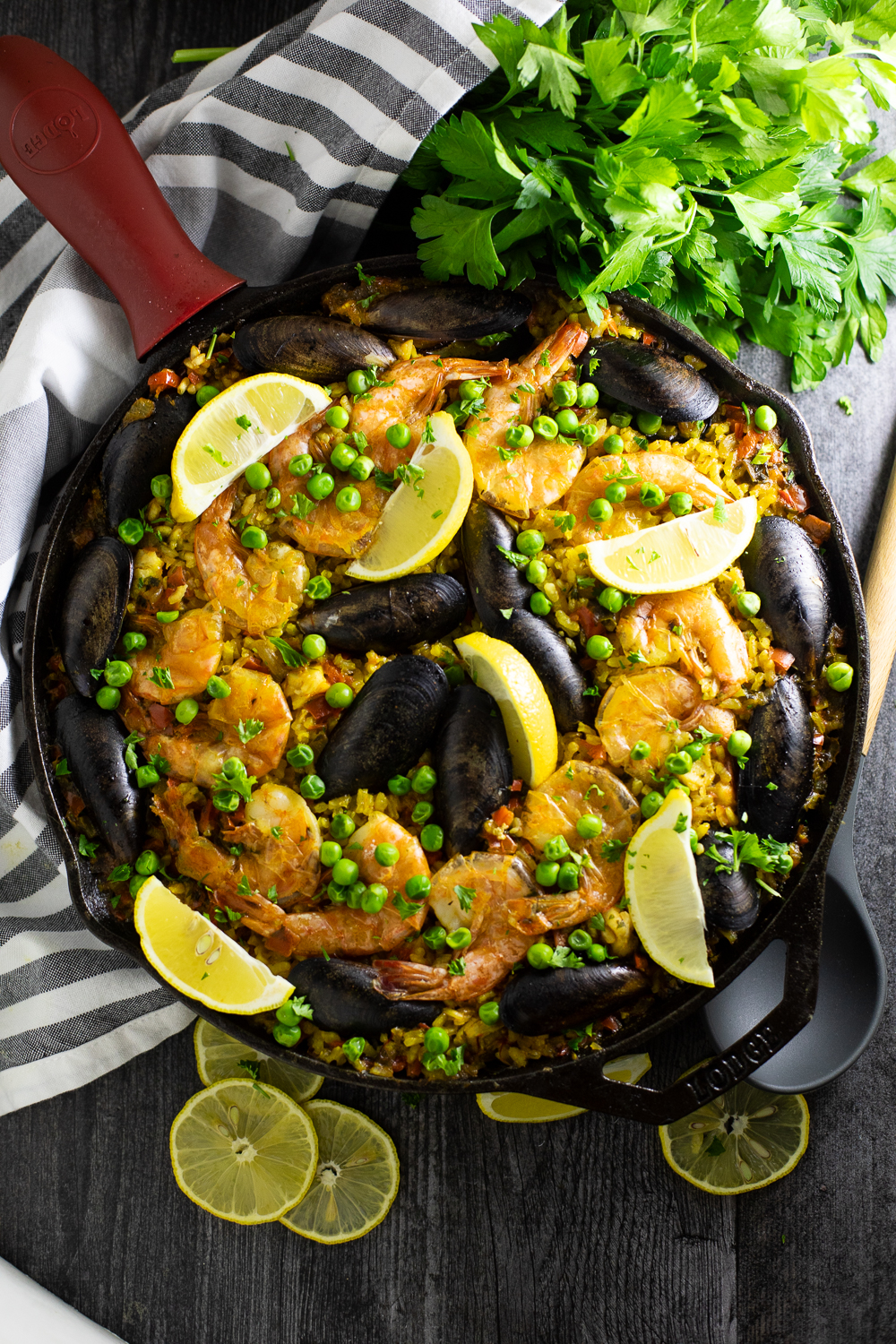
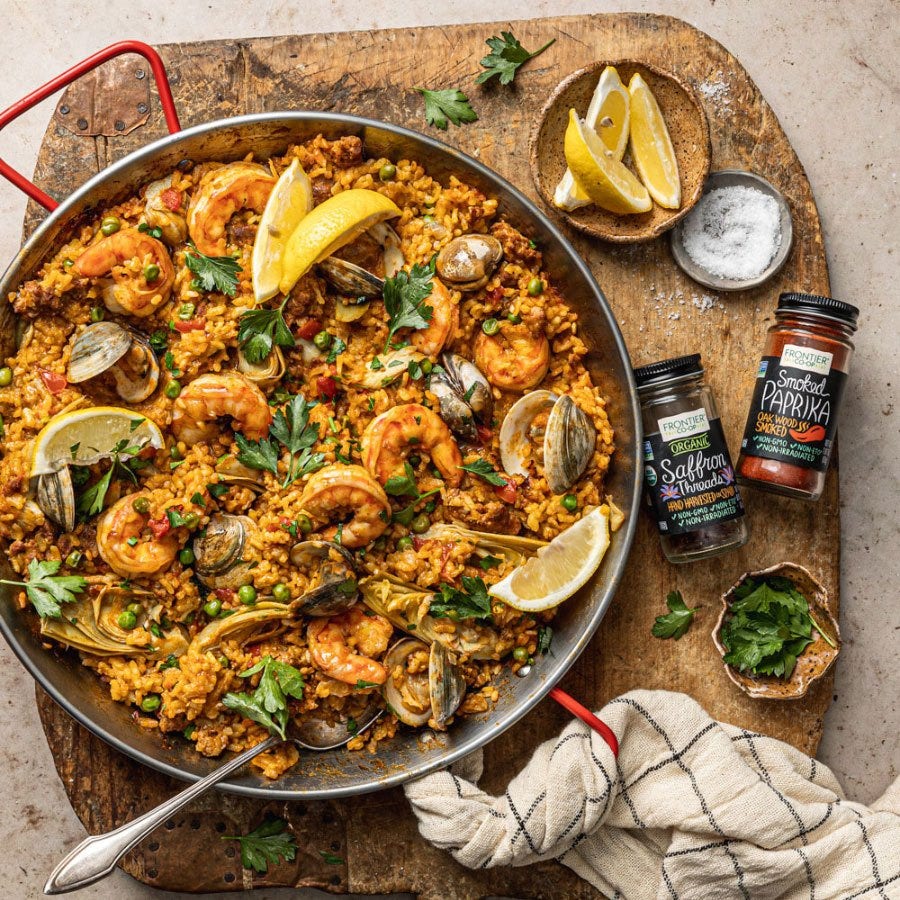
This recipe captures the soul of traditional Valencian paella while keeping things accessible for a home kitchen. No special outdoor fire required. No imported paella pan essential (though it does help). Just good ingredients, a wide skillet, and a little patience. The result is a pan full of fragrant, saffron-kissed rice with perfectly cooked chicken and shrimp, a medley of sweet peppers and tomatoes, and that coveted crispy bottom layer known as socarrat — the hallmark of a truly great paella.
Why You’ll Love This Recipe
- One-pan wonder: Everything cooks in a single pan, meaning maximum flavor and minimal cleanup.
- Nutritionally balanced: Lean protein from chicken and shrimp, complex carbohydrates from short-grain rice, and an abundance of vegetables make this a genuinely wholesome meal.
- Packed with anti-inflammatory ingredients: Saffron, turmeric, garlic, and olive oil are Mediterranean powerhouses with well-documented health benefits.
- Scales beautifully: This recipe serves four comfortably but doubles easily for a crowd.
- Impressive without being complicated: The steps are straightforward, and the reward is a dish that looks and tastes like it came from a restaurant in Valencia.
- Naturally gluten-free: No flour, no pasta, no breadcrumbs — just clean, whole ingredients.
Key Ingredients
The backbone of any great Spanish Paella is the rice, and not just any rice will do. Short-grain bomba rice (or Calasparra rice) is the traditional choice because it absorbs liquid slowly and evenly, holding its shape while soaking up every drop of that saffron-perfumed broth without turning mushy. If you cannot find bomba rice, Arborio works as a backup, though the texture will be slightly creamier. Speaking of that broth — saffron is the irreplaceable heart of paella. A small pinch steeped in warm stock releases a gorgeous golden hue and a subtle, floral, almost honey-like flavor that is completely unique. There is truly no substitute, and the good news is you only need a little. The investment is absolutely worth it — Serious Eats has a wonderful deep-dive into what makes saffron so special in rice dishes if you want to geek out on the science.
Chicken thighs are the preferred protein here over breasts because they stay juicy and flavorful through the longer cooking process. Their fat bastes the dish as it cooks, contributing to that rich, deep base flavor. Large shrimp are added later so they cook gently without becoming rubbery — they bring sweetness and that unmistakable coastal character that defines paella as a dish of the sea. Smoked paprika — pimentón de la Vera — is another non-negotiable. It adds a smoky warmth and depth that olive oil and garlic alone cannot replicate, giving the dish its distinctly Spanish personality. Finally, roasted red peppers and ripe tomatoes provide sweetness, acidity, and vibrant color, breaking down into the rice and creating a sofrito base that is the flavor foundation of the entire dish.
Pro Tips & Variations
- Do not stir the rice. This is the single most important rule of paella. Once the broth goes in and the rice is distributed evenly, leave it alone. Stirring releases starch and destroys any chance of forming the coveted socarrat — that crispy, caramelized bottom layer that is the hallmark of authentic paella.
- Bloom your saffron. Add your saffron threads to a few tablespoons of warm (not boiling) broth or water and let it steep for at least 10 minutes before adding to the pan. This releases maximum color and flavor.
- Use the right pan. A wide, shallow paella pan or a large (12–15 inch) stainless steel or cast iron skillet works best. The wide surface area is essential for even cooking and proper socarrat formation. If you love cooking in cast iron, you might also enjoy our Cast Iron Skillet Pizza — another one-pan favorite that never disappoints.
- Keep your broth warm. Adding cold stock to a hot pan causes temperature shock and uneven cooking. Keep your chicken or seafood broth at a gentle simmer in a separate pot throughout the process.
- Listen for the sizzle. In the final 2–3 minutes of cooking, you should hear a slight crackling sound from the bottom of the pan — that is your socarrat forming. Let it go a little longer if needed, but watch carefully to avoid burning.
- Make it vegetarian: Skip the chicken and shrimp and load up with artichoke hearts, green beans, white beans, roasted bell peppers, and cherry tomatoes. Use vegetable broth and increase the smoked paprika slightly for depth.
- Make it all-seafood: Use a combination of shrimp, mussels, clams, and squid with a rich seafood broth. Add mussels and clams in the last 8–10 minutes so they steam open right in the pan — dramatic and delicious.
- Spice it up: Add a pinch of cayenne or a few threads of dried chili to the sofrito for a gentle heat that plays beautifully against the saffron’s sweetness.
Paella pairs brilliantly with light, fresh sides. A bright Cucumber Tomato Salad is a perfect companion — its vinegary crunch cuts through the richness of the rice and proteins in the most refreshing way. Alternatively, a Crispy Rice Salad brings a fun textural contrast if you want to lean into a rice-forward spread for entertaining.
Nutritional Highlights
Spanish Paella is a wonderful example of Mediterranean eating at its finest. A single serving delivers a solid hit of lean protein from both chicken thighs and shrimp — essential for muscle repair, satiety, and sustained energy. Short-grain rice provides complex carbohydrates that fuel the body steadily rather than causing blood sugar spikes. The olive oil used throughout the recipe is rich in monounsaturated fats and oleocanthal, a natural anti-inflammatory compound, while garlic and smoked paprika bring antioxidant properties that support immune function. Saffron itself has been studied for its mood-supporting and antioxidant-rich properties. The addition of tomatoes contributes lycopene, a powerful carotenoid linked to heart health, and the bell peppers deliver a meaningful dose of vitamin C. All of this comes in at approximately 480 calories per generous serving — a satisfying, nutrient-dense plate that never feels like a compromise. Food Network’s guide to paella traditions is a great read if you want more context on the cultural significance of this iconic dish.
Frequently Asked Questions
Can I make Spanish Paella ahead of time?
Paella is genuinely best eaten fresh — the socarrat is crispiest right out of the pan, and the rice texture is at its peak. That said, you can absolutely do a significant amount of prep ahead: marinate and sear your chicken, make your sofrito base, and bloom your saffron up to a day in advance. Store each component separately in the refrigerator and combine when ready to cook. If you do have leftovers, they reheat reasonably well in a skillet over medium-low heat with a splash of chicken broth to rehydrate the rice. Cover loosely for the first few minutes, then uncover to let any excess moisture evaporate.
What can I substitute for bomba rice in Spanish Paella?
Bomba or Calasparra rice is the gold standard, but it is not always easy to find. Arborio rice is the most commonly available substitute and works reasonably well — just be aware that it has a higher starch content, so it will produce a slightly creamier, risotto-like texture rather than the distinct, separate grains of authentic paella. Medium-grain rice such as Calrose is another option. Avoid long-grain rice like basmati or jasmine — they do not absorb the broth in the same way and will give you a very different (less desirable) result. Whatever you use, measure by weight rather than volume if possible for the most consistent results.
How do I know when the socarrat has formed without burning the paella?
The socarrat — the crispy, caramelized layer of rice at the bottom of the pan — is formed in the final 2–4 minutes of cooking over medium to medium-high heat after most of the broth has been absorbed. You will know it is forming when you hear a gentle crackling or sizzling sound coming from the bottom of the pan. To check without stirring, carefully lift a small edge of the rice with a spatula to peek underneath. The rice should be golden and toasted, not dark brown or black. If it smells at all acrid or burnt, remove from heat immediately. Practice makes perfect — your first paella might not have a perfect socarrat, but it will still be absolutely delicious.
Ready to Bring a Taste of Spain to Your Table?
Spanish Paella is one of those recipes that genuinely earns its reputation. It is warm, generous, deeply flavorful, and made almost entirely from clean, wholesome ingredients that your body will thank you for. Whether you are cooking it for a relaxed Sunday dinner, a summer gathering, or a special occasion that deserves something truly memorable, this dish delivers every single time. The process of making it — the sizzle of the sofrito, the bloom of saffron turning the broth gold, the patience of leaving the rice alone — is as nourishing as the meal itself.
If you make this Spanish Paella, we would absolutely love to hear how it turns out. Leave a comment below with your experience, any variations you tried, or which proteins you used. Share a photo on Instagram and tag us — seeing your beautiful pans of paella is genuinely our favorite thing. Save this recipe to your Pinterest boards so it is always within reach for your next occasion worth celebrating. Wholesome, vibrant, deeply satisfying — this is exactly what eating happiness looks like.
Find the complete recipe card below ↓
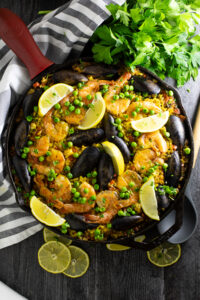
Spanish Paella
Ingredients
- 1/4 tsp saffron threads steeped in 3 tablespoons warm broth for 10 minutes
- 5 cups chicken broth low-sodium, kept warm
- 3 tbsp extra virgin olive oil divided
- 1.5 lbs bone-in chicken thighs trimmed of excess fat, or use boneless skinless
- 1 lb large shrimp peeled and deveined, tails on
- 1 Spanish chorizo about 6 oz, sliced into rounds (optional but recommended)
- 1 medium yellow onion finely diced
- 1 medium red bell pepper thinly sliced
- 1 medium green bell pepper thinly sliced
- 5 cloves garlic minced
- 2 medium ripe tomatoes grated or finely chopped
- 2 tsp smoked paprika pimentón de la Vera preferred
- 1/2 tsp sweet paprika
- 1/2 tsp turmeric optional, deepens color
- 2 cups bomba rice or Calasparra rice; do not rinse
- 1/2 cup dry white wine such as Albariño or Pinot Grigio
- 1/2 cup jarred roasted red peppers sliced, for topping
- 1/2 cup frozen peas added in last 5 minutes
- 1 tsp kosher salt plus more to taste
- 1/2 tsp black pepper freshly ground
- 1 lemon (cut into wedges)
- 1/4 cup fresh flat-leaf parsley roughly chopped
- aioli or garlic mayo optional, for serving on the side

Instructions
- Combine saffron threads with 3 tablespoons of warm (not boiling) chicken broth in a small bowl. Stir gently and set aside to steep for at least 10 minutes. Keep remaining broth warm in a saucepan over low heat.
- Pat chicken thighs dry with paper towels and season generously on all sides with salt and black pepper.
- Heat 2 tablespoons of olive oil in a large (14–16 inch) paella pan or wide, deep skillet over medium-high heat until shimmering.
- Add the chicken thighs skin-side (or top-side) down and sear for 4–5 minutes until deeply golden. Flip and sear the other side for 3 minutes. Remove and set aside — the chicken does not need to be fully cooked at this stage.
- If using chorizo, add to the pan and cook for 2 minutes per side until lightly browned. Remove and set aside with the chicken.
- Reduce heat to medium. Add the remaining 1 tablespoon of olive oil to the pan. Add the diced onion and sliced bell peppers with a pinch of salt. Cook, stirring occasionally, for 6–8 minutes until softened and beginning to caramelize.
- Add the minced garlic and cook for 1 minute until fragrant.
- Add the grated tomatoes, smoked paprika, sweet paprika, and turmeric (if using). Stir to combine and cook for 4–5 minutes, stirring occasionally, until the tomato has darkened and the mixture is jammy and fragrant. This is your sofrito — the flavor foundation of the dish.
- Pour in the white wine and stir to deglaze the pan, scraping up any browned bits from the bottom. Cook for 1–2 minutes until the wine is mostly absorbed.
- Add the dry bomba rice and stir to coat in the sofrito for 1–2 minutes, toasting lightly.
- Pour in all of the warm chicken broth along with the bloomed saffron mixture. Stir everything once to distribute the rice evenly in a single layer. Season with salt to taste.
- Nestle the seared chicken thighs and chorizo back into the rice. Bring to a vigorous simmer over medium-high heat, then reduce to medium and cook uncovered — do not stir — for 15 minutes.
- Arrange the shrimp in a single layer over the surface of the rice. Scatter the roasted red pepper strips over the top. Sprinkle the frozen peas evenly across the pan.
- Continue cooking uncovered for 8–10 minutes until the shrimp are pink and opaque and nearly all of the broth has been absorbed.
- To form the socarrat, increase heat to medium-high for the final 2–3 minutes. Listen for a gentle crackling from the pan bottom. Carefully lift a small edge of rice to check — it should be golden and toasted. Remove from heat immediately once achieved.
- Remove from heat and cover loosely with foil or a clean kitchen towel. Rest for 5 minutes.
- Scatter chopped fresh parsley over the top. Serve directly from the pan with lemon wedges on the side for squeezing. Add aioli on the side if desired.