

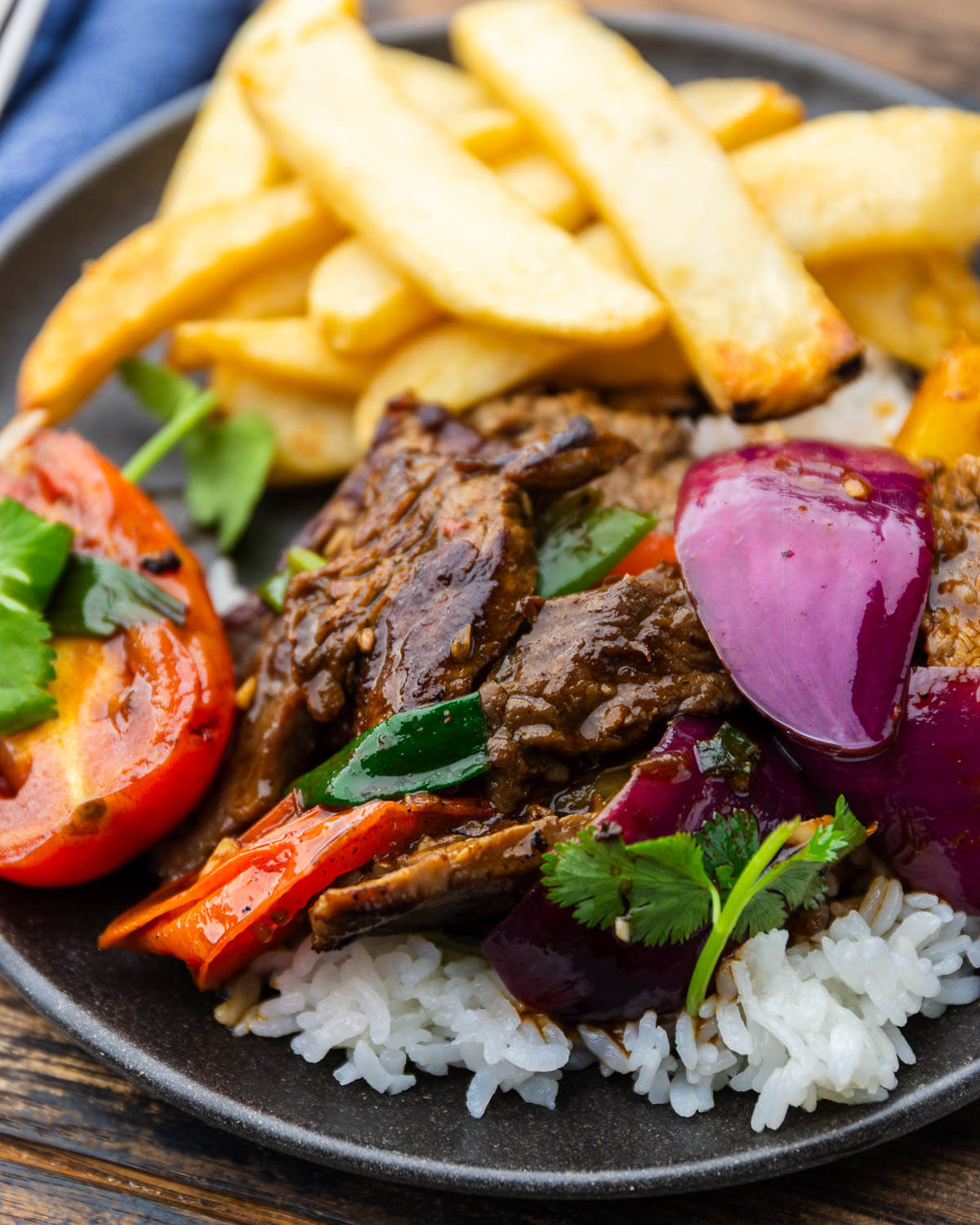
There are certain dishes that stop you mid-bite and make you think, where has this been all my life? Peruvian Lomo Saltado is exactly that kind of recipe. It’s a dish that defies easy categorization — part Chinese stir-fry, part South American soul food — and it is absolutely electric on the plate. Strips of tender marinated beef hit a screaming-hot wok alongside juicy tomatoes, sweet red onions, and golden french fries, all unified by a deeply savory soy-and-vinegar sauce that somehow tastes like it has been simmering for hours, even though the whole thing comes together in under twenty minutes of actual cooking time. It’s the kind of meal that earns a permanent spot in your weeknight rotation after the very first time you make it.
Lomo Saltado is one of the crown jewels of chifa cuisine — the beloved Peruvian-Chinese culinary fusion that emerged in the late 19th century when Chinese immigrants arrived in Peru and began blending their wok techniques and soy-forward flavors with local Andean ingredients. The result is a dish that is uniquely, proudly Peruvian, served in everything from humble huariques (hole-in-the-wall lunch spots) to celebrated Lima restaurants. What makes it so relevant to how we eat today is that beneath all that bold, unapologetic flavor, it is actually a beautifully balanced meal. You get quality protein, an abundance of vegetables, and a satisfying complexity that leaves you genuinely full and nourished — not weighed down.
At Eating Happiness, we are all about food that does double duty: meals that are deeply pleasurable to eat and genuinely good for your body. Peruvian Lomo Saltado fits that philosophy perfectly. Yes, it has french fries in it — and we are not apologizing for that, because in this context, they are absolutely a worth-it moment. But the real story of this dish is lean beef packed with iron and protein, a rainbow of antioxidant-rich vegetables, and a sauce built from clean, purposeful ingredients. This is the kind of dinner that makes healthy eating feel like the most exciting thing you could possibly do on a Tuesday night.
Why You’ll Love This Recipe
- One-pan wonder (almost): The stir-fry itself comes together in a single skillet or wok in under 20 minutes, making cleanup genuinely manageable on a weeknight.
- Protein-packed and vegetable-forward: Lean sirloin delivers serious iron and muscle-supporting protein, while tomatoes, onions, and peppers add vitamins, antioxidants, and fiber.
- Crowd-pleasing and family-friendly: The flavors are bold but not aggressively spicy, making this a dish that kids and adults alike tend to devour enthusiastically.
- Authentic flavor from clean ingredients: No mystery packets or processed sauces here — just soy sauce, red wine vinegar, garlic, and a handful of pantry staples that you likely already have.
- A genuinely unique weeknight dinner: If you are stuck in a dinner rut, Lomo Saltado is the reset your meal plan needs. It is exciting, fast, and completely different from everything else in your regular rotation.
- Naturally gluten-free adaptable: Swap in tamari or coconut aminos for the soy sauce and this dish is fully gluten-free without any sacrifice in flavor.
Key Ingredients
The backbone of any great Peruvian Lomo Saltado is the beef, and quality matters here. Beef sirloin is the traditional and ideal cut — it is lean enough to cook quickly at high heat without becoming tough or fatty, yet marbled just enough to stay juicy and flavorful when it hits the hot wok. Slicing it thin against the grain is non-negotiable; this is what gives you those tender, melt-in-your-mouth strips rather than chewy, laborious bites. The beef gets a quick marinade in soy sauce, which does two essential jobs simultaneously: it seasons the meat deeply and provides the umami-rich, slightly sweet backbone that makes the sauce so addictive. For a cleaner, lower-sodium option, tamari or coconut aminos work beautifully in its place.
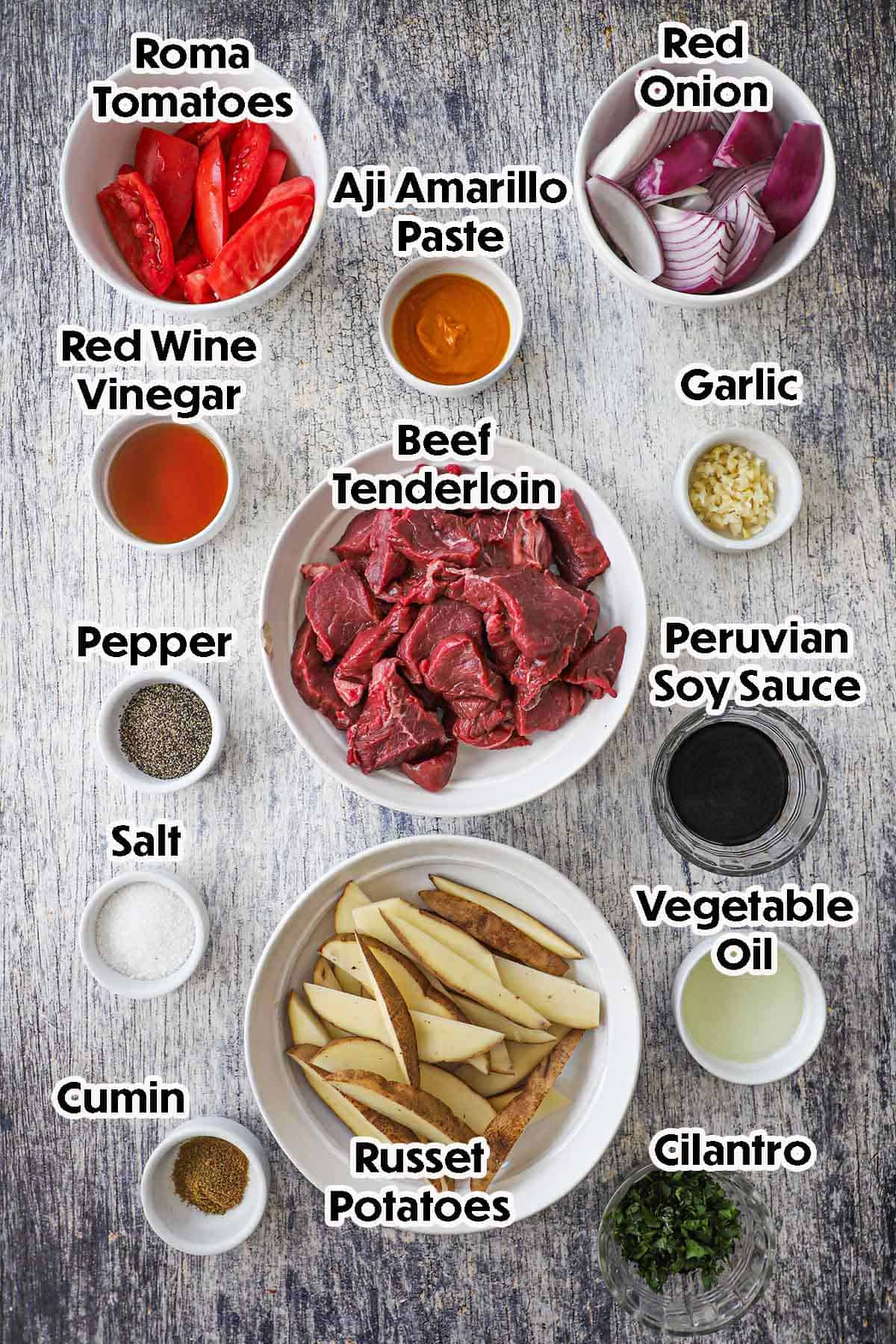
The vegetables in this dish are not supporting actors — they are co-stars. Roma tomatoes are the traditional choice because they are firm enough to hold their shape in a hot wok while still releasing their juice into the sauce at the last moment, creating that signature slightly saucy, slightly caramelized coating that clings to every piece of beef. Red onion adds a gentle sharpness that softens and sweetens as it cooks, contributing both color and a natural sweetness that balances the salty soy sauce beautifully. Aji amarillo paste — a golden Peruvian chili paste — is the ingredient that truly sets this dish apart from any other beef stir-fry you have ever made. It has a fruity, medium heat that is warming rather than punishing, and it gives the sauce a depth and character that is impossible to replicate with substitutes. Look for it at Latin grocery stores or order it online; it is worth seeking out. Finally, a generous handful of fresh cilantro stirred in at the very end brings brightness, freshness, and a herbal lift that ties everything together.
Pro Tips & Variations
Get your pan screaming hot. This is the single most important technique tip for Lomo Saltado. A properly hot wok or cast iron skillet is what gives you that characteristic wok hei — the slightly smoky, charred flavor that you cannot achieve in a lukewarm pan. Let your pan heat for at least two full minutes before adding oil, and cook the beef in a single layer without crowding it. If you are cooking for a crowd, do it in two batches rather than piling everything in at once.
Don’t skip the resting step for the beef. After your marinade, pat the beef strips lightly with a paper towel before they hit the pan. Excess moisture is the enemy of a good sear — it steams the meat rather than browning it, and you lose all that beautiful caramelization.
Fries: bake, air-fry, or buy. Traditional Lomo Saltado uses french fries that are cooked separately and tossed in at the very end. You can absolutely use frozen fries (baked or air-fried until crispy) for a weeknight shortcut, or make your own. The key is adding them at the very last moment so they stay crispy rather than going soggy in the sauce. If you love crispy components in bowls, you might also enjoy our Crispy Rice Salad — The Crunchy, Fresh Bowl You’ll Make on Repeat for another satisfying textural experience.
Serve it two ways. In Peru, Lomo Saltado is traditionally served with both white rice and french fries — a glorious, carb-forward presentation that is completely wonderful for a celebratory weekend dinner. For a lighter weeknight version, serve it over cauliflower rice or simply double the vegetables and skip the starch altogether. The stir-fry is so flavorful it needs no carrier to be completely satisfying.
Make it chicken or tofu. While beef sirloin is the classic, this dish works wonderfully with thinly sliced chicken breast or extra-firm tofu (pressed well and cubed). The marinade and sauce are so robust that the protein choice becomes almost secondary to the overall experience. For another protein-forward dinner idea, check out our Million Dollar Chicken Casserole for a completely different but equally satisfying option.
Balance the heat to your taste. Aji amarillo paste has a moderate, fruity heat. Start with one tablespoon if you are heat-sensitive and build from there. If you cannot find aji amarillo, a combination of one teaspoon of turmeric (for color) and half a teaspoon of cayenne (for heat) is an imperfect but workable substitute that at least gestures toward the dish’s character. For a deep dive into the history and technique of this dish, Serious Eats has an excellent exploration of chifa cuisine and the science behind wok cooking that is absolutely worth reading if you want to geek out on the details. And if you are looking for inspiration for rounding out your global cooking repertoire, Bon Appétit consistently publishes beautiful explorations of South American cuisine that pair wonderfully with this kind of cooking journey.
Nutritional Highlights
Peruvian Lomo Saltado is a genuinely nourishing meal hiding beneath its bold, indulgent personality. Beef sirloin is one of the leanest cuts of red meat available, delivering a powerful dose of complete protein, iron (critical for energy and immune function), zinc, and B vitamins — particularly B12, which supports neurological health and is harder to get from plant sources alone. The tomatoes contribute lycopene, an antioxidant associated with heart health and reduced inflammation, especially when briefly cooked. Red onions are rich in quercetin, a powerful flavonoid with anti-inflammatory properties. Even the aji amarillo pepper brings capsaicin, which research has linked to improved metabolism and cardiovascular support. The soy sauce does add sodium, which is worth noting for those monitoring salt intake — using a reduced-sodium tamari or coconut aminos is a simple swap that cuts sodium significantly without altering the dish’s character. A single serving of this Lomo Saltado (served with rice) provides roughly 420 calories and over 35 grams of protein, making it a genuinely filling, muscle-supporting meal that earns its place in a health-conscious kitchen. If you love fresh, vegetable-forward sides that would complement this dish beautifully, our Cucumber Tomato Salad — Light, Vinegary Summer Side You’ll Make All Season would be a bright, refreshing counterpart to the bold flavors of the stir-fry.
Frequently Asked Questions
Can I make Peruvian Lomo Saltado ahead of time?
Lomo Saltado is genuinely at its very best served fresh from the wok — the textures, especially the crispy fries and the just-softened vegetables, are part of what makes it so special. That said, the beef can absolutely be marinated up to 24 hours in advance and kept covered in the refrigerator, which actually deepens the flavor beautifully. You can also pre-slice all your vegetables and have your sauce mixed and ready so that when you are ready to cook, the whole stir-fry comes together in about 15 minutes. If you do have leftovers, reheat them in a hot skillet rather than a microwave to preserve as much of the texture as possible, and consider adding a fresh handful of cilantro after reheating to brighten everything back up.
What can I substitute for aji amarillo paste?
Aji amarillo paste is genuinely the soul of authentic Peruvian Lomo Saltado, and we strongly encourage you to seek it out at a Latin grocery store or online before defaulting to substitutes — it is increasingly easy to find and the flavor difference is significant. That said, if you truly cannot source it, you have a few options. A combination of one teaspoon of mild yellow curry paste and a pinch of cayenne gets you somewhere close in terms of color and fruity heat. Some cooks use a small amount of habanero or scotch bonnet pepper blended with a bit of turmeric for color, though the flavor profile will be noticeably different. If heat is a concern, you can reduce the quantity of any substitute and simply lean harder into the other aromatics — garlic, soy sauce, and red wine vinegar carry this dish a long way even without the pepper component at full strength.
How do I store and reheat leftovers?
Store leftover Lomo Saltado in an airtight container in the refrigerator for up to three days. Keep the fries separate from the beef and vegetable mixture if possible — this prevents them from becoming completely soggy overnight. When reheating, use a hot skillet or wok over medium-high heat with just a tiny splash of water or beef broth to loosen the sauce, and cook for 3 to 4 minutes until everything is heated through. The fries are honestly best re-crisped in an air fryer for 3 minutes at 375°F before being tossed back in. This dish does not freeze especially well due to the texture-sensitive nature of the tomatoes and potatoes, so plan to enjoy it within a few days of cooking for the best experience.
Bring a Little Lima to Your Kitchen
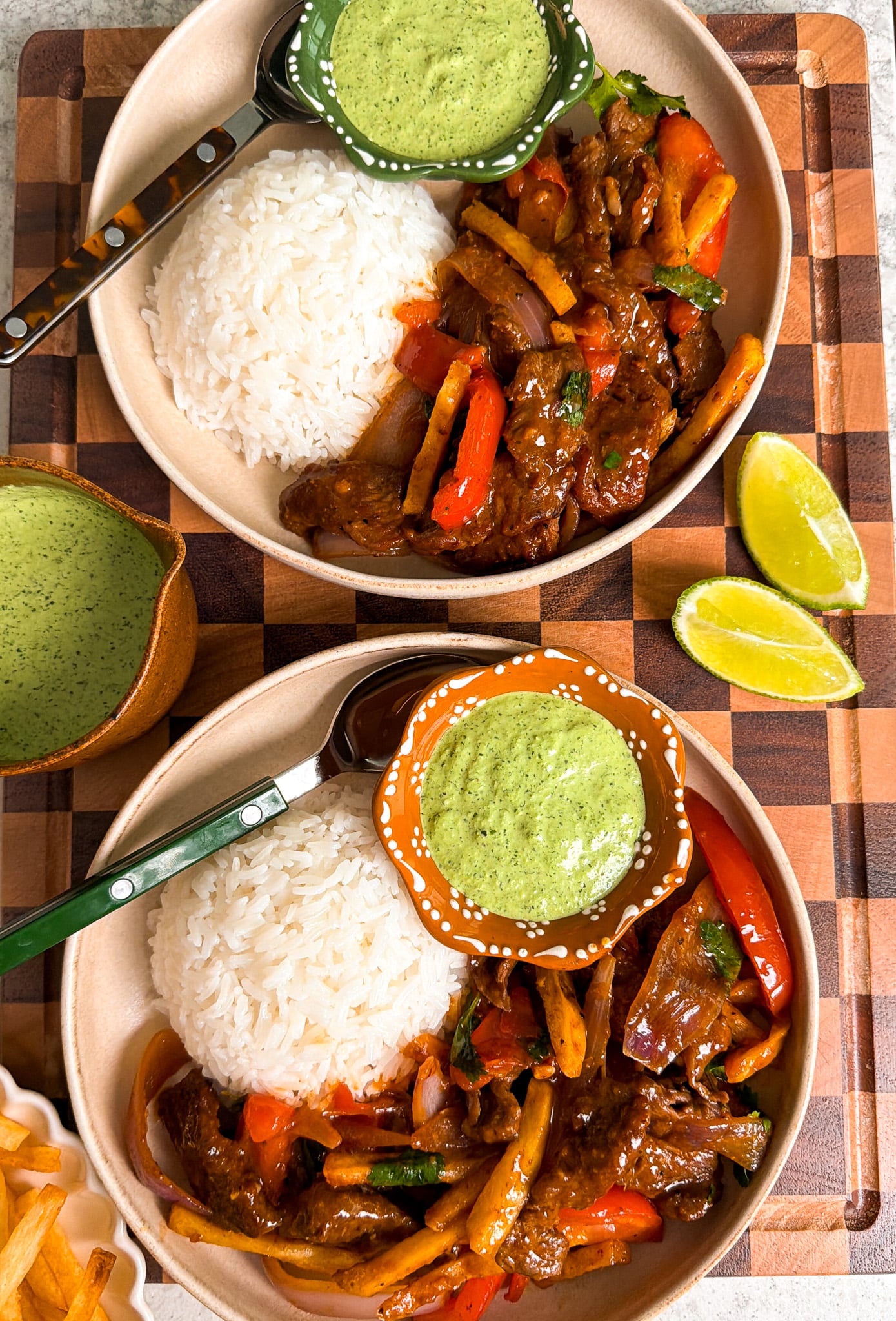
Peruvian Lomo Saltado is one of those rare recipes that delivers maximum reward for the effort invested — it is fast, it is deeply flavorful, it is nourishing, and it will almost certainly become a household favorite from the very first time you make it. Whether you are cooking it for a weeknight dinner, a casual dinner party, or simply because you need something exciting and different after a long week, this dish delivers on every single front. We hope it brings as much joy and satisfaction to your table as it has to ours.
If you make this Peruvian Lomo Saltado, we would absolutely love to hear how it turned out! Leave a comment below, rate the recipe, and share a photo on Instagram or Pinterest — tag us so we can see your beautiful bowls. Save this recipe now so you always have it when the craving strikes, because trust us, it will.
Find the complete recipe card below ↓
Peruvian Lomo Saltado
A bold and nourishing Peruvian-Chinese stir-fry featuring tender marinated beef sirloin, juicy tomatoes, red onion, and crispy french fries in a deeply savory soy-and-vinegar sauce. Ready in 45 minutes and packed with protein and vibrant vegetables.
Ingredients
- 1.5 lbs beef sirloin (sliced thin against the grain into strips)
- 3 tablespoons soy sauce (or tamari for gluten-free)
- 1 tablespoon red wine vinegar
- 4 cloves garlic (minced)
- 1 teaspoon ground cumin
- 0.5 teaspoon black pepper (freshly ground)
- 2 tablespoons vegetable oil (or avocado oil, divided)
- 1 large red onion (sliced into thick wedges)
- 3 medium roma tomatoes (cut into thick wedges, seeds mostly removed)
- 1 medium yellow bell pepper (sliced into strips)
- 1.5 tablespoons aji amarillo paste (found at Latin grocery stores or online)
- 2 tablespoons soy sauce (added to the stir-fry sauce)
- 1 tablespoon red wine vinegar
- 0.5 cup fresh cilantro (roughly chopped, for finishing)
- 2 green onions scallions (sliced on the bias, for garnish)
- 3 cups frozen french fries (baked or air-fried until crispy according to package directions)
- 2 cups cooked white rice (or cauliflower rice for a lower-carb option)
Instructions
- In a medium bowl, combine the sliced beef sirloin with 3 tablespoons soy sauce, 1 tablespoon red wine vinegar, minced garlic, ground cumin, and black pepper. Toss well to coat. Let marinate at room temperature for 15 minutes, or cover and refrigerate for up to 24 hours for deeper flavor.
- When ready to cook, pat the beef strips lightly with a paper towel to remove excess marinade moisture. This step is key to achieving a good sear rather than steaming the meat.
- Bake or air-fry the frozen french fries according to package directions until golden and very crispy. Set aside. Do not add them to the stir-fry until the very last moment to preserve their crunch.
- Heat a large wok or cast iron skillet over high heat for 2 full minutes until very hot. Add 1 tablespoon of oil and swirl to coat the pan.
- Add the beef strips in a single layer — work in two batches if needed to avoid crowding. Sear without moving for 1-2 minutes until a deep brown crust forms, then flip and cook for another 1 minute. The beef should be just cooked through. Transfer to a plate and set aside.
- Return the wok to high heat and add the remaining 1 tablespoon of oil. Add the red onion wedges and bell pepper strips. Stir-fry for 2-3 minutes until they begin to soften at the edges but still have some texture and bite.
- Add the aji amarillo paste and stir to coat the vegetables, cooking for 30 seconds until fragrant.
- Add the tomato wedges and stir-fry for 1-2 minutes, just long enough for them to begin releasing their juices without completely falling apart.
- Return the seared beef and any accumulated juices to the wok. Add the remaining 2 tablespoons of soy sauce and 1 tablespoon of red wine vinegar. Toss everything together vigorously over high heat for 1-2 minutes until the sauce coats everything evenly and is slightly reduced.
- Remove from heat. Add the crispy french fries and roughly chopped fresh cilantro. Toss gently to combine — work quickly so the fries retain their crispiness.
- Serve immediately over white rice, garnished with sliced green onions and additional cilantro if desired.
