

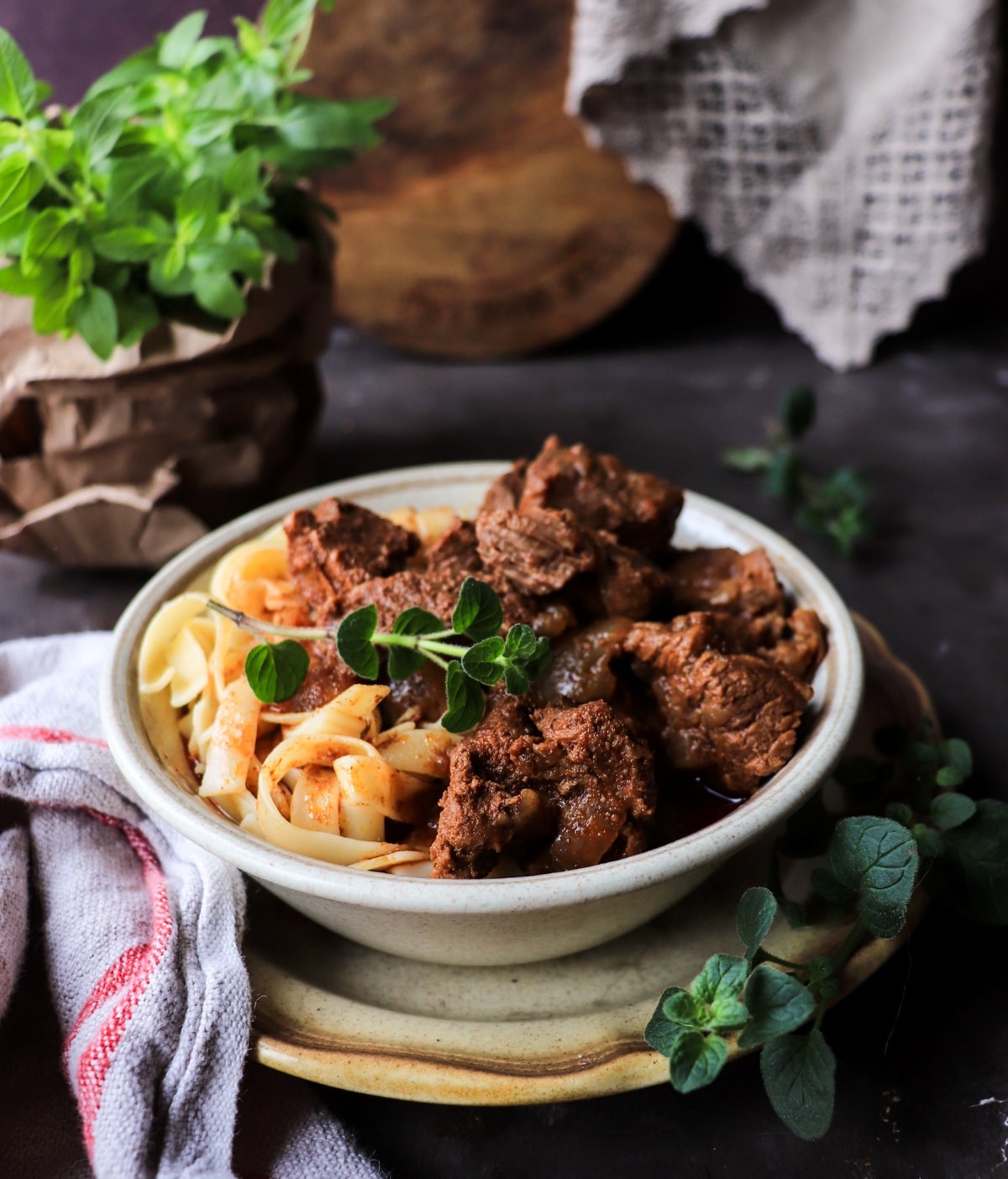
There are certain dishes that feel less like a recipe and more like a memory — something passed down through generations, cooked low and slow on a winter afternoon, filling the whole house with a warmth that goes far beyond the stovetop. Hungarian Goulash is exactly that kind of dish. Rooted in the traditions of Magyar shepherds who slow-cooked beef with onions and paprika over open fires centuries ago, this stew has traveled the world and earned its place at tables in every corner of the globe. And once you make it yourself, you’ll understand why it’s never gone out of style.
At Eating Happiness, we believe that truly nourishing food doesn’t have to mean bland or boring. Hungarian Goulash is the perfect example: it’s built on clean, wholesome ingredients — quality beef, sweet onions, garlic, vibrant paprika, and a handful of vegetables — slow-simmered into something that feels indulgent but is actually deeply balanced. It’s a worth-it meal in every sense. The kind of dinner you make on a Sunday and feel good about eating all week. Rich, satisfying, and made with nothing artificial — just real food doing what real food does best.
Whether you’re new to Eastern European cooking or you grew up eating goulash at your grandmother’s table, this recipe is going to become a staple. We’ve kept the method approachable and the ingredients accessible, while honoring the soul of the dish. This is Hungarian Goulash the way it was meant to be made: generous, paprika-forward, and absolutely soul-satisfying. Let’s get into it.
Why You’ll Love This Recipe
- Deep, complex flavor from simple ingredients. The magic of Hungarian Goulash is that it transforms a short, clean ingredient list into something that tastes like it took all day — because it kind of does, in the best possible way.
- Genuinely nourishing. Lean beef provides high-quality protein and iron, the paprika is loaded with antioxidants, and the vegetables add fiber and micronutrients. This is comfort food with real nutritional value.
- Meal prep gold. Goulash is one of those rare dishes that gets even better on day two and three. Make a big batch and you’ve got lunches and dinners covered for days.
- Flexible and forgiving. Serve it over egg noodles, mashed potatoes, crusty bread, or rice. It adapts to whatever you have on hand and pleases even the pickiest eaters at the table.
- Freezer-friendly. This stew freezes beautifully, making it a smart addition to your healthy meal prep rotation — especially during cooler months when you want something warming ready to go.
Key Ingredients
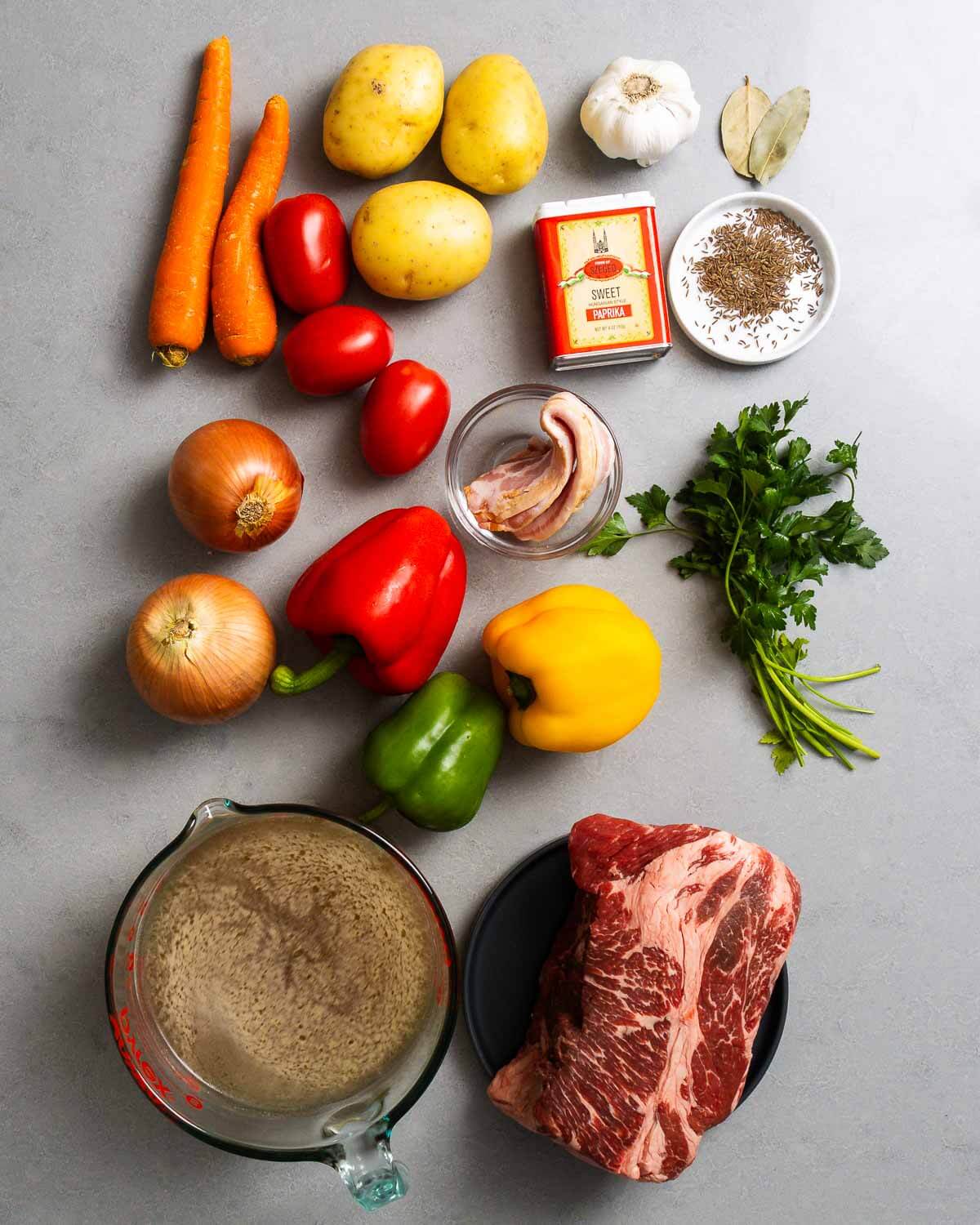
The heart of any great Hungarian Goulash is the beef, and choosing the right cut makes all the difference. We use beef chuck, cut into generous chunks, because it’s well-marbled enough to stay tender through the long braise without drying out. As it slow-cooks, the collagen breaks down into the broth, giving the stew that signature silky, rich body you simply can’t achieve with leaner cuts. It’s also one of the more affordable beef options, which makes this recipe a genuine win for both your health and your grocery budget.
Next, and arguably the most important ingredient in the entire dish: Hungarian sweet paprika. This is non-negotiable. Standard grocery store paprika simply doesn’t have the same depth, fruitiness, or color. Authentic Hungarian paprika — the sweet variety, sometimes labeled édes — brings a warmth and complexity that is the defining characteristic of true goulash. If you can find it at a European import store or online, it’s absolutely worth seeking out. Serious Eats has a wonderful breakdown of paprika varieties that can help you choose the right one for this recipe.
The onions in goulash aren’t just background flavor — they’re structural. You’ll use a generous amount, and you’ll cook them down low and slow until they’re deeply softened and almost melting. This creates the base of the stew’s flavor and natural thickening. Don’t rush this step. Meanwhile, garlic adds its familiar savory punch, and tomato paste brings acidity and body, helping to balance the richness of the beef and depth of the paprika. Finally, a couple of bell peppers — green or red, or a mix of both — add subtle sweetness and a pop of color while contributing vitamin C and antioxidants to the pot. These aren’t fussy, exotic ingredients. They’re everyday staples working together in perfect harmony.
Pro Tips & Variations
Don’t skip blooming the paprika. One of the most important techniques in this recipe is adding the paprika directly to the hot oil or fat in the pan for 30–60 seconds before adding liquid. This brief step — called blooming — activates the fat-soluble flavor compounds in the paprika and dramatically deepens the color and flavor of the final dish. Watch the heat carefully during this step; paprika can burn quickly and turn bitter.
Low and slow is the law. Hungarian Goulash is not a dish to rush. The beef needs time to become truly tender, and the flavors need time to meld. Plan for at least 90 minutes of simmering on the stovetop, or transfer to a Dutch oven and braise in a 325°F oven for 2 hours. The longer, gentler approach produces a more cohesive, deeply flavored stew every time.
Sear your beef properly. Before braising, take the time to sear the beef chunks in batches over high heat until deeply browned on all sides. Don’t crowd the pan — crowding causes steaming rather than searing, and you’ll miss out on the Maillard reaction that adds enormous flavor. Those caramelized, golden-brown edges on the beef translate directly into a richer, more complex stew.
Add a splash of something acidic at the end. Just before serving, a small squeeze of lemon juice or a splash of red wine vinegar brightens the entire dish and makes all the flavors pop. It’s a small detail that makes a big difference.
Variations to try: For a lighter version, swap half the beef for mushrooms — cremini or portobello work beautifully and add an earthy umami depth that complements the paprika. For a creamier finish reminiscent of a German-style gulasch, stir in a generous dollop of full-fat sour cream at the very end, off the heat. If you’re craving another deeply comforting beef-based dinner, our Tater Tot Casserole is another reader-favorite that hits that same warm, satisfying note.
Serving ideas: The classic accompaniment in Hungary is nokedli — small egg dumplings similar to spätzle. But egg noodles, buttered mashed potatoes, or even a simple bowl of steamed rice all work wonderfully. For a lighter pairing, a crisp, vinegary side salad cuts through the richness beautifully. Our Cucumber Tomato Salad is a perfect accompaniment — bright, fresh, and exactly what this rich stew needs alongside it.
Make it ahead: This is one of the best make-ahead recipes you can have in your rotation. Cook it fully, let it cool, and refrigerate for up to 4 days. The flavor genuinely improves overnight as everything continues to meld together. It also freezes beautifully for up to 3 months. Food Network has great guidance on freezing stews and braises to maintain the best texture when reheating.
Nutritional Highlights
Hungarian Goulash earns its place on a health-focused table in ways that might surprise you. Beef chuck is a powerhouse of complete protein, providing all essential amino acids alongside significant amounts of iron, zinc, and B vitamins — particularly B12, which is critical for energy metabolism and neurological health. The star spice, Hungarian sweet paprika, is rich in carotenoids including beta-carotene and capsanthin, both of which function as antioxidants in the body, supporting immune function and reducing oxidative stress. The onions and bell peppers contribute quercetin, vitamin C, and dietary fiber, making this much more than just a meat stew. A generous serving clocks in at approximately 420 calories with a strong protein-to-fat ratio, keeping you full and fueled for hours. When served over egg noodles or potatoes, it becomes a genuinely complete, balanced meal. For those watching sodium, simply use low-sodium broth and adjust seasoning at the end — the paprika and aromatics carry so much flavor that you won’t miss the salt.
Frequently Asked Questions
What is the difference between Hungarian Goulash and American Goulash?
This is one of the most common questions we get, and it’s a great one. Authentic Hungarian Goulash — the kind we’re making here — is a slow-braised beef stew with a rich, paprika-forward broth. It’s typically served over noodles or dumplings as a soup-stew hybrid. American Goulash (sometimes called American Chop Suey) is quite a different dish: it’s made with ground beef and elbow macaroni cooked in a tomato-based sauce, closer to a pasta dish than a stew. Both are delicious comfort foods, but they share little more than the name. If you love American-style comfort pasta bakes, our Baked Ziti scratches that same itch beautifully.
Can I make Hungarian Goulash in a slow cooker or Instant Pot?
Absolutely, and both methods work wonderfully. For the slow cooker, sear your beef and sauté the onions and paprika on the stovetop first — this step adds crucial flavor that the slow cooker alone can’t replicate — then transfer everything to the slow cooker and cook on LOW for 7–8 hours or HIGH for 4–5 hours. For the Instant Pot, use the sauté function to build the base, then pressure cook on HIGH for 35 minutes with a natural pressure release of 15 minutes. The beef will be fall-apart tender and the flavors beautifully developed. If using an Instant Pot, you may want to reduce the liquid slightly, as pressure cooking doesn’t allow for evaporation the way stovetop braising does.
What paprika should I use, and can I substitute smoked paprika?
For the most authentic result, use genuine Hungarian sweet paprika, which has a distinctly fruity, mellow sweetness and a brilliant red color. It’s increasingly available in specialty food stores, international markets, and online. If you can only find standard sweet paprika, use it — it will still produce a delicious stew, just with a slightly flatter flavor profile. As for smoked paprika: you can substitute a portion of it (no more than one third of the total amount) for a subtle smokiness, but using it as a full replacement will push the dish in a Spanish direction rather than Hungarian. The smokiness can easily overpower the delicate, sweet depth that defines authentic Hungarian Goulash. A small amount of hot paprika or cayenne can be added alongside the sweet paprika if you prefer a little heat.
Final Thoughts
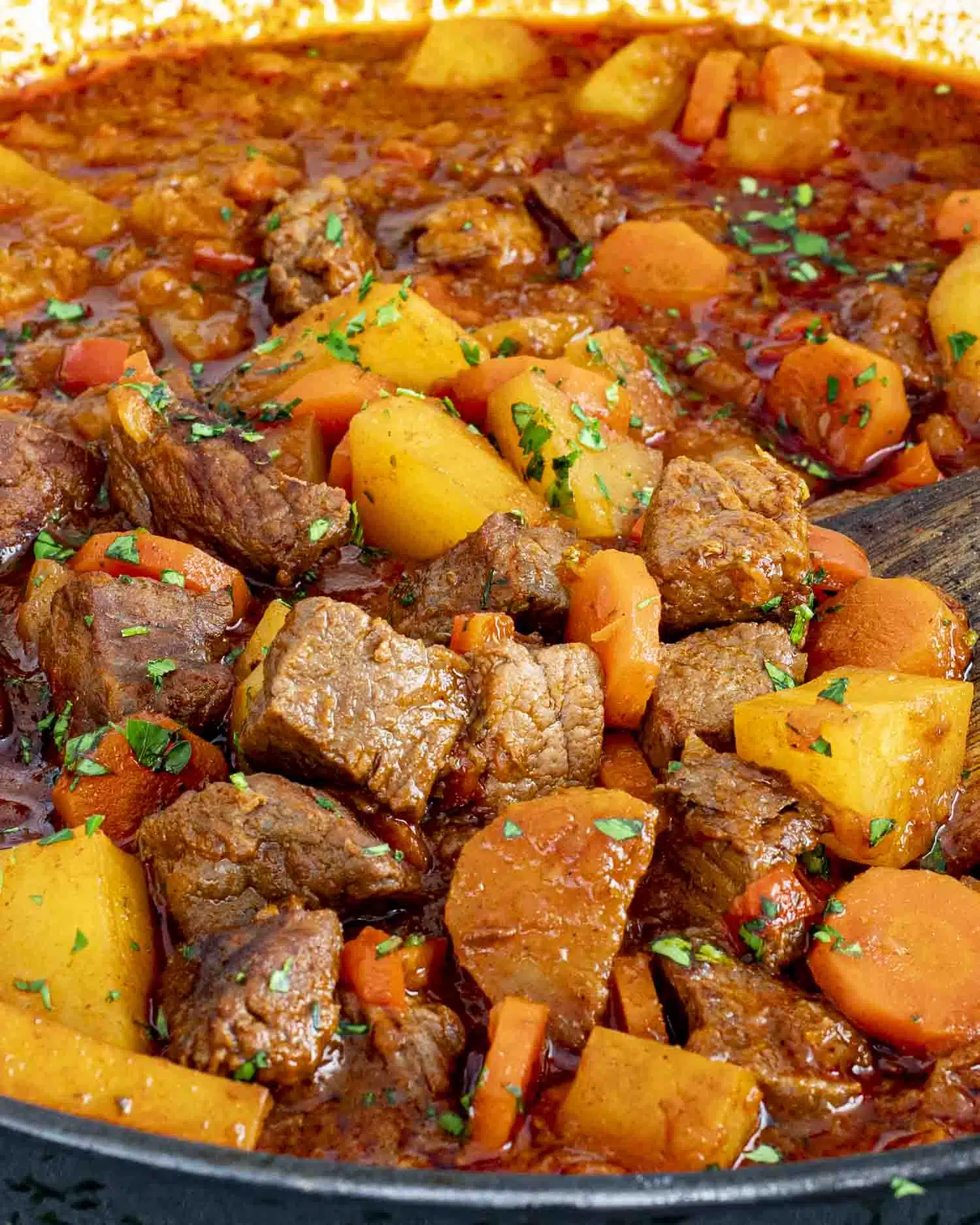
Hungarian Goulash is one of those recipes that reminds you why home cooking matters. It’s humble in its ingredients, patient in its process, and generous in its rewards. Every bowl is proof that nourishing food and deeply satisfying food are not mutually exclusive — they can be, and should be, one and the same. Whether you’re making it for a cozy family dinner, meal prepping for the week ahead, or bringing a pot to share with someone who needs a little comfort, this dish delivers in every way that counts.
We’d love to see your goulash! Share your photos in the comments below, tag us on Instagram, and save this recipe to your Pinterest boards so you can find it again on the next cold night when you need something warm and real. And if you make any delicious variations — a splash of red wine, a handful of mushrooms, a swirl of sour cream — tell us about it. This recipe is yours to make your own.
Find the complete recipe card below ↓
Hungarian Goulash
A deeply flavorful, slow-braised Hungarian Goulash made with tender beef chuck, sweet Hungarian paprika, and hearty vegetables. This classic stew is wholesome, satisfying, and even better the next day.
Ingredients
- 2.5 lbs beef chuck (cut into 1.5-inch cubes, excess fat trimmed)
- 2 tablespoons neutral oil or lard (such as avocado oil or rendered pork fat)
- 2 large yellow onions (diced)
- 4 cloves garlic (minced)
- 2 medium bell peppers (green or red, seeded and diced)
- 3 tablespoons Hungarian sweet paprika (authentic Hungarian preferred)
- 1 teaspoon hot paprika or cayenne pepper (optional, for heat)
- 2 tablespoons tomato paste
- 1 can (14.5 oz) diced tomatoes (or 2 fresh Roma tomatoes, chopped)
- 3 cups beef broth (low-sodium preferred)
- 2 medium Yukon Gold potatoes (peeled and cut into 1-inch chunks)
- 1 teaspoon caraway seeds (optional but traditional)
- 1.5 teaspoons kosher salt (plus more to taste)
- 0.5 teaspoon black pepper (freshly ground)
- 1 tablespoon lemon juice or red wine vinegar (added at the end to brighten)
- 2 tablespoons fresh flat-leaf parsley (chopped, for garnish)
- 12 oz egg noodles (cooked according to package directions)
- mashed potatoes (as an alternative to egg noodles)
- crusty bread (for soaking up the broth)
- 0.5 cup full-fat sour cream (optional, for a creamy finish — stir in at the end off heat)
Instructions
- Pat the beef chuck cubes completely dry with paper towels — this is essential for a good sear. Season generously on all sides with 1 teaspoon of the kosher salt and the black pepper.
- Heat the oil in a large Dutch oven or heavy-bottomed pot over medium-high heat until shimmering and very hot. Working in 2–3 batches, add the beef in a single layer without crowding the pan. Sear undisturbed for 3–4 minutes per side until deeply browned. Transfer to a plate and repeat with remaining beef. Set aside.
- Reduce heat to medium. Add a small drizzle of oil if the pan is dry, then add the diced onions. Cook, stirring occasionally, for 10–12 minutes until the onions are very soft, golden, and beginning to turn translucent. Do not rush this step — softened, caramelized onions are the flavor foundation of the stew.
- Add the minced garlic and diced bell peppers. Cook for 2 minutes, stirring frequently, until fragrant and slightly softened.
- Push the vegetables to the sides of the pot and add the sweet paprika (and hot paprika if using) to the center of the pan. Let it bloom in the residual heat and oil for 45–60 seconds, stirring constantly, until fragrant and darkened slightly. Be careful not to burn it. Then stir the paprika together with the vegetables.
- Add the tomato paste and stir it into the vegetable mixture. Cook for 1–2 minutes until the paste darkens slightly and loses its raw smell.
- Return the seared beef and any accumulated juices on the plate back to the pot. Add the diced tomatoes, beef broth, caraway seeds (if using), and remaining half teaspoon of salt. Stir everything together, scraping up any browned bits from the bottom of the pot.
- Bring the liquid to a gentle boil, then reduce heat to low. Cover the pot with a lid slightly ajar and simmer for 60 minutes, stirring occasionally.
- After 60 minutes, add the diced potatoes. Continue to simmer, partially covered, for another 30–35 minutes until the potatoes are tender and the beef is completely fork-tender and nearly falling apart.
- Taste and adjust seasoning with additional salt and pepper as needed. Stir in the lemon juice or red wine vinegar — this brightens all the flavors and balances the richness.
- If using sour cream, remove the pot from heat and stir in the sour cream until fully incorporated. Do not boil the stew after adding sour cream or it may curdle.
- Ladle the goulash into bowls over cooked egg noodles or mashed potatoes. Garnish generously with fresh chopped parsley and serve immediately. Offer extra sour cream on the side if desired.
