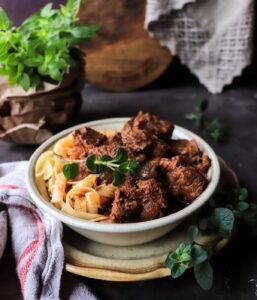
Hungarian Goulash
Ingredients
- 2.5 lbs beef chuck cut into 1.5-inch cubes, excess fat trimmed
- 2 tablespoons neutral oil or lard such as avocado oil or rendered pork fat
- 2 large yellow onions diced
- 4 cloves garlic minced
- 2 medium bell peppers green or red, seeded and diced
- 3 tablespoons Hungarian sweet paprika authentic Hungarian preferred
- 1 teaspoon hot paprika or cayenne pepper optional, for heat
- 2 tablespoons tomato paste
- 1 can (14.5 oz) diced tomatoes or 2 fresh Roma tomatoes, chopped
- 3 cups beef broth low-sodium preferred
- 2 medium Yukon Gold potatoes peeled and cut into 1-inch chunks
- 1 teaspoon caraway seeds optional but traditional
- 1.5 teaspoons kosher salt plus more to taste
- 0.5 teaspoon black pepper freshly ground
- 1 tablespoon lemon juice or red wine vinegar added at the end to brighten
- 2 tablespoons fresh flat-leaf parsley chopped, for garnish
- 12 oz egg noodles cooked according to package directions
- mashed potatoes (as an alternative to egg noodles)
- crusty bread (for soaking up the broth)
- 0.5 cup full-fat sour cream optional, for a creamy finish — stir in at the end off heat

Instructions
- Pat the beef chuck cubes completely dry with paper towels — this is essential for a good sear. Season generously on all sides with 1 teaspoon of the kosher salt and the black pepper.
- Heat the oil in a large Dutch oven or heavy-bottomed pot over medium-high heat until shimmering and very hot. Working in 2–3 batches, add the beef in a single layer without crowding the pan. Sear undisturbed for 3–4 minutes per side until deeply browned. Transfer to a plate and repeat with remaining beef. Set aside.
- Reduce heat to medium. Add a small drizzle of oil if the pan is dry, then add the diced onions. Cook, stirring occasionally, for 10–12 minutes until the onions are very soft, golden, and beginning to turn translucent. Do not rush this step — softened, caramelized onions are the flavor foundation of the stew.
- Add the minced garlic and diced bell peppers. Cook for 2 minutes, stirring frequently, until fragrant and slightly softened.
- Push the vegetables to the sides of the pot and add the sweet paprika (and hot paprika if using) to the center of the pan. Let it bloom in the residual heat and oil for 45–60 seconds, stirring constantly, until fragrant and darkened slightly. Be careful not to burn it. Then stir the paprika together with the vegetables.
- Add the tomato paste and stir it into the vegetable mixture. Cook for 1–2 minutes until the paste darkens slightly and loses its raw smell.
- Return the seared beef and any accumulated juices on the plate back to the pot. Add the diced tomatoes, beef broth, caraway seeds (if using), and remaining half teaspoon of salt. Stir everything together, scraping up any browned bits from the bottom of the pot.
- Bring the liquid to a gentle boil, then reduce heat to low. Cover the pot with a lid slightly ajar and simmer for 60 minutes, stirring occasionally.
- After 60 minutes, add the diced potatoes. Continue to simmer, partially covered, for another 30–35 minutes until the potatoes are tender and the beef is completely fork-tender and nearly falling apart.
- Taste and adjust seasoning with additional salt and pepper as needed. Stir in the lemon juice or red wine vinegar — this brightens all the flavors and balances the richness.
- If using sour cream, remove the pot from heat and stir in the sour cream until fully incorporated. Do not boil the stew after adding sour cream or it may curdle.
- Ladle the goulash into bowls over cooked egg noodles or mashed potatoes. Garnish generously with fresh chopped parsley and serve immediately. Offer extra sour cream on the side if desired.
Notes
Make Ahead: Goulash tastes even better the next day as the flavors deepen overnight. Cool completely and refrigerate in an airtight container for up to 4 days. Freezing: Freeze in portion-sized containers for up to 3 months. Thaw overnight in the refrigerator and reheat gently over low heat with a splash of beef broth to loosen. Paprika Tip: Blooming the paprika in hot fat for 45–60 seconds before adding liquid is essential — it activates fat-soluble flavor compounds and dramatically improves color and depth. Slow Cooker: Sear beef and sauté onions and paprika on the stovetop first, then transfer to slow cooker. Cook on LOW 7–8 hours or HIGH 4–5 hours. Add potatoes for the last 2 hours on LOW. Instant Pot: Use sauté function for all stovetop steps. Pressure cook on HIGH for 35 minutes with a 15-minute natural pressure release. Reduce broth to 2 cups to account for lack of evaporation.