

When a Meal Becomes a Moment
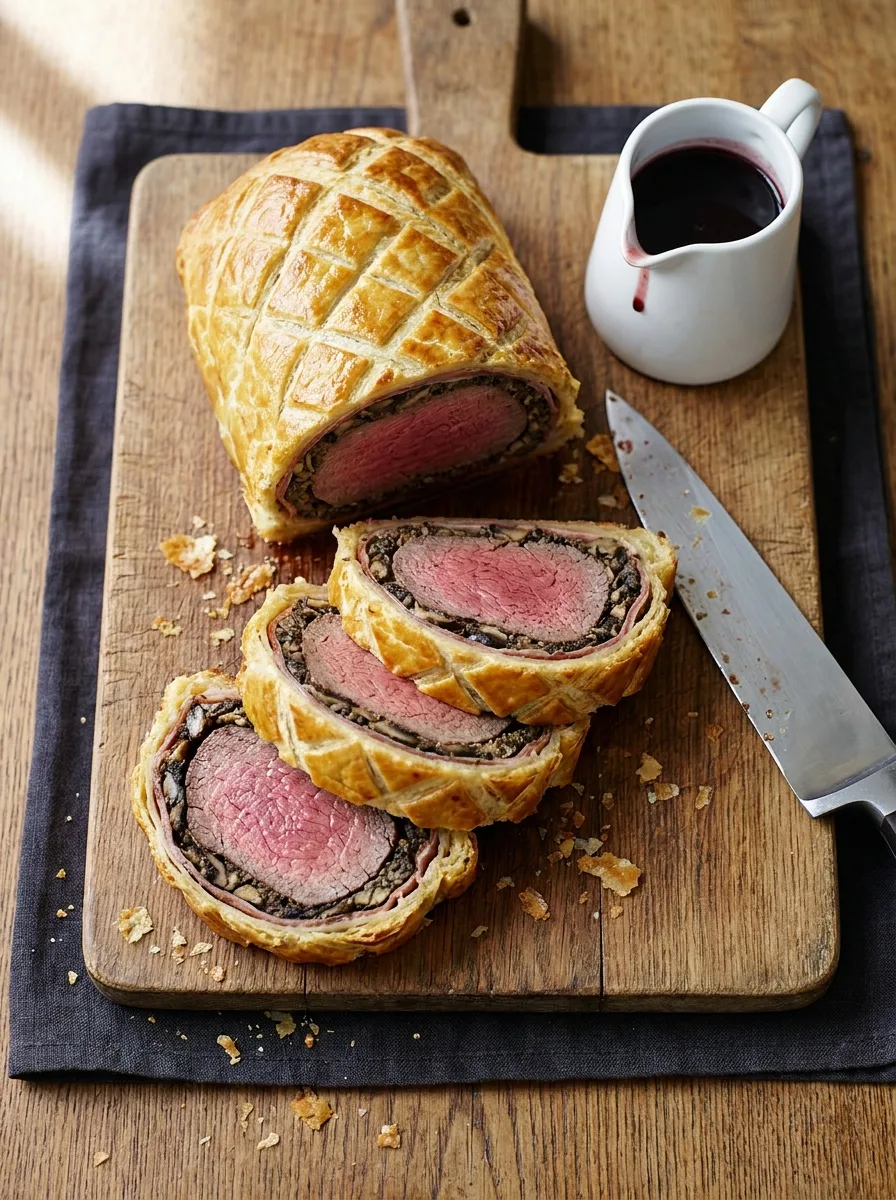
There are recipes you cook on a Tuesday, and then there are recipes that mark a moment in time. British Beef Wellington belongs firmly in the second category. This iconic dish — a gloriously seared beef tenderloin wrapped in a savory mushroom paste and encased in golden, flaky puff pastry — is the kind of centerpiece that makes guests go quiet when it lands on the table. The silence lasts exactly three seconds before the compliments start rolling in, and they don’t stop.
At Eating Happiness, we believe in eating well in both senses of the phrase: food that nourishes your body and food that genuinely brings joy. Beef Wellington is one of those rare worth-it indulgences that earns its place at the table. The ingredients are real, clean, and purposeful — quality beef, earthy mushrooms, aromatic herbs, and buttery pastry. Nothing artificial, nothing processed beyond the pantry staples you already know and trust. When you invest in a beautiful cut of beef and take a little extra time on a weekend or holiday dinner, this is the reward you get.
Whether you’re celebrating a birthday, hosting a dinner party, or simply deciding that an ordinary Saturday deserves something extraordinary, this British Beef Wellington recipe will walk you through every step with confidence. We’ve tested it carefully, gathered the best techniques from seasoned chefs, and translated them into a process that’s absolutely achievable at home — even if this is your first Wellington. Let’s make something memorable.
Why You’ll Love This Recipe
- Real, quality ingredients: This dish is built on honest, wholesome components — premium beef, fresh mushrooms, whole-grain mustard, and herbs. No shortcuts that compromise nutrition or flavor.
- Impressive but achievable: The technique is methodical, not complicated. Follow the steps and you’ll pull a restaurant-quality Wellington from your home oven.
- Naturally balanced: The high-protein beef center paired with the umami-rich mushroom duxelles means every bite is satisfying and deeply flavored without relying on heavy sauces or cream-laden additions.
- Make-ahead friendly: You can assemble the entire Wellington the night before, refrigerate it, and simply bake it the next day — a true gift for holiday meal planning.
- A worthy celebration dish: This is the recipe you’ll pull out year after year. It becomes part of your family’s story.
Key Ingredients
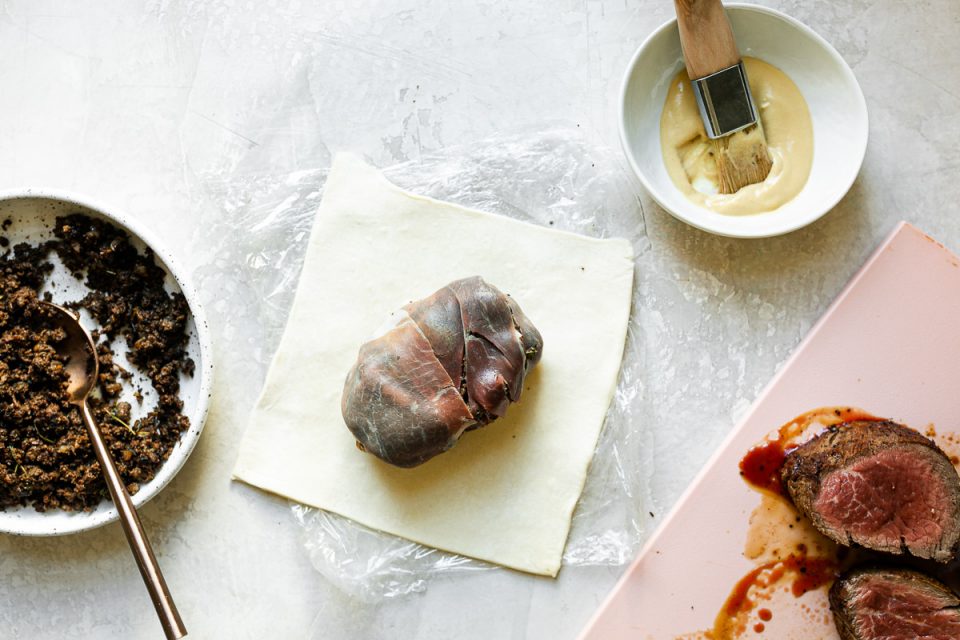
The hero of this dish is, without question, a center-cut beef tenderloin — the most tender, lean cut on the animal. It’s naturally lower in fat compared to a ribeye but delivers extraordinary tenderness and a clean, beefy flavor that holds up beautifully inside the pastry wrapping. Choosing a good quality cut here is the single most important decision you’ll make for this recipe. Next comes the mushroom duxelles, a finely chopped mixture of cremini or button mushrooms cooked down with shallots, garlic, and thyme until nearly all the moisture has evaporated. This paste is what prevents the pastry from getting soggy and adds a deep, earthy, almost meaty layer of umami that elevates the entire dish. Whole-grain or Dijon mustard acts as both a flavor bridge and a protective coating applied directly to the seared beef — it subtly seasons the meat, helps everything adhere, and adds just a gentle sharpness that cuts through the richness of the pastry. Speaking of pastry, high-quality all-butter puff pastry (store-bought is perfectly acceptable and what many professional kitchens use) provides that signature shatteringly crisp, golden exterior. Finally, thin slices of prosciutto di Parma are layered between the mushroom duxelles and the beef, adding a savory, slightly salty note while also creating a moisture barrier that keeps the pastry crisp from the inside out. These five elements work in perfect harmony — there’s a reason this dish has stood the test of culinary time.
Pro Tips & Variations
Pro Tips for Success
- Dry your beef thoroughly: Pat the tenderloin completely dry before searing. Moisture is the enemy of a good crust and will steam rather than sear the meat, leaving you with a grey exterior instead of that beautiful mahogany crust.
- Chill between every step: This is the most important technique tip. After searing, chill the beef. After wrapping in prosciutto and duxelles, chill the roll. After wrapping in pastry, chill again before baking. Cold temperatures keep everything firm, tight, and in shape — and prevent the pastry from melting before it can puff.
- Cook the mushrooms until completely dry: Wet duxelles will make your pastry soggy. Cook the mushroom mixture on medium-high heat, stirring frequently, until the pan looks nearly dry and the mushrooms have reduced dramatically — this usually takes 12 to 15 minutes.
- Use a meat thermometer: The only way to nail your desired doneness is with an instant-read thermometer. Pull the Wellington at 120°F for rare, 125–130°F for medium-rare (the sweet spot for most diners), and 135°F for medium. The temperature will rise a few degrees as it rests.
- Let it rest: After pulling from the oven, rest the Wellington for at least 10 minutes before slicing. This allows the juices to redistribute so your slices stay rosy and moist rather than bleeding out onto the cutting board.
- Score the pastry: Use the back of a knife to create a light decorative scoring pattern on top of the Wellington before baking. It looks beautiful and helps steam escape so the pastry stays crisp.
Variations Worth Trying
- Individual Wellingtons: Divide the tenderloin into individual portions (about 6 oz each), wrap each one separately in duxelles and pastry, and bake for a shorter time. Perfect for plated dinner parties and much easier to cook to individual preferences. Serious Eats has a wonderful breakdown of the technique for individual portions that is worth bookmarking.
- Vegetarian Wellington: Replace the beef with a thick roasted portobello mushroom cap or a butternut squash fillet, and use a lentil and walnut filling in place of the duxelles. It’s a stunning plant-based centerpiece with real nutritional weight.
- Add a layer of pâté: The classic French preparation includes a layer of chicken liver pâté between the duxelles and the prosciutto. It adds a richer, more complex flavor if you want to lean into the old-school British-French tradition.
- Swap the prosciutto: If you prefer a slightly smokier note, thinly sliced Serrano ham or even good-quality bacon that has been briefly par-cooked and blotted dry can work beautifully.
If you love putting effort into a showstopping beef-centered dinner, you might also enjoy our Tater Tot Casserole for a more weeknight-friendly ground beef option that delivers comfort food satisfaction with far less fuss.
What to Serve with Beef Wellington
British Beef Wellington is rich and substantial, so the best sides lean toward brightness, acidity, and freshness to balance the pastry’s butteriness and the beef’s depth. Roasted asparagus, creamy mashed potatoes, or a simple green bean almondine are all classic companions. For a lighter, acidic counterpoint that cuts through the richness beautifully, our Cucumber Tomato Salad makes a surprisingly elegant side — the bright vinegary notes cleanse the palate between bites of that rich pastry-wrapped beef. A red wine reduction or classic béarnaise sauce served on the side rounds out the plate for a truly restaurant-level dining experience at home.
Nutritional Highlights
While British Beef Wellington is undeniably an indulgent dish, it earns its place at a health-conscious table when you look at what’s actually in it. Beef tenderloin is one of the leanest cuts of beef available, delivering an impressive amount of high-quality, complete protein alongside essential nutrients like iron, zinc, B12, and selenium — all critical for energy metabolism, immune function, and muscle health. The mushroom duxelles are a genuine nutritional powerhouse: mushrooms are rich in antioxidants, B vitamins, and ergothioneine, a rare amino acid with anti-inflammatory properties. The prosciutto adds sodium, so if you’re watching salt intake, use it sparingly or opt for a lower-sodium alternative. The puff pastry contributes the majority of the carbohydrates and saturated fat in this dish, which is why we frame this as a worthy celebration meal rather than a Tuesday night staple. One well-portioned slice alongside plenty of vegetables makes for a genuinely balanced and satisfying dinner. Food Network’s notes on Beef Wellington also highlight how the technique-forward nature of this dish means you’re paying for skill, not unnecessary additives.
Frequently Asked Questions
Can I make Beef Wellington ahead of time?
Absolutely, and in fact, making it ahead is one of the best strategies for stress-free entertaining. You can assemble the entire Wellington — beef seared, cooled, coated in mustard, wrapped in duxelles and prosciutto, and then rolled in puff pastry — up to 24 hours in advance. Wrap it tightly in plastic wrap and refrigerate. When you’re ready to bake, unwrap it, brush with egg wash, score the top, and bake directly from the refrigerator. The cold start actually helps the pastry bake more evenly and retain its structure. Just add a few extra minutes to the bake time to account for the colder starting temperature.
How do I prevent the pastry from getting soggy?
Soggy pastry is the most common Beef Wellington problem, and it almost always comes down to moisture. There are three key steps to prevent it: First, cook your mushroom duxelles until they are completely dry — every last bit of liquid must be evaporated. Second, always sear the beef to create a crust that seals in its juices rather than leaking into the pastry. Third, use prosciutto as a moisture barrier between the duxelles and the pastry. Some bakers also dust the puff pastry lightly with fine breadcrumbs or almond flour before laying on the filling as an additional moisture absorber. Chilling the assembled roll before baking also helps the pastry stay firm and structured rather than melting prematurely in the oven.
What internal temperature should Beef Wellington reach?
Because the pastry requires a hot oven (typically 425°F) and the beef needs to stay pink and juicy inside, temperature management is the key technical challenge. For medium-rare — which is the classic and most recommended doneness for this cut — you want to pull the Wellington when the center of the beef reads 125°F to 130°F on an instant-read thermometer. The temperature will continue to rise 5 to 10 degrees as it rests under a loose foil tent for 10 minutes. If you prefer medium, pull at 135°F. Anything above 145°F will yield overcooked, grey beef inside, which would be a shame given the investment in this dish.
Make Something Worth Remembering
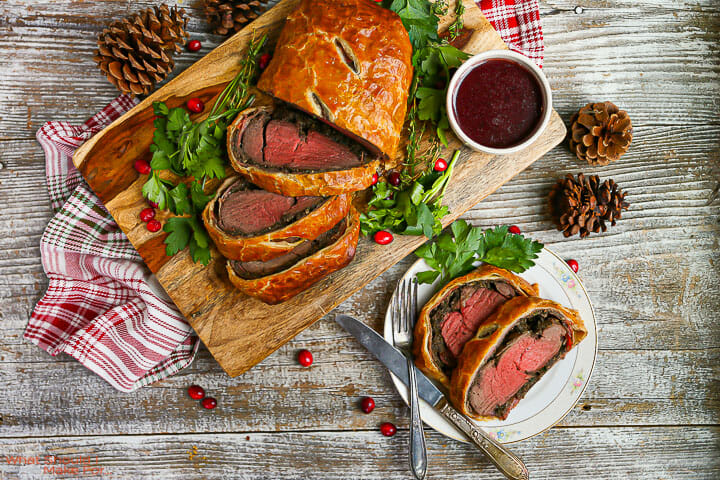
British Beef Wellington is one of those recipes that rewards patience and attention with a result that truly feels special — because it is. There’s something deeply satisfying about mastering a dish this iconic, pulling it from the oven in all its golden, puffed glory, and carrying it to the table knowing you built that from scratch. It’s the kind of cooking that reminds us why we love being in the kitchen in the first place.
If you make this recipe, we’d love to see it. Share your Wellington on Instagram and tag us @EatingHappiness — we genuinely celebrate every single golden crust that comes out of your oven. Save this post to Pinterest for your next dinner party, and if you found these tips helpful, leave a comment below telling us how it went. Your feedback helps this community, and your Wellington photos make our whole week.
Find the complete recipe card below ↓
British Beef Wellington
A classic British Beef Wellington featuring a seared center-cut beef tenderloin coated in Dijon mustard, wrapped in savory mushroom duxelles and prosciutto, then encased in golden all-butter puff pastry. Elegant, impressive, and absolutely worth every step.
Ingredients
- 2 lbs center-cut beef tenderloin (trimmed of silverskin, tied if uneven)
- 2 tbsp olive oil
- 2 tbsp Dijon or whole-grain mustard
- 1 tsp kosher salt
- 1 tsp black pepper (freshly ground)
- 1 lb cremini or button mushrooms (very finely chopped or pulsed in food processor)
- 3 cloves garlic (minced)
- 2 shallots (finely minced)
- 2 tbsp unsalted butter
- 1 tbsp fresh thyme leaves
- 1 tbsp dry sherry or white wine (optional)
- 1 tsp kosher salt
- 0.5 tsp black pepper
- 6 oz prosciutto di Parma (thinly sliced, about 8 to 10 slices)
- 1 sheet all-butter puff pastry (thawed if frozen, about 14 oz)
- 2 large eggs (beaten, for egg wash)
- 1 pinch flaky sea salt (for topping pastry)
Instructions
- Pat the beef tenderloin completely dry with paper towels. Season generously on all sides with kosher salt and black pepper.
- Heat olive oil in a large heavy skillet (cast iron or stainless) over high heat until smoking. Sear the beef on all sides, including the ends, for about 1 to 2 minutes per side until a deep mahogany crust forms. Total searing time should be 6 to 8 minutes.
- Transfer the seared beef to a plate. Immediately brush all over with Dijon mustard using a pastry brush. Allow to cool completely to room temperature, then refrigerate uncovered for at least 30 minutes.
- In the same skillet over medium-high heat, melt butter. Add shallots and garlic and cook for 2 minutes until softened.
- Add the finely chopped mushrooms, thyme, salt, pepper, and sherry if using. Cook, stirring frequently, for 12 to 15 minutes until all the liquid has evaporated and the mixture is nearly dry and dark. The mushrooms should look like a thick, almost paste-like consistency.
- Spread the duxelles onto a plate or baking sheet and refrigerate until fully cooled, about 20 minutes.
- Lay a large sheet of plastic wrap on your work surface. Arrange the prosciutto slices in a rectangle slightly wider and longer than your beef tenderloin, overlapping them by about half an inch.
- Spread the cooled mushroom duxelles evenly over the prosciutto in a thin, even layer.
- Place the chilled, mustard-coated beef at the near edge of the prosciutto. Using the plastic wrap, tightly roll the prosciutto and duxelles around the beef, twisting the ends of the plastic wrap tightly to form a firm, uniform log. Refrigerate for at least 30 minutes or up to 24 hours.
- Lightly flour your work surface and roll the puff pastry out to a rectangle large enough to encase the beef roll completely. Unwrap the chilled beef roll and place it at the near edge of the pastry. Brush the far edges of the pastry with egg wash.
- Roll the beef tightly in the pastry, pressing the seam firmly to seal. Tuck the ends under and press to seal. Place seam-side down on a parchment-lined baking sheet.
- Brush the entire surface generously with egg wash. Score a light decorative pattern on top with the back of a knife, being careful not to cut all the way through. Sprinkle with flaky sea salt. Refrigerate for 15 to 20 minutes while the oven preheats.
- Preheat the oven to 425°F (220°C).
- Bake the Wellington for 25 to 30 minutes until the pastry is deeply golden brown and an instant-read thermometer inserted into the center of the beef reads 125°F to 130°F for medium-rare.
- Transfer to a cutting board and rest uncovered for 10 full minutes before slicing with a sharp serrated knife into 1.5-inch rounds. Serve immediately.
