
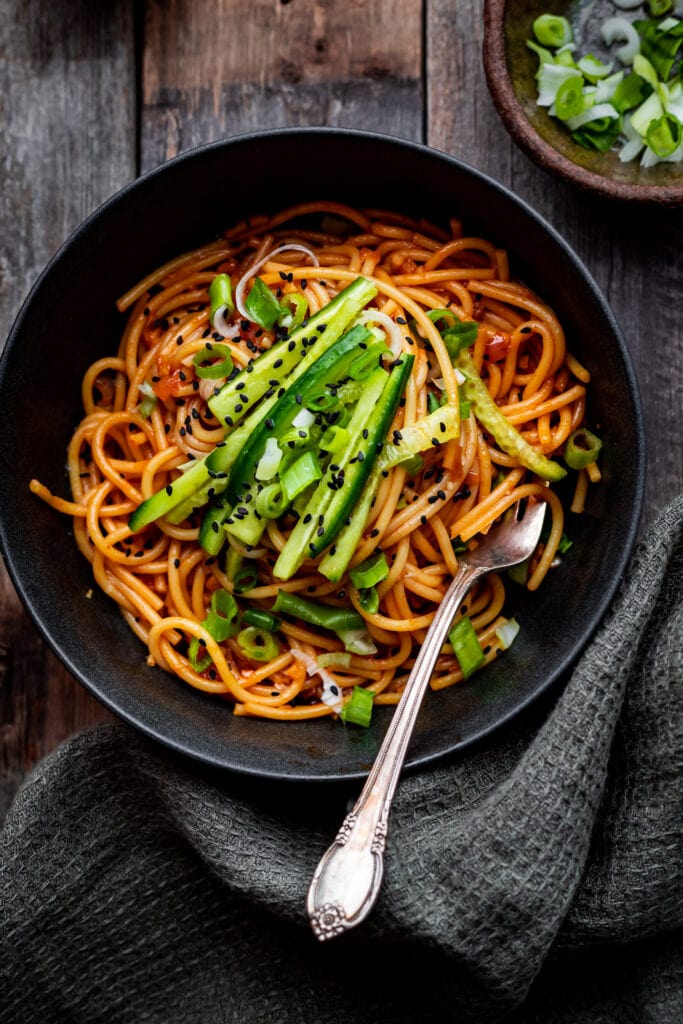
There are weeknights when you want something that genuinely excites you — not just fuel, but a bowl that makes you stop mid-bite and think, yes, this is exactly what I needed. Gochujang noodles are that dish. Built around one of Korea’s most iconic fermented condiments, this recipe delivers layers of heat, umami, and subtle sweetness in a sauce that clings to every strand of noodle like it was made to be there. It’s bold without being overwhelming, fast without tasting rushed, and nourishing in a way that feels like a genuine treat for your body and your taste buds.
Korean cuisine has long celebrated the idea that food should do more than fill you up — it should restore you. Gochujang, a slow-fermented chili paste made from red chili peppers, glutinous rice, fermented soybeans, and salt, has been a cornerstone of Korean cooking for centuries. Unlike raw hot sauce, it carries a deep, complex heat that’s rounded out by natural sweetness and a savory depth you simply can’t fake. When that paste becomes the backbone of a quick weeknight noodle sauce, something almost magical happens. The result is warming, satisfying, and surprisingly balanced — exactly the kind of clean indulgence we love to champion here at Eating Happiness.
Whether you’re a longtime fan of Korean flavors or you’ve just spotted gochujang at the grocery store and weren’t sure what to do with it, this recipe is your entry point. It’s weeknight-friendly, endlessly customizable, and genuinely good for you in all the ways that matter. If you’ve been reaching for the same comfort food rotation on repeat, it’s time to shake things up — and gochujang noodles are the perfect reason to do it.
Why You’ll Love This Recipe
- Ready in about 20 minutes — from pantry to bowl faster than takeout.
- One pan, minimal cleanup — the sauce comes together in the same skillet you’ll toss the noodles in.
- Naturally balanced heat — gochujang brings warmth that builds gently, not a sharp burn that overwhelms.
- Incredibly versatile — works with whatever protein or vegetables you have on hand.
- Made with real, clean ingredients — no mystery additives, just pantry staples with purpose.
- Meal-prep friendly — the sauce can be made ahead and stored all week.
Key Ingredients
The star of this entire dish is, without question, gochujang paste. Don’t be tempted to substitute sriracha or another hot sauce here — gochujang’s slow fermentation process gives it a depth and complexity that no other condiment can replicate. Look for it in the international aisle of most grocery stores or at any Asian market. A little goes a long way, and that’s actually great news from a nutritional standpoint: fermented foods like gochujang are naturally rich in beneficial bacteria that support gut health, and the capsaicin in red chili peppers has been linked to metabolism support and anti-inflammatory properties.
For the noodles themselves, ramen noodles or thin wheat noodles are the go-to choice because they’re bouncy, chewy, and hold up beautifully to a thick, glossy sauce. That said, rice noodles or soba noodles work equally well if you’re keeping things gluten-reduced. Soba in particular is worth noting — made from buckwheat, it brings a slightly nutty flavor and a nice dose of fiber and protein compared to refined wheat noodles, as Serious Eats explores in their deep dive on soba.
Toasted sesame oil is non-negotiable in this recipe. Added at the very end, it perfumes the entire dish with a nutty warmth that pulls everything together. Sesame oil is rich in heart-healthy unsaturated fats and contains sesamol, a natural antioxidant. It’s one of those ingredients that turns a good dish into a great one — just a drizzle makes a world of difference.
Soy sauce (or tamari for a gluten-free version) deepens the umami base of the sauce and brings the saltiness into balance. Paired with a touch of honey or brown sugar, the sauce hits every note on the flavor spectrum: spicy, salty, sweet, and savory all at once. That balance is precisely what makes gochujang noodles so craveable. Finally, fresh garlic and ginger round out the aromatics with bright, lively heat that’s completely different from the slow burn of the chili paste — together, they create a sauce that’s complex enough to taste like it took hours, even though it came together in minutes.
Pro Tips & Variations
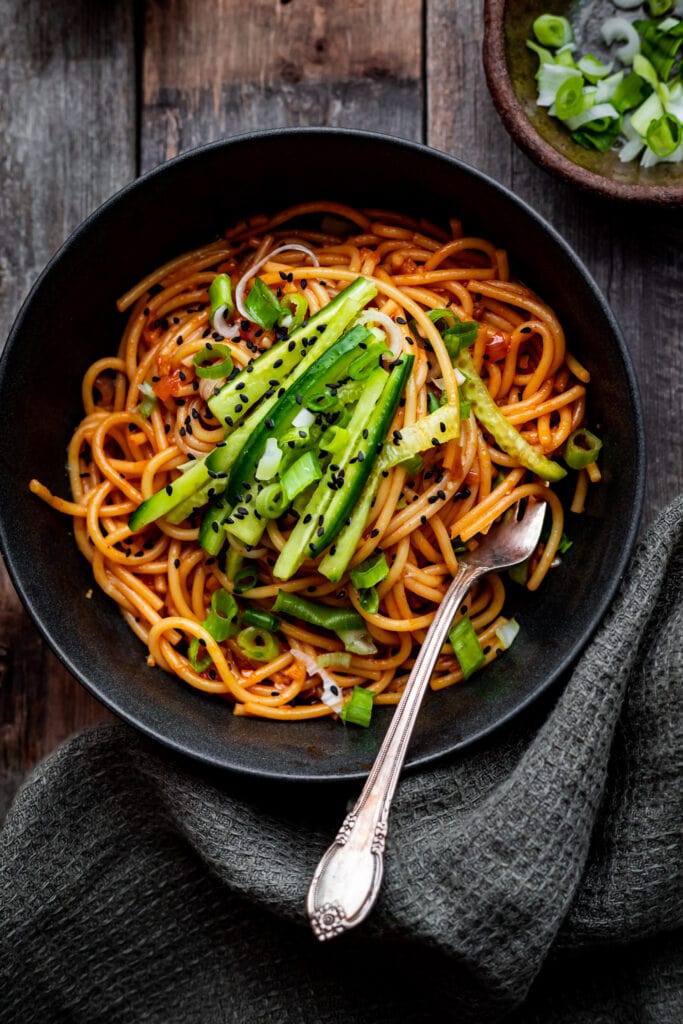
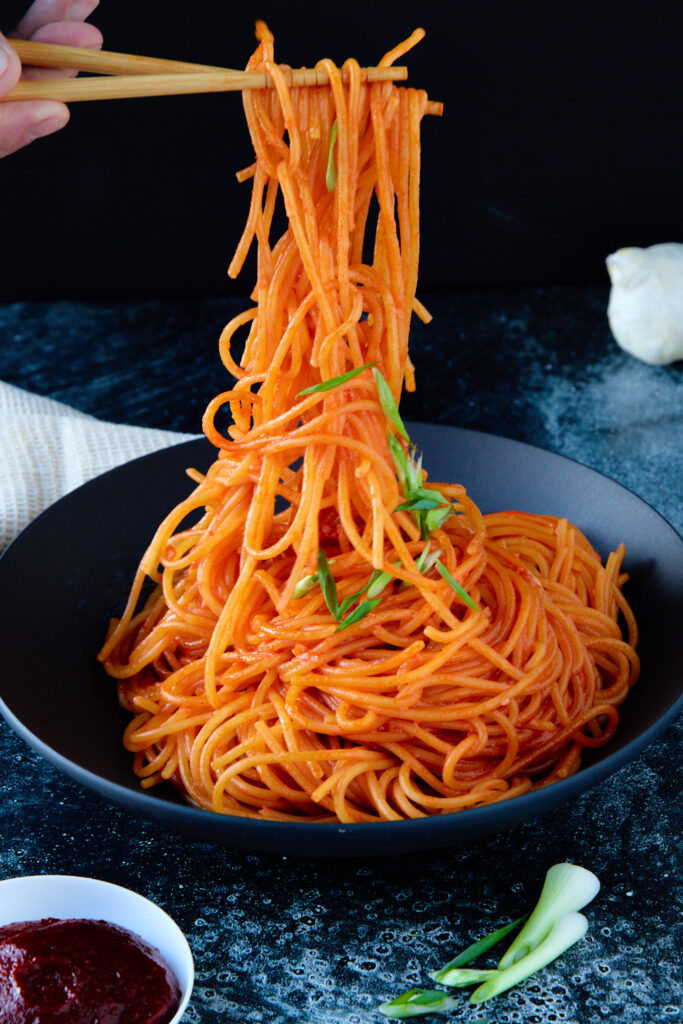
- Don’t skip the pasta water. Reserve about half a cup before draining your noodles. Adding a splash to the sauce as you toss everything together creates that glossy, restaurant-quality coating that makes each noodle glisten. The starch in the water acts as a natural emulsifier.
- Control your heat level. One tablespoon of gochujang gives you a gentle, crowd-friendly warmth. Two tablespoons bring the heat to a comfortable medium-spicy level. Go beyond that only if you’re a true heat seeker. The paste varies in spice level by brand, so taste as you go.
- Add protein your way. Thinly sliced chicken breast, a couple of soft-boiled eggs, crispy tofu, shrimp, or even ground turkey all work beautifully here. If you love bold flavors in your proteins, the gochujang sauce itself from our Hot Honey Chicken recipe is a great flavor reference for how to build heat into a protein before adding it to the noodles.
- Load up the vegetables. This is where gochujang noodles really shine as a wellness-forward meal. Bok choy, shredded cabbage, thinly sliced bell peppers, mushrooms, snap peas, edamame, or even roasted broccoli all integrate naturally. The sauce is bold enough to elevate any vegetable.
- Make it creamy. Stir one to two tablespoons of peanut butter or tahini into the sauce for a nutty, silky variation that mellows the heat slightly and adds healthy fats and plant-based protein.
- Go gluten-free easily. Swap the wheat noodles for rice noodles and use tamari in place of soy sauce. Gochujang itself typically contains a small amount of glutinous rice flour — check the label if celiac is a concern, but many brands are certified gluten-free.
- Serve it cold. Toss the cooked, cooled noodles with the sauce for a refreshing cold noodle bowl — similar in spirit to a Bon Appétit-style cold noodle dish — perfect for warm evenings when a hot bowl doesn’t appeal.
- Double the sauce. It keeps in the refrigerator for up to two weeks in a sealed jar, and you’ll want it on everything — roasted vegetables, grain bowls, grilled salmon, and beyond.
Nutritional Highlights
Gochujang noodles are a genuinely nourishing choice when made with wholesome ingredients. The fermented chili paste itself is a functional food — the fermentation process creates beneficial probiotics that support gut microbiome health, and research continues to illuminate the connection between a healthy gut and everything from immunity to mood regulation. The capsaicin in gochujang may also support circulation and have mild thermogenic effects. Sesame oil and any added protein round out the macronutrient profile beautifully, and if you lean into the vegetable additions, you’re easily hitting multiple daily servings of fiber-rich, antioxidant-packed produce in a single bowl. Using whole grain soba noodles further elevates the nutritional profile, adding complex carbohydrates and amino acids. Compared to a takeout noodle dish — which can clock in at well over 800 calories and sky-high sodium — this homemade version lets you control every element, from the salt level to the oil quantity, making it the kind of bold, craveable meal that genuinely supports your wellness goals. For another clean and satisfying bowl that hits that same nourishing note, our Salmon Sushi Bake is another crowd-pleaser worth having in your weekly rotation.
Frequently Asked Questions
Is gochujang very spicy?
Gochujang has a moderate, building heat rather than an immediate sharp burn. Its spice level is mellowed by the natural sweetness from the fermented rice in the paste, and in this sauce it’s further balanced by honey and sesame oil. Most people who consider themselves moderate spice eaters find the dish very approachable at one tablespoon. That said, gochujang brands vary — some are labeled mild, medium, or hot — so check the packaging and start with less if you’re sensitive to heat. You can always add more, but you can’t take it away.
Can I make gochujang noodles ahead of time?
Absolutely, and it’s one of the best aspects of this recipe for meal prep. The sauce can be made up to two weeks in advance and stored in an airtight jar in the refrigerator — it actually deepens in flavor as it sits. The noodles themselves are best cooked fresh, as they tend to clump and absorb too much sauce when stored already dressed. If you want to prep ahead for lunches, store the cooked noodles separately from the sauce, lightly tossed with a tiny bit of sesame oil to prevent sticking, and combine them at serving time. Toss with a splash of warm water or broth to loosen if needed.
What can I serve alongside gochujang noodles?
These noodles are a complete meal on their own, especially with protein and vegetables mixed in. For a more spread-out dinner, they pair wonderfully with a simple cucumber salad dressed in rice vinegar and sesame seeds, steamed edamame, kimchi for extra probiotic benefit, or a light miso soup. If you’re entertaining and want to round out a Korean-inspired spread, consider a crunchy slaw on the side — our Southern Coleslaw brings a tangy crunch that actually plays beautifully against the heat of the gochujang sauce.
Let’s Make It Tonight
Gochujang noodles are one of those recipes that earns a permanent place in your regular rotation — not because it’s trendy, not because it’s flashy, but because it genuinely delivers every single time. It’s the kind of bold, satisfying bowl that makes healthy eating feel like a reward rather than a compromise. Whether you keep it simple with noodles and sauce or pile it high with vegetables and protein, this dish is a celebration of real ingredients doing beautiful things together.
If you try this recipe, we’d love to see your bowl! Share a photo on Instagram and tag us at @eatinghappiness, or leave a comment below to let us know how you made it your own. Save this post to your Pinterest boards so you can come back to it on those nights when you need something fast, bold, and genuinely delicious — because those nights come more often than we plan for, and it pays to be ready.
Find the complete recipe card below ↓
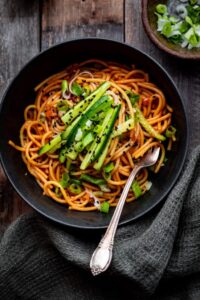
Gochujang Noodles
Ingredients
- 8 oz ramen or thin wheat noodles or soba noodles for a nutritious alternative
- 2 tbsp gochujang paste adjust to taste for heat level
- 3 tbsp soy sauce or tamari for gluten-free
- 1 tbsp honey or brown sugar
- 1 tbsp toasted sesame oil
- 1 tbsp rice vinegar
- 4 cloves garlic minced
- 1 tsp fresh ginger grated
- 1 tsp neutral oil such as avocado or vegetable oil
- 3 scallions (thinly sliced)
- 1 tbsp sesame seeds toasted
- 2 soft-boiled eggs optional but recommended
- 1 tsp chili flakes or additional gochujang optional, for extra heat
- 1 cup protein of choice cooked chicken, shrimp, tofu, or ground turkey
- 2 cups vegetables of choice bok choy, snap peas, mushrooms, or bell peppers

Instructions
- Bring a large pot of salted water to a boil. Cook noodles according to package directions until just al dente — usually 3 to 5 minutes for thin ramen noodles. Before draining, reserve 1/2 cup of the starchy pasta water. Drain and set aside.
- In a small bowl, whisk together the gochujang paste, soy sauce, honey, rice vinegar, and toasted sesame oil until smooth and fully combined. Set aside.
- Heat neutral oil in a large skillet or wok over medium heat. Add the minced garlic and grated ginger and sauté for 60 to 90 seconds, stirring constantly, until fragrant and just starting to turn golden. Do not let it burn.
- Pour the gochujang sauce into the skillet with the garlic and ginger. Stir to combine and let it simmer for 1 to 2 minutes until slightly thickened and bubbling.
- Add the drained noodles directly to the skillet with the sauce. If adding vegetables, add any quick-cooking vegetables now (bok choy, snap peas, pre-sautéed mushrooms). Toss everything together using tongs, adding splashes of reserved pasta water as needed to loosen the sauce and create a glossy, even coating on every noodle.
- If adding cooked protein, fold it in now and toss to combine. Taste and adjust seasoning — add more gochujang for heat, more honey for sweetness, or more soy sauce for saltiness.
- Divide into bowls and top with sliced scallions, toasted sesame seeds, and a soft-boiled egg if using. Serve immediately.