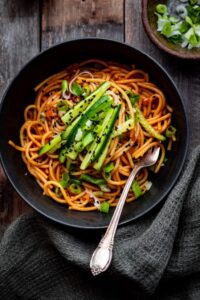
Gochujang Noodles
Ingredients
- 8 oz ramen or thin wheat noodles or soba noodles for a nutritious alternative
- 2 tbsp gochujang paste adjust to taste for heat level
- 3 tbsp soy sauce or tamari for gluten-free
- 1 tbsp honey or brown sugar
- 1 tbsp toasted sesame oil
- 1 tbsp rice vinegar
- 4 cloves garlic minced
- 1 tsp fresh ginger grated
- 1 tsp neutral oil such as avocado or vegetable oil
- 3 scallions (thinly sliced)
- 1 tbsp sesame seeds toasted
- 2 soft-boiled eggs optional but recommended
- 1 tsp chili flakes or additional gochujang optional, for extra heat
- 1 cup protein of choice cooked chicken, shrimp, tofu, or ground turkey
- 2 cups vegetables of choice bok choy, snap peas, mushrooms, or bell peppers

Instructions
- Bring a large pot of salted water to a boil. Cook noodles according to package directions until just al dente — usually 3 to 5 minutes for thin ramen noodles. Before draining, reserve 1/2 cup of the starchy pasta water. Drain and set aside.
- In a small bowl, whisk together the gochujang paste, soy sauce, honey, rice vinegar, and toasted sesame oil until smooth and fully combined. Set aside.
- Heat neutral oil in a large skillet or wok over medium heat. Add the minced garlic and grated ginger and sauté for 60 to 90 seconds, stirring constantly, until fragrant and just starting to turn golden. Do not let it burn.
- Pour the gochujang sauce into the skillet with the garlic and ginger. Stir to combine and let it simmer for 1 to 2 minutes until slightly thickened and bubbling.
- Add the drained noodles directly to the skillet with the sauce. If adding vegetables, add any quick-cooking vegetables now (bok choy, snap peas, pre-sautéed mushrooms). Toss everything together using tongs, adding splashes of reserved pasta water as needed to loosen the sauce and create a glossy, even coating on every noodle.
- If adding cooked protein, fold it in now and toss to combine. Taste and adjust seasoning — add more gochujang for heat, more honey for sweetness, or more soy sauce for saltiness.
- Divide into bowls and top with sliced scallions, toasted sesame seeds, and a soft-boiled egg if using. Serve immediately.
Notes
Storage: Store leftover noodles in an airtight container in the refrigerator for up to 3 days. The sauce alone keeps for up to 2 weeks. Reheat noodles in a skillet over medium-low heat with a splash of water to loosen. For meal prep, store noodles and sauce separately. Spice tip: Start with 1 tablespoon of gochujang for a milder dish and increase to taste. Creamy variation: Stir 1-2 tablespoons of peanut butter or tahini into the sauce before adding the noodles.