

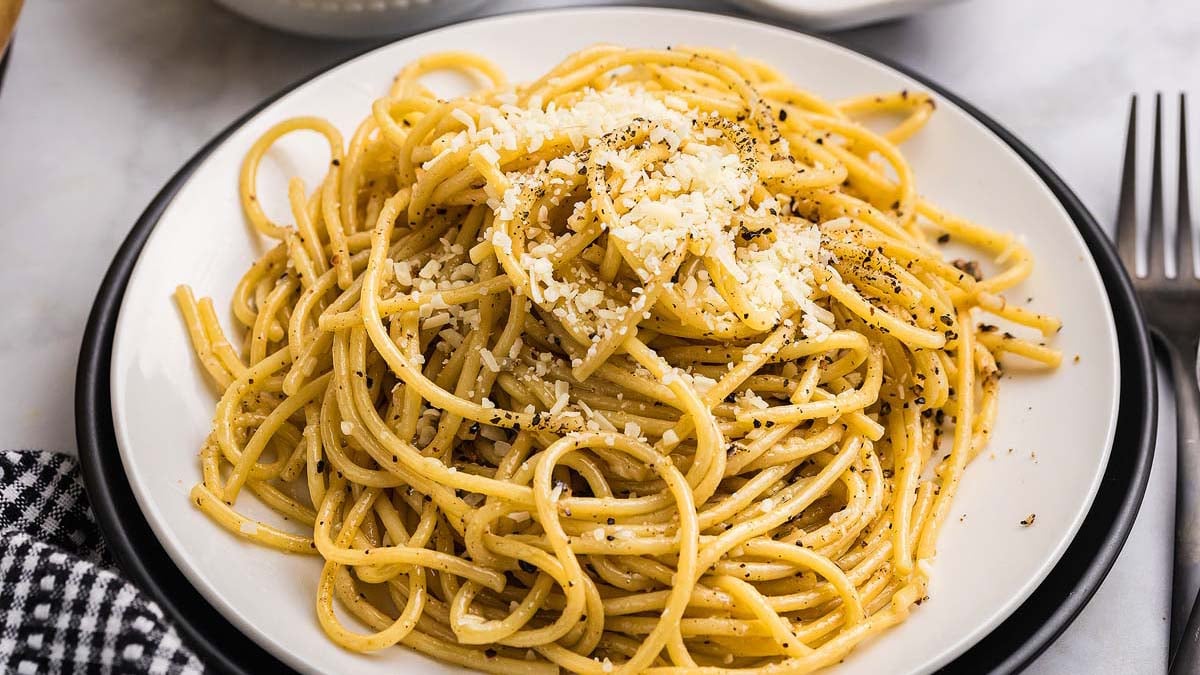
There’s something profoundly magical about a dish that transforms three humble ingredients into pure culinary poetry. Cacio e Pepe, literally meaning “cheese and pepper” in Italian, represents the very essence of Roman cooking philosophy: perfection through simplicity. This isn’t just pasta with cheese—it’s a masterclass in technique that creates silky, emulsified perfection from nothing more than aged Pecorino Romano, freshly cracked black pepper, and quality pasta.
In our wellness-focused kitchen, Cacio e Pepe stands as a testament to mindful eating. While it may seem indulgent, this dish actually embodies clean eating principles: whole grain pasta provides complex carbohydrates and fiber, aged cheese delivers protein and beneficial probiotics, and the minimal ingredient list means you know exactly what’s nourishing your body. It’s comfort food that loves you back, proving that the most satisfying meals often come from the simplest foundations.
What makes this recipe particularly special is how it teaches us to slow down and focus on technique over complexity. The creamy sauce forms through pasta water alchemy—no heavy cream needed. It’s a worth-it indulgence that celebrates quality ingredients and traditional methods, making every twirl around your fork a moment of pure eating happiness.
Why You’ll Love This Recipe
This Cacio e Pepe recipe will become your go-to comfort meal for busy weeknights and special occasions alike. The beauty lies in its accessibility—you likely have these ingredients in your pantry right now, yet the result tastes like it came from a high-end Roman trattoria. Unlike heavy cream-based pasta dishes, this version relies on technique to create its signature silky texture, making it surprisingly light while still deeply satisfying.
From a nutritional perspective, you’re getting quality protein from the aged cheese, complex carbohydrates from the pasta, and the anti-inflammatory benefits of freshly ground black pepper. The dish comes together in under 20 minutes, making it perfect for those moments when you want restaurant-quality food without the fuss. Plus, mastering the emulsification technique will elevate your overall cooking skills—it’s a foundational skill that applies to countless other recipes.
Key Ingredients
The magic of Cacio e Pepe lies in the quality and treatment of its three essential components. Pecorino Romano serves as the star—this aged sheep’s milk cheese brings sharp, salty complexity that’s irreplaceable, unlike milder cheeses that would create a completely different dish. The pasta choice matters tremendously; traditional spaghetti or tonnarelli work best because their shape and texture hold the emulsified sauce perfectly, while the starchy pasta water becomes your secret weapon for creating that silky coating. Freshly cracked black pepper isn’t just seasoning here—it’s a primary flavor component that should be aromatic and punchy, preferably ground just before cooking. The final hero ingredient is actually the pasta cooking water itself, loaded with starches that bind everything together into creamy perfection without any dairy beyond the cheese.
Pro Tips & Variations
The key to perfect Cacio e Pepe lies in temperature control and timing. Always remove your pan from direct heat before adding the cheese mixture to prevent it from seizing and becoming grainy. Reserve at least two cups of pasta water before draining—you’ll need it for the emulsification process, and having extra ensures you can adjust the consistency perfectly. Grate your Pecorino Romano fresh using the finest holes of your box grater or a microplane for the smoothest integration.
For the healthiest version, opt for whole wheat pasta or even chickpea pasta for added protein and fiber. While traditional recipes call for regular spaghetti, whole grain varieties actually work beautifully here and provide sustained energy. If you’re looking to lighten the dish further, you can use a 50/50 mix of Pecorino Romano and a high-quality Parmesan, though purists might protest.
The technique translates beautifully to other simple pasta preparations. Once you’ve mastered this method, you’ll find yourself applying the same principles to dishes like quick seafood pastas where the pasta water helps create silky sauces without heavy creams. Just like mastering authentic techniques in traditional Pad Thai, getting Cacio e Pepe right is all about understanding the fundamentals.
Common troubleshooting: If your sauce breaks or becomes clumpy, don’t panic. Add a splash of hot pasta water and whisk vigorously off the heat—the starches will help bring it back together. If the dish seems too dry, gradually add more pasta water until you achieve that glossy, creamy consistency that coats each strand perfectly.
Nutritional Highlights
Despite its reputation as indulgent comfort food, Cacio e Pepe offers surprising nutritional benefits when prepared mindfully. Pecorino Romano provides high-quality protein and calcium, while being naturally lower in lactose due to its aging process—making it more digestible for those with mild dairy sensitivities. The black pepper contains piperine, a compound with anti-inflammatory properties and potential digestive benefits. When you choose whole grain pasta, you’re adding fiber, B vitamins, and minerals that support steady blood sugar levels. Traditional Roman preparation methods actually maximize these benefits by using minimal added fats, relying instead on the natural richness of aged cheese and starchy pasta water to create satisfaction and satiety.
Frequently Asked Questions
Can I make Cacio e Pepe ahead of time?
Cacio e Pepe is best served immediately after preparation, as the delicate emulsion can break when reheated. However, you can prep your ingredients in advance—grate the cheese, crack the pepper, and have everything measured and ready. If you must store leftovers, refrigerate for up to 2 days and reheat very gently in a skillet with a splash of pasta water or low-sodium broth, stirring constantly to re-emulsify the sauce.
What can I substitute for Pecorino Romano?
While Pecorino Romano is traditional and provides the dish’s characteristic sharp, salty flavor, you can substitute with aged Parmesan (Parmigiano-Reggiano) for a milder, nuttier taste. Some recipes use a combination of both cheeses. Avoid pre-grated cheeses as they contain anti-caking agents that prevent proper melting and emulsification. For those avoiding dairy, high-quality nutritional yeast can provide umami depth, though the texture will be different.
How do I prevent the cheese from clumping?
The key is temperature control and gradual incorporation. Always remove the pan from direct heat before adding cheese, and make sure your cheese is finely grated. Create a slurry by mixing the grated cheese with a small amount of pasta water before adding it to the pasta. Add the mixture gradually while tossing constantly, and don’t let the mixture get too hot. If clumping occurs, immediately add hot pasta water and whisk vigorously off the heat until smooth.

Conclusion
Mastering Cacio e Pepe is about more than just making dinner—it’s about understanding how simple, quality ingredients can create extraordinary experiences. This dish embodies the kind of mindful cooking that nourishes both body and soul, proving that the most memorable meals often come from the humblest beginnings. Whether you’re seeking comfort after a long day or wanting to impress dinner guests with your technique, this recipe delivers every time.
The beauty of Cacio e Pepe lies in its teachable moments. Each time you make it, you’ll improve your understanding of emulsification, ingredient quality, and the importance of technique in creating restaurant-worthy results at home. It’s a recipe that grows with you, rewarding practice with increasingly perfect results.
We’d love to see your Cacio e Pepe creations! Share your photos and variations in the comments below, and don’t forget to save this recipe for those nights when you want maximum flavor with minimum fuss. There’s something deeply satisfying about mastering a technique that’s been perfected over centuries—and even more satisfying about sharing it with the people you love.
Find the complete recipe card below ↓

Cacio e Pepe
Ingredients
- 1 lb spaghetti or tonnarelli pasta
- 2 cups Pecorino Romano cheese freshly grated
- 2 teaspoons black pepper freshly ground, plus more for serving
- 1 tablespoon kosher salt for pasta water

Instructions
- Bring a large pot of water to boil. Add kosher salt generously—the water should taste like seawater.
- Meanwhile, finely grate the Pecorino Romano cheese using a microplane or the finest holes of a box grater. Freshly grind the black pepper.
- Add pasta to the boiling water and cook according to package directions until just shy of al dente (about 1 minute less than package instructions).
- Reserve 2 cups of pasta cooking water before draining the pasta.
- In a large skillet or wide saucepan, toast the ground black pepper over medium heat for about 1 minute until fragrant.
- Add 1 cup of the reserved pasta water to the skillet with the pepper and bring to a simmer.
- Add the drained pasta to the skillet and toss vigorously for 1-2 minutes to finish cooking and absorb some liquid.
- Remove the pan from heat completely. In a small bowl, mix the grated cheese with 1/4 cup of pasta water to create a slurry.
- Add the cheese mixture to the pasta gradually while tossing constantly with tongs or a pasta fork.
- Continue tossing vigorously, adding pasta water a little at a time until the sauce becomes creamy and coats each strand of pasta. This should take 2-3 minutes of constant motion.
- Taste and adjust seasoning with additional black pepper if desired. The dish should be creamy, not dry or clumpy.
- Serve immediately in warmed bowls, garnished with additional grated Pecorino Romano and freshly ground black pepper.