

The Bowl That Feels Like a Warm Hug
There is something almost magical about the way a butternut squash transforms in a hot oven. What starts as a dense, slightly awkward gourd with tough skin emerges from the roasting pan as something deeply caramelized, impossibly sweet, and saturated with a nutty depth that no amount of stovetop steaming can replicate. That transformation is the entire foundation of this butternut squash soup — and once you taste what roasting does for the flavor, you will never go back to the shortcut version again.
I first made this soup on a drizzly October afternoon when the farmers market had an enormous pile of butternut squash priced at practically nothing. I grabbed two without a plan, roasted them on a whim, and blended them with a handful of pantry staples. The result was so good it immediately became part of my fall rotation — right alongside cozy bowls like my Slow Cooker Chicken Wild Rice Soup, which has a similar deeply nourishing, warming quality. This soup has since been tweaked and tested dozens of times to get the sage-to-cream ratio exactly right, the roast time dialed in, and the finish elevated just enough to feel special without straying into fussy territory.
What you end up with is a soup that is genuinely good for you — loaded with beta-carotene, fiber, and vitamins — but so silky and satisfying that it feels indulgent. It is the kind of bowl that makes you slow down, breathe deeply, and actually enjoy the season. Whether you are meal-prepping for the week, hosting friends for a casual dinner, or just trying to use up that squash sitting on your counter, this recipe delivers every single time.

Why You’ll Love This Butternut Squash Soup
- Deeply roasted flavor: Roasting the squash first adds a caramelized sweetness that blows simple boiled versions out of the water.
- Nutritionally dense: Butternut squash is packed with vitamin A, vitamin C, potassium, and antioxidants — this is real nourishment in a bowl.
- Naturally gluten-free and easily dairy-free: Simple swaps make this accessible for nearly every dietary need.
- Weeknight friendly: Mostly hands-off roasting time means you can prep this with minimal effort.
- Freezer-friendly: Make a big batch and freeze in portions for the best weeknight emergency meal you’ve ever had waiting for you.
- Elegant enough for guests: A swirl of cream and a few crispy sage leaves turn this into a dinner-party-worthy starter.
Key Ingredients
Butternut squash is the unquestionable star here, and its quality matters. Look for a squash that feels heavy for its size with a matte, beige skin — shiny skin can mean it was picked too early. Roasting it with a drizzle of olive oil coaxes out natural sugars and creates those gorgeous caramelized edges that give the soup its complexity. Sage is the herbal backbone of this recipe — it has an earthy, slightly piney quality that pairs with squash the way rosemary pairs with lamb. It is simply meant to be. You will crisp some in butter for garnish and use more to perfume the soup itself, and both applications matter. Yellow onion and garlic form the aromatic base, softened until sweet and then blended seamlessly into the puree. They add savory depth that keeps the soup from tasting one-dimensional. A generous pour of vegetable broth thins the puree to the right velvety consistency — use a high-quality, low-sodium broth so you control the salt level. Finally, a measured splash of heavy cream rounds everything out with a richness that makes this soup feel luxurious. If you prefer to keep things dairy-free, full-fat coconut cream works beautifully and adds a subtle tropical undertone that is surprisingly lovely.
Pro Tips & Variations

- Don’t skip roasting: I know it takes longer, but roasting the squash cut-side-down for the first half of cooking, then flipping it, creates layers of flavor you simply cannot get any other way. Serious Eats has a brilliant breakdown of why roasting vegetables beats boiling every time — worth a read if you are a technique nerd like me.
- Blend in batches: If you are using a traditional blender rather than an immersion blender, work in batches and never fill the jar more than halfway with hot liquid. Hold the lid down with a folded kitchen towel. Hot soup blowouts are a real and very unpleasant thing.
- Make it spicier: Add a pinch of cayenne or a small diced jalapeño to the onion sauté for a subtle heat that plays beautifully against the sweet squash.
- Boost the protein: Stir in a can of drained white beans before blending for extra plant-based protein and an even creamier texture — you won’t taste the beans, just the silkiness they add.
- Go vegan: Swap the butter for olive oil when crisping your sage, and replace the heavy cream with full-fat coconut cream or a cashew cream made by blending soaked raw cashews with water.
- Add an apple: Roast a peeled, quartered Granny Smith or Honeycrisp apple alongside the squash. It adds a bright tartness that lifts the whole soup without making it taste fruity.
- Pair it right: This soup is phenomenal alongside a simple green salad, crusty sourdough bread, or even served as a starter before a heartier main like my Sheet Pan Sausage and Peppers for a full, satisfying autumn meal.
Nutritional Highlights
Butternut squash is one of fall’s greatest nutritional gifts. A single cup of cooked butternut squash delivers over 450% of your daily recommended vitamin A in the form of beta-carotene — the same antioxidant that gives the squash its glorious orange color and supports eye health, immune function, and skin integrity. It is also a solid source of vitamin C, potassium, magnesium, and dietary fiber, making it genuinely supportive of heart health and digestive wellness. The olive oil used in roasting is rich in heart-healthy monounsaturated fats, and the small amount of heavy cream used in this recipe — just enough for silkiness — keeps the calorie count reasonable while dramatically improving satiety. At roughly 210 calories per generous bowl, this soup is the kind of nourishing, whole-food meal that fits beautifully into a balanced lifestyle. Bon Appétit dives into the nutritional power of winter squash if you want to read more about why this vegetable deserves a regular spot in your fall and winter kitchen. For soup lovers looking to build a warming weekly rotation, this recipe pairs wonderfully in the weekly rotation with our Crockpot Chicken Noodle Soup — a deeply nourishing slow-cooker classic that rounds out the comfort food lineup perfectly.
Frequently Asked Questions
Can I make butternut squash soup ahead of time?
Absolutely — and in fact, this soup often tastes even better the next day once the flavors have had time to meld together. Let it cool completely, then store it in an airtight container in the refrigerator for up to 5 days. Reheat gently on the stovetop over medium-low heat, stirring occasionally. If the soup has thickened during storage, simply whisk in a splash of broth or water until it returns to your preferred consistency. This also makes it an ideal meal-prep option — portion it into individual containers at the start of the week for fast, nourishing lunches.
Can I freeze butternut squash soup?
Yes, this soup freezes exceptionally well — especially if you hold off on adding the cream until after reheating. Ladle the blended soup (without cream) into freezer-safe containers or zip-top bags, leaving about an inch of headspace for expansion. It will keep beautifully in the freezer for up to 3 months. To serve, thaw overnight in the refrigerator and reheat on the stovetop. Stir in your cream during the final few minutes of reheating and taste for seasoning — a pinch of salt and a tiny squeeze of fresh lemon juice goes a long way after freezing to wake the flavors back up.
What can I use instead of heavy cream to keep this dairy-free?
Full-fat coconut cream is the most seamless swap — it blends in smoothly and adds a subtle richness that complements the squash’s natural sweetness. Cashew cream is another excellent option: soak raw cashews in water for at least 4 hours (or overnight), then drain and blend with fresh water until completely smooth. Oat cream and soy creamer also work in a pinch, though they are slightly thinner. Whatever you use, add it gradually and taste as you go — the goal is a velvety, rounded finish, not an overpowering dairy or coconut flavor. The soup is naturally so flavorful from the roasting that you really do not need much cream at all.
Go Ahead — Make the Bowl That Matters
There is a reason butternut squash soup shows up on every fall menu worth its salt — it is genuinely one of the most satisfying, nourishing, and deeply comforting things you can make when the air turns crisp. This version, roasted low and slow and finished with sage and cream, is the kind of recipe that earns a permanent spot in your seasonal rotation. It is wholesome without being boring, elegant without being difficult, and cozy in the truest, most soul-warming sense of the word.
If you make this soup, I would absolutely love to hear about it. Leave a comment below, rate the recipe, or share a photo on Instagram and tag us — there is nothing that makes my day more than seeing your beautiful bowls. And if you are building out your cozy soup game this season, save this recipe to your Pinterest boards so you can come back to it all winter long. Happy eating.
Find the complete recipe card below ↓
Butternut Squash Soup
A silky, deeply flavored butternut squash soup made with roasted squash, fragrant sage, and a touch of cream. Nourishing, naturally gluten-free, and endlessly cozy — this is fall in a bowl.
Ingredients
- 1 large butternut squash (about 3 lbs, halved lengthwise and seeds scooped out)
- 3 tablespoons olive oil (divided)
- 1 medium yellow onion (roughly chopped)
- 4 cloves garlic (smashed)
- 10 leaves fresh sage (divided — 6 for soup, 4 for garnish)
- 4 cups low-sodium vegetable broth (plus more as needed to adjust consistency)
- 1/3 cup heavy cream (plus extra for swirling to serve; sub full-fat coconut cream for dairy-free)
- 2 tablespoons unsalted butter (for crisping sage garnish; sub olive oil for dairy-free)
- 1/2 teaspoon kosher salt (plus more to taste)
- 1/4 teaspoon black pepper (freshly cracked)
- 1/8 teaspoon cayenne pepper (optional, for a subtle kick)
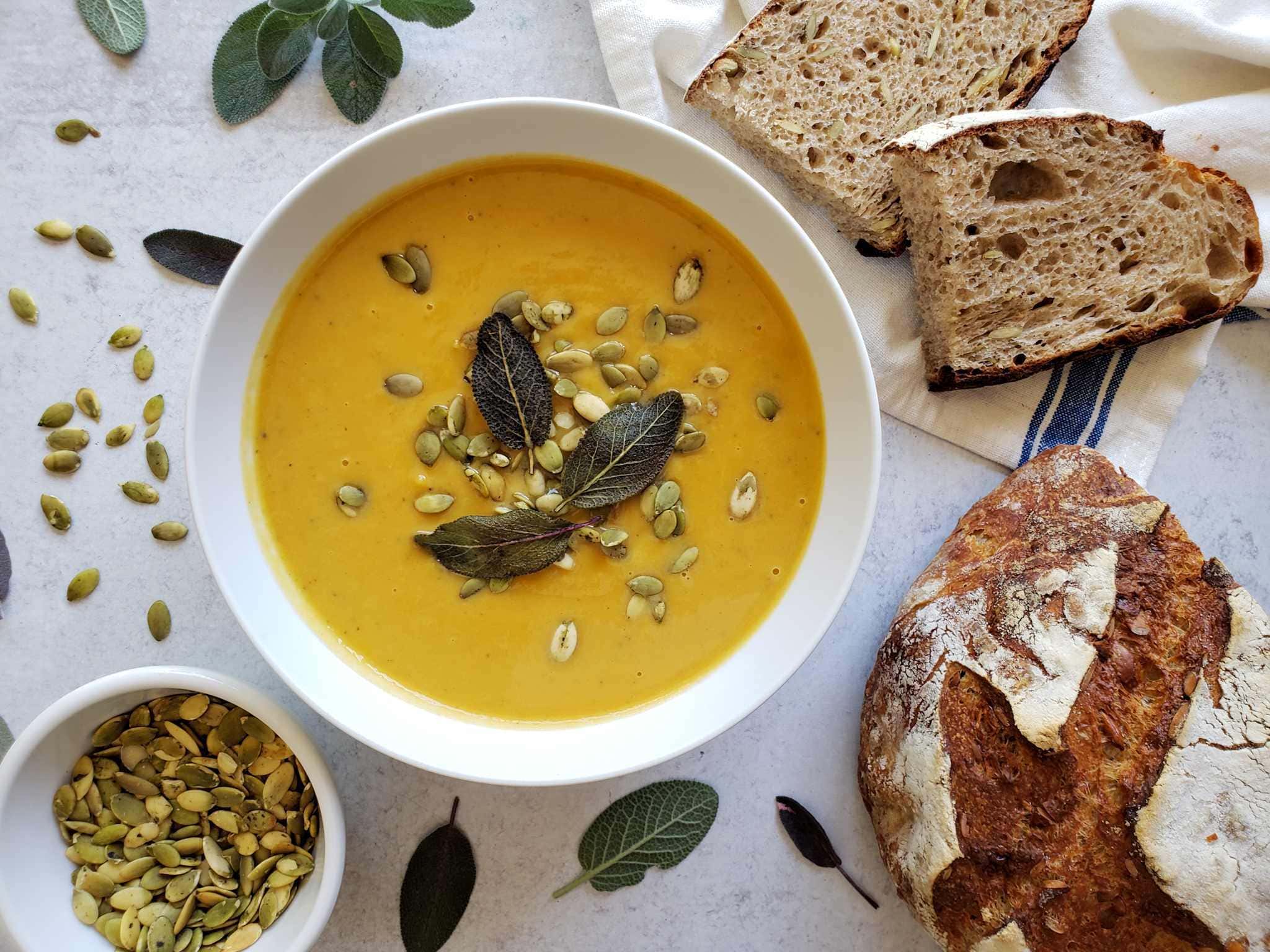
- 2 tablespoons toasted pepitas (for garnish, optional)
Instructions
- Preheat your oven to 400°F (200°C). Line a large rimmed baking sheet with parchment paper.
- Place the butternut squash halves cut-side-up on the prepared baking sheet. Drizzle with 2 tablespoons of olive oil and season with salt and pepper. Flip the squash cut-side-down. Roast for 45 to 55 minutes, until the flesh is completely tender when pierced with a fork and the cut sides are deeply caramelized.
- While the squash roasts, heat the remaining 1 tablespoon of olive oil in a large heavy-bottomed pot or Dutch oven over medium heat. Add the chopped onion and cook, stirring occasionally, for 7 to 8 minutes until softened and lightly golden.
- Add the smashed garlic cloves and 6 sage leaves to the pot. Cook, stirring, for 1 to 2 minutes until fragrant. Remove from heat and set aside.
- Once the squash is cool enough to handle, use a large spoon to scoop the flesh away from the skin directly into the pot with the onion mixture. Discard the skins.
- Pour in the vegetable broth. Use an immersion blender to blend the soup directly in the pot until completely smooth and silky, about 1 to 2 minutes. Alternatively, carefully transfer the soup in batches to a countertop blender and blend on high. Return the blended soup to the pot.
- Set the pot over medium-low heat. Stir in the heavy cream and cayenne (if using). Taste and adjust seasoning with additional salt and pepper. If the soup is too thick, add more broth a quarter cup at a time until you reach your preferred consistency. Heat through gently — do not boil.
- In a small skillet, melt the butter over medium-high heat. Once foaming, add the remaining 4 sage leaves in a single layer. Fry for 30 to 45 seconds per side until crisp and fragrant. Transfer to a paper towel-lined plate.
- Ladle the soup into warm bowls. Finish each bowl with a small swirl of heavy cream, one or two crispy sage leaves, a sprinkle of toasted pepitas, and a crack of fresh black pepper. Serve immediately.
