

There is a reason the Traditional Greek Salad has been gracing Mediterranean tables for centuries. It is not just a salad — it is a philosophy. A sun-drenched, olive-oil-soaked reminder that the best food on earth is often the simplest. No cooking required, no complicated techniques, no long ingredient lists that require a trip to three different specialty stores. Just ripe, vibrant vegetables, a generous block of creamy feta, briny olives, and a drizzle of the best olive oil you own. The moment you taste it, you will understand why the Greeks have been eating this way for generations — and why the rest of the world keeps trying to catch up.
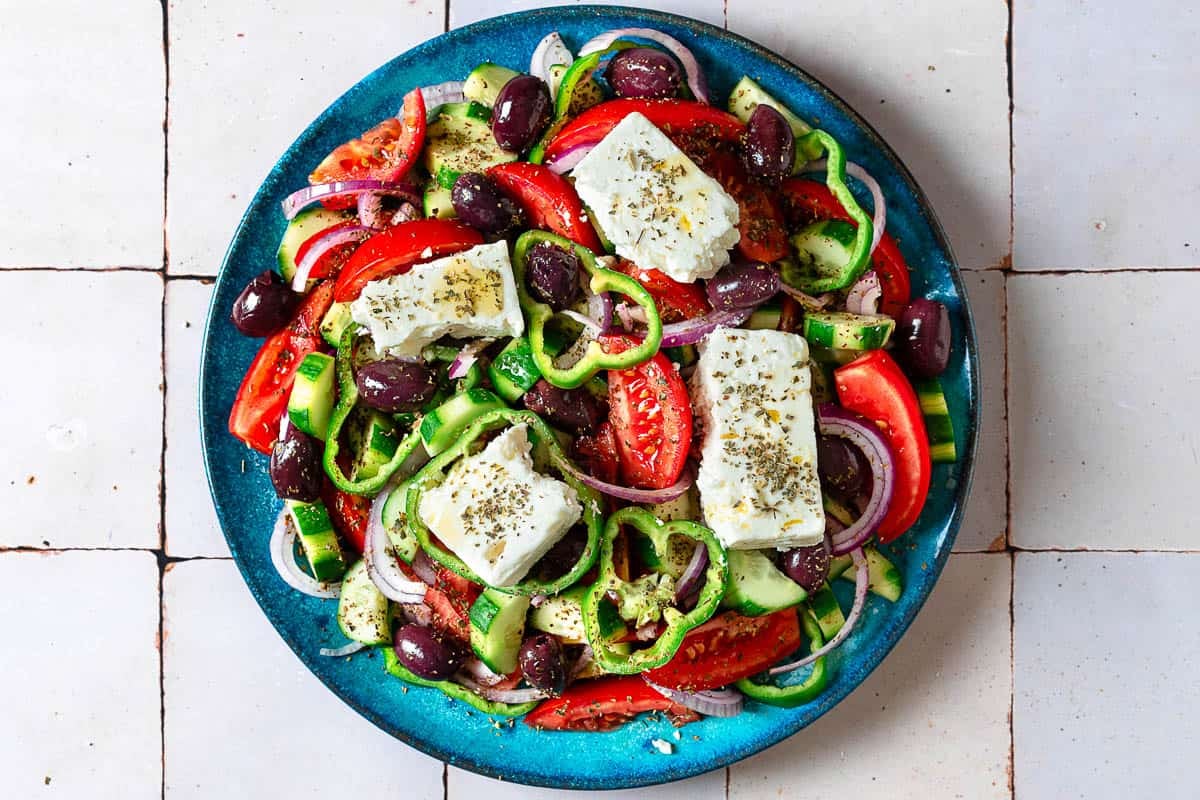
What makes this version genuinely special is the commitment to doing it the traditional way. And that means a few things you might not expect. In Greece, this salad — known as Horiatiki, or “village salad” — does not contain lettuce. Not a single leaf. It is bold, chunky, and built around the pure flavor of each ingredient rather than a leafy base diluted by dressing. The tomatoes are thick-wedged and juicy, the cucumbers are cut into half-moons with heft, and the feta sits on top in a whole slab — not crumbled — so you can break it yourself at the table. These details matter, and once you make it this way, you will never go back.
At Eating Happiness, we are all about recipes that nourish your body without sacrificing a single ounce of satisfaction, and this Traditional Greek Salad is one of those perfect crossroads. It is naturally gluten-free, loaded with vitamins, healthy fats, and antioxidants, and it comes together in about fifteen minutes. Whether you are serving it alongside grilled chicken on a weeknight, bringing it to a summer cookout, or eating it straight from the bowl as a light lunch, it delivers every single time. This is clean eating at its most delicious — and most effortless.
Why You’ll Love This Recipe
- Truly authentic: Made the traditional Greek way — no lettuce, whole feta slab, thick-cut vegetables, and a simple olive oil dressing that lets the ingredients shine.
- Ready in 15 minutes: No cooking, no waiting, no complicated prep. Just chop, assemble, and dress.
- Nutritionally stellar: Packed with heart-healthy monounsaturated fats, antioxidant-rich vegetables, and calcium-loaded feta — a genuinely wholesome meal.
- Naturally gluten-free and vegetarian: Works for almost every dietary need without any modification.
- Endlessly versatile: Serve it as a side, a light main, or a meal-prep staple — it holds up better than most salads.
- Crowd-pleasing every time: This is the salad that disappears first at every gathering, every single summer.
Key Ingredients
The magic of a Traditional Greek Salad lives entirely in the quality of its ingredients, so this is one recipe where it really does pay to choose well. Ripe tomatoes are the backbone of the dish — you want them deeply red, slightly soft, and full of sweetness, cut into generous wedges rather than thin slices so each bite has real substance. In peak summer, heirloom or vine-ripened tomatoes are extraordinary here. Right alongside them, English or Persian cucumbers bring cool crunch and fresh flavor; the traditional approach is to slice them into thick half-moons, keeping the skin on for texture and nutrition. Kalamata olives are non-negotiable — their deep, briny, almost wine-like flavor is what gives this salad its distinctly Mediterranean soul, and generic black olives simply cannot replicate it. For the feta cheese, seek out a block of authentic Greek feta packed in brine rather than pre-crumbled dry feta. The difference is enormous — real feta is tangy, creamy, and slightly crumbly in the most satisfying way, and it contains beneficial probiotics as well. Extra virgin olive oil is your dressing here, full stop — choose a good quality oil with a peppery, grassy finish because it does all the heavy lifting. Finally, a dusting of dried Greek oregano ties everything together with that unmistakable herbal warmth that makes this salad taste like you are sitting at a taverna overlooking the Aegean Sea.
Pro Tips & Variations
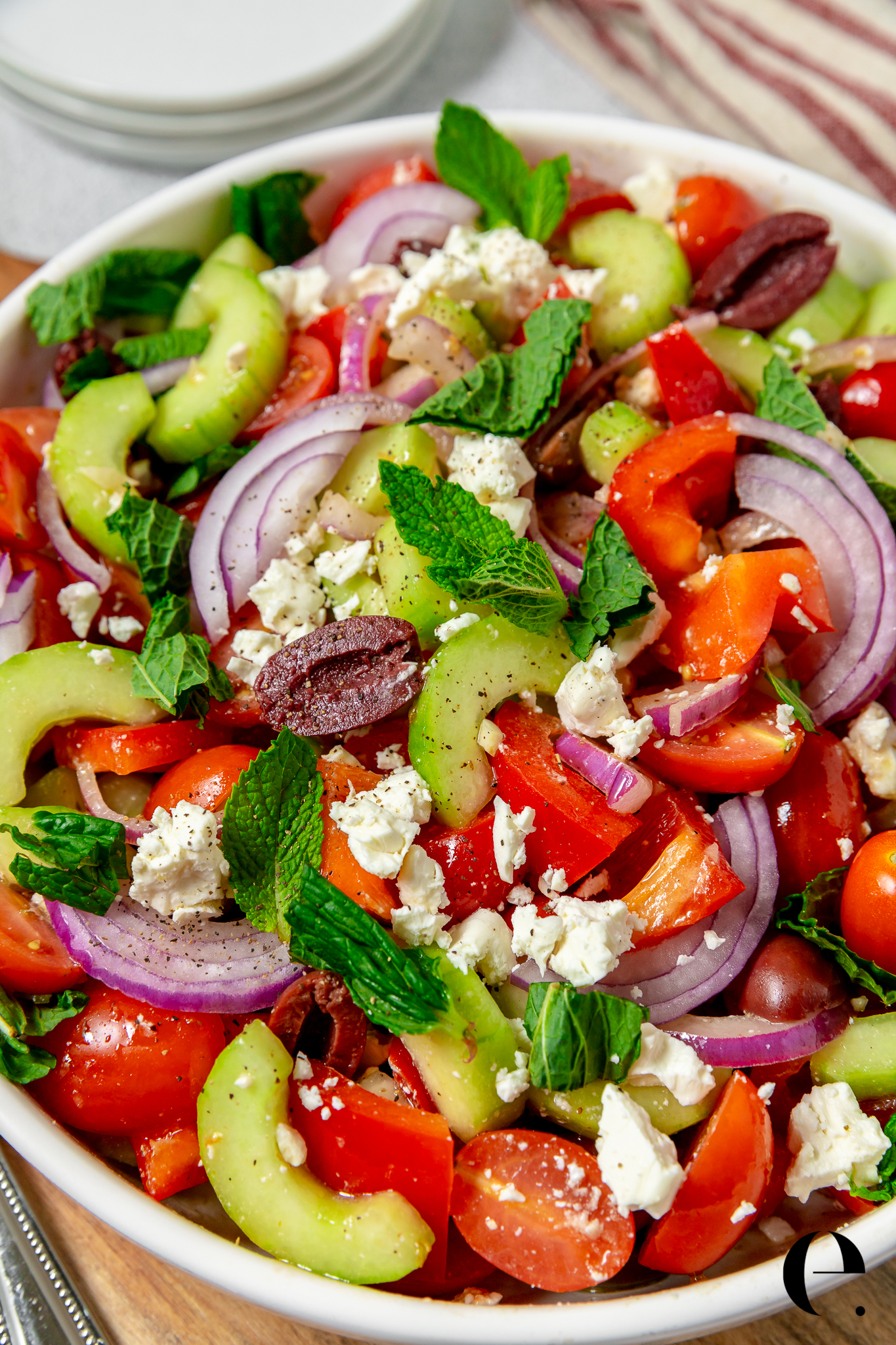
- Do not skip the salt rest: After cutting your tomatoes, sprinkle them lightly with salt and let them sit for 5 minutes before assembling. This draws out their juices and intensifies their flavor dramatically — it is a small step that makes a big difference.
- Keep the feta whole: Resist the urge to crumble the feta before serving. Place the entire slab or a large piece on top and let guests break it themselves. It stays creamier, looks more impressive, and is the authentic Greek way.
- Use the brine: A tablespoon of the feta brine whisked into your olive oil adds a salty, tangy depth that elevates the entire dressing without any extra ingredients.
- Capers for extra brininess: If you love bold, punchy flavors, scatter a tablespoon of capers across the top before serving. They are not strictly traditional but are used in some regional Greek variations.
- Add protein to make it a full meal: Grilled chicken, chickpeas, or a can of high-quality tuna turn this salad into a complete, protein-rich lunch. Grilled shrimp is also spectacular.
- Make it ahead strategically: You can chop all the vegetables and store them separately, then assemble and dress just before serving for the best texture. If you love fresh salads, you might also enjoy our Cucumber Tomato Salad — a light, vinegary summer side that uses a similar approach to keeping things bright and crisp.
- Go heavy on the oregano: Dried oregano is not a garnish here — it is a key flavoring agent. Be generous. Greek oregano has a stronger, more aromatic character than common dried oregano, and if you can find it at a specialty store, it is worth it.
- Temperature matters: This salad is best served at room temperature, not straight from the refrigerator. Cold temperatures mute the flavor of tomatoes and olive oil significantly. Let it sit for 10 minutes after assembling if your ingredients have been chilled.
- Green bell pepper is traditional: Some people swap it for red or yellow for sweetness, but green pepper is the authentic choice and provides a pleasant slight bitterness that balances the rich olive oil and salty feta beautifully.
If you are in a salad-building mood this season, our Crispy Rice Salad is another texture-forward, endlessly satisfying bowl that pairs wonderfully with Mediterranean-style meals.
Nutritional Highlights
This Traditional Greek Salad is genuinely one of the most nutritionally well-rounded dishes you can put on your table, and it requires zero compromise on flavor to get there. The extra virgin olive oil at its heart is rich in oleocanthal and oleacein, powerful anti-inflammatory compounds that Serious Eats notes are most potent in high-quality, fresh-pressed oils — one more reason to invest in a good bottle. Tomatoes deliver lycopene, a carotenoid antioxidant linked to heart health, while cucumbers contribute silica, vitamin K, and hydration. Kalamata olives add healthy monounsaturated fats and vitamin E. Feta, despite being lower in fat than many cheeses, is a solid source of calcium, phosphorus, and beneficial probiotics from the fermentation process, making it easier to digest than many other dairy products. Red onion brings quercetin, a potent antioxidant with anti-inflammatory properties, and dried oregano contains rosmarinic acid, a compound studied for its antimicrobial and antioxidant effects. One serving of this salad comes in around 280 calories with a balance of healthy fats, modest carbohydrates from the vegetables, and satisfying protein from the feta — making it a genuinely nourishing choice whether you eat it as a side or a light main dish. According to Bon Appétit’s guide to Mediterranean eating, this style of ingredient-forward, olive-oil-based cooking is consistently associated with longevity, reduced inflammation, and cardiovascular health. Eating your Greek salad is not just delicious — it is genuinely one of the most science-backed things you can do for your body at lunchtime.
Frequently Asked Questions
Is a Traditional Greek Salad supposed to have lettuce?
No — and this is one of the most important things to understand about the authentic version. The traditional Greek salad, known as Horiatiki, contains absolutely no lettuce. It is a robust, chunky salad built on thick-cut tomatoes, cucumbers, green pepper, red onion, Kalamata olives, and feta. The absence of lettuce is what gives it such a bold, concentrated flavor and what allows it to hold up well for longer than a typical leafy salad. When you see Greek salad served with lettuce at American restaurants, that is a westernized adaptation — delicious in its own right, but not the traditional preparation.
Can I make Traditional Greek Salad ahead of time?
You can absolutely prep the components ahead of time, though the best approach is to store the cut vegetables and olives separately from the feta and dressing, then combine everything within about 30 minutes of serving. If you dress the salad too far in advance, the salt in the olives and feta will draw moisture from the tomatoes and cucumbers, creating a watery pool at the bottom of the bowl and softening the vegetables more than you want. If you must assemble fully in advance, do so no more than an hour ahead and keep it refrigerated — just bring it back to room temperature before serving for the best flavor. This strategic approach is similar to how we handle our Broccoli Salad, another make-ahead-friendly option that travels beautifully.
What is the best feta cheese to use for Greek salad?
For an authentic Traditional Greek Salad, look for PDO (Protected Designation of Origin) Greek feta — this is a legally protected designation meaning the cheese was made in specific regions of Greece using traditional methods and milk from local sheep and goats. It is sold in blocks packed in brine and has a creamy yet crumbly texture and a tangy, complex flavor that pre-crumbled feta simply cannot match. You will find it at most well-stocked grocery stores, specialty cheese shops, or Mediterranean markets. Brands like Dodoni, Epiros, or Mt. Vikos are widely available and excellent. If you absolutely cannot find Greek feta, a good quality Bulgarian feta is a reasonable substitute — it tends to be slightly creamier and milder, which some people prefer.
Make This Salad Your Own — Then Share It
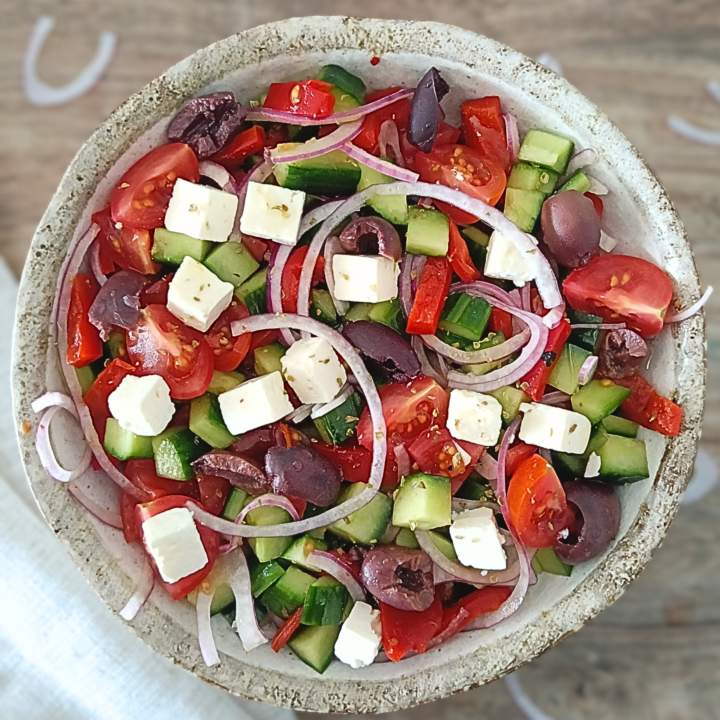
A Traditional Greek Salad is one of those rare recipes that manages to be simultaneously humble and extraordinary — a dish that proves you do not need complexity to create something genuinely memorable. Every time you make it, it will taste slightly different based on the ripeness of your tomatoes, the quality of your olive oil, and the season you are cooking in, and that is part of its enduring charm. It is alive in a way that few recipes are. Once you have made it the authentic way — chunky, lettuce-free, and crowned with a magnificent slab of feta — it will become a permanent fixture in your warm-weather rotation and a recipe you find yourself craving long after summer fades.
We would love to see your version of this recipe. Snap a photo, tag us on Instagram, and share this post with anyone who needs a little Mediterranean sunshine in their life this season. And if you are building out a full summer spread, this salad pairs beautifully with our Pasta Primavera for a vegetable-forward feast that celebrates the season at its peak.
Find the complete recipe card below ↓
Traditional Greek Salad
This Traditional Greek Salad (Horiatiki) is the authentic Mediterranean classic — chunky vegetables, Kalamata olives, creamy feta, and golden olive oil with dried oregano. Ready in 15 minutes, naturally gluten-free, and packed with nutrition.
Ingredients
- 4 medium ripe tomatoes (cut into thick wedges)
- 1 large English cucumber (halved lengthwise and sliced into thick half-moons, skin on)
- 1 medium green bell pepper (cored and sliced into rings or strips)
- 1/2 medium red onion (thinly sliced into half-moons)
- 1/2 cup Kalamata olives (pitted or whole, your preference)
- 6 oz Greek feta cheese (PDO block packed in brine, kept whole or in one large piece)
- 3 tablespoons extra virgin olive oil (best quality you have)
- 1 tablespoon red wine vinegar (optional, some Greek recipes omit this)
- 1 teaspoon dried Greek oregano (plus more to finish)
- 1/4 teaspoon sea salt (or to taste — feta and olives add saltiness)
- 1/4 teaspoon freshly ground black pepper
Instructions
- Cut the tomatoes into thick wedges — about 6 wedges per tomato. Place them in a large shallow serving bowl or platter. Sprinkle lightly with a pinch of salt and let them sit for 5 minutes to release their juices and deepen their flavor.
- Slice the cucumber into thick half-moons (about 1/2-inch thick) with the skin on. Add to the bowl with the tomatoes.
- Core and slice the green bell pepper into rings or strips and add to the bowl. Thinly slice the red onion into half-moons and add to the bowl. Scatter the Kalamata olives over everything.
- In a small bowl, whisk together the extra virgin olive oil, red wine vinegar (if using), dried oregano, salt, and black pepper.
- Drizzle the dressing evenly over the assembled vegetables and olives.
- Place the block of feta cheese on top of the salad — centered or to one side. Do not crumble it. Drizzle a little extra olive oil directly over the feta.
- Finish with an additional generous pinch of dried oregano sprinkled over the feta and the whole salad.
- Allow the salad to rest at room temperature for 5-10 minutes before serving so the flavors meld and the olive oil loosens slightly. Serve with crusty bread to soak up the juices at the bottom of the bowl.
