

The Bowl That Changed How I Think About Comfort Food
There’s a particular kind of cold-weather craving that no amount of soup or salad can satisfy — the kind that calls for something thick, deeply spiced, and just a little bit surprising. That’s exactly the craving that led me down the rabbit hole of West African groundnut stews a few winters ago, and honestly, I haven’t looked back. The first time I made a version of this Sweet Potato Peanut Stew, I stood over the pot with a wooden spoon and just kept tasting it — one more spoonful, then another — until I had to physically walk away before dinner was ruined. That’s the kind of recipe this is.
West African peanut stew (sometimes called groundnut stew or maafe) is one of those dishes that feels ancient and nourishing in the very best sense. It draws on the rich culinary traditions of countries like Senegal, Ghana, and Mali, where peanuts, tomatoes, and warming spices form the backbone of incredibly satisfying one-pot meals. Our version leans into the natural sweetness of sweet potatoes and the hearty protein boost of chickpeas to create something that is 100% plant-based, deeply flavorful, and genuinely filling without ever feeling heavy. It’s the kind of food that makes you feel cared for.
What I love most about bringing this recipe to the Eating Happiness table is how effortlessly it fits our philosophy of clean, balanced, nourishing eating. Every ingredient earns its place. There’s no filler, no shortcuts that compromise flavor, and no long list of processed pantry staples. Just real food, cooked simply, tasting extraordinary. If you’re looking for your new weeknight hero — something that works for meal prep, impresses at dinner parties, and makes your kitchen smell absolutely incredible — this is it.
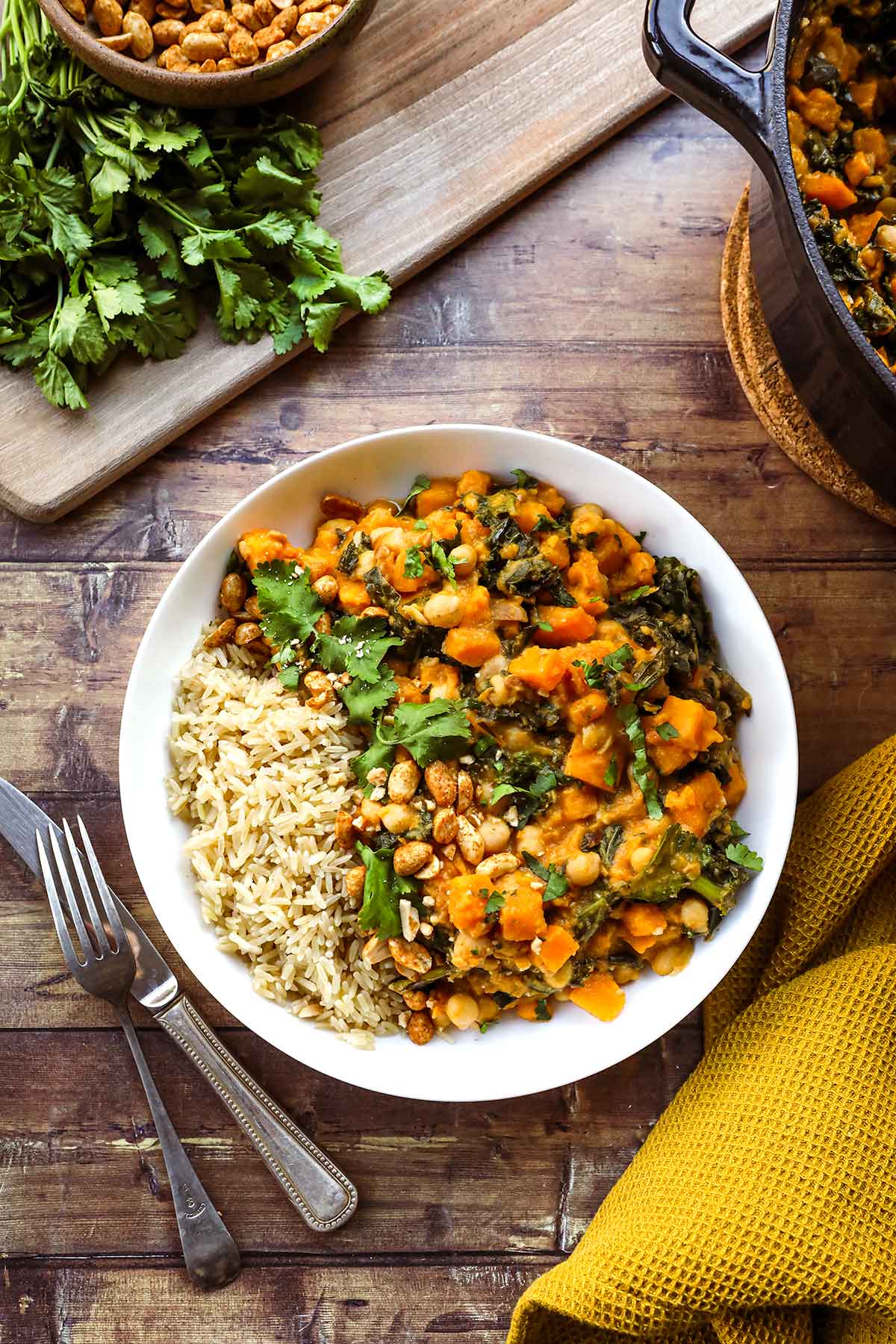
Why You’ll Love This Recipe
- One pot, minimal cleanup. Everything comes together in a single Dutch oven or large pot — which means less mess and more time to actually enjoy your meal.
- Packed with plant-based protein and fiber. Between the chickpeas and the peanut butter, this stew delivers serious staying power without a gram of meat.
- Big, bold, complex flavor. Smoked paprika, ginger, cumin, and a hit of cayenne create layers of warmth that taste like you’ve been cooking for hours — even though this comes together in under 45 minutes.
- Meal-prep gold. This stew tastes even better the next day. Make a big batch on Sunday and you’ve got lunches sorted for the week.
- Easily customizable. Swap in different greens, adjust the heat level, or add chicken for a non-vegan version. This recipe flexes with you.
- Naturally gluten-free and vegan. No substitutions needed — it’s already there.
Key Ingredients
At the heart of this stew are sweet potatoes, and they do a lot of heavy lifting. They break down slightly as they cook, naturally thickening the broth while contributing a gentle sweetness that balances the savory, spiced base beautifully. Look for firm, unblemished orange-fleshed sweet potatoes — they’ll hold their shape better than softer varieties during the longer simmer.
Natural peanut butter is non-negotiable here. We’re talking the good stuff — just peanuts and salt, no added oils or sugar. It melts into the broth to create that signature creamy, nutty richness that defines groundnut stew. Stir it in toward the end of cooking so it doesn’t scorch, and watch the whole pot transform. For a deeper dive into how fats behave in stewed dishes like this, Serious Eats has a fantastic breakdown of building depth and richness in one-pot cooking that’s worth bookmarking.
Chickpeas bring the protein and a satisfying, almost meaty bite. Canned chickpeas work perfectly here — just rinse and drain them well. If you want to go the extra mile and cook your own from dried, you’ll be rewarded with chickpeas that are creamier and more flavorful, but weeknight-you will be just as happy with the canned version, I promise.
The aromatic base — onion, garlic, and fresh ginger — is where the flavor story really begins. Don’t rush this step. Letting the onion soften and the garlic and ginger bloom in the oil for a few minutes before adding your liquids and spices is what separates a flat stew from one that’s complex and layered. Fresh ginger in particular adds a bright, almost floral heat that dried ginger simply can’t replicate.
A can of crushed tomatoes provides the acidic backbone that keeps all that richness in check. It also gives the stew its gorgeous deep orange-red color and a subtle tang that makes every bite feel balanced rather than one-dimensional. Finally, a generous handful of fresh spinach or kale stirred in at the very end adds color, nutrients, and a slight earthiness that rounds out the whole bowl. It wilts down in about two minutes and disappears into the stew in the best possible way.
If you enjoy exploring globally inspired one-pot meals, our Faux-Massaman Vegetable Curry follows a similar philosophy — bold spices, clean ingredients, and deeply satisfying results. It’s another weeknight winner worth adding to your rotation.
Pro Tips & Variations
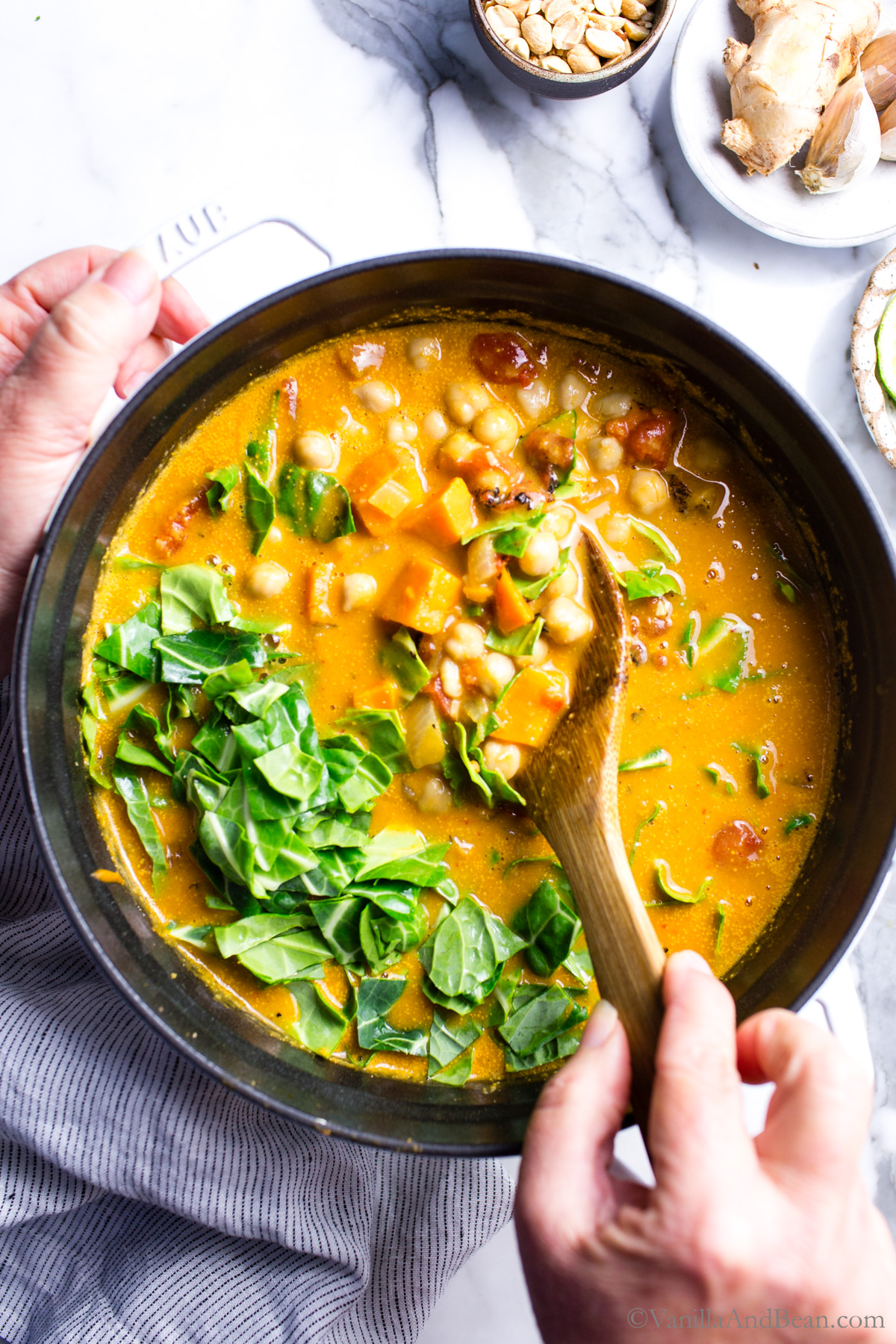
Toast your spices. Before adding your liquids, take an extra 60 seconds to let the smoked paprika, cumin, and cayenne cook in the oil with your aromatics. This blooms the spices and intensifies their flavor dramatically. It’s a small step with a big payoff.
Thin it to your preference. West African groundnut stew can range from thick and almost porridge-like to a brothier consistency closer to soup. Start with the amount of broth listed in the recipe, then add more at the end if you prefer a thinner stew. It will thicken as it sits, so keep that in mind for leftovers too.
Don’t skip the toppings. A finished bowl of this stew really comes alive with garnishes. Think a drizzle of extra peanut butter, fresh cilantro, sliced fresh chili or a dash of hot sauce, a squeeze of lime, and maybe a handful of crushed roasted peanuts for crunch. These aren’t just pretty — they add layers of texture and brightness that elevate every single bite. Epicurious has a great primer on the regional variations of West African peanut soups and stews if you want to explore the cultural context and garnishing traditions more deeply.
Add protein if you’d like. While this recipe is wonderfully complete as a vegan dish, it’s also a natural canvas for added protein. Shredded rotisserie chicken stirred in at the end works beautifully. Cubed firm tofu, lightly pan-fried first, is another excellent option. And if you’re the kind of cook who loves a one-pot approach for hearty proteins, our Low Country Shrimp Boil scratches a very similar one-pot, crowd-pleasing itch — just in a completely different flavor direction.
Swap the greens. Spinach is the quickest option, but kale, collard greens, or Swiss chard all work well. Just add them a few minutes earlier than you would spinach to give them time to soften.
Make it spicier (or not). The cayenne in this recipe gives a gentle background warmth. If you love heat, add a fresh scotch bonnet or habanero pepper to the pot while the stew simmers, then remove it before serving. This gives you a slow-building heat without making the stew aggressively spicy. For a milder family-friendly version, omit the cayenne entirely.
Serving suggestions. This stew is traditionally served over rice, and that’s our top recommendation. Fluffy basmati or jasmine rice soaks up the peanut broth beautifully. But it’s also wonderful with crusty bread for dipping, over millet or quinoa for extra nutrition, or even on its own as a thick, hearty bowl.
Nutritional Highlights
This Sweet Potato Peanut Stew is the kind of meal a nutritionist would actually get excited about. Sweet potatoes are loaded with beta-carotene (the precursor to vitamin A), vitamin C, potassium, and fiber — making them one of the most nutrient-dense carbohydrates you can eat. Chickpeas contribute substantial plant-based protein and a second hit of fiber, which supports digestive health and helps you stay satisfied long after the meal is over. Natural peanut butter brings heart-healthy monounsaturated fats, magnesium, and vitamin E into the mix, while the tomatoes add lycopene, an antioxidant associated with reduced inflammation. The fresh ginger and garlic pull double duty as both flavor builders and anti-inflammatory powerhouses. In short: this is a bowl that feeds you on every level. Each serving comes in at around 420 calories with a strong balance of complex carbohydrates, plant protein, and healthy fat — making it a genuinely complete meal, especially when served over a whole grain like brown rice or quinoa.
Frequently Asked Questions
Can I make Sweet Potato Peanut Stew ahead of time?
Absolutely — and honestly, you should. This stew improves significantly with time as the flavors meld and deepen overnight. You can make the full recipe up to 3 days in advance and store it in an airtight container in the refrigerator. When reheating, add a splash of vegetable broth or water to loosen the stew (it thickens considerably as it sits) and warm it gently over medium-low heat, stirring frequently. If you’re adding greens like spinach, you can stir them in fresh when you reheat rather than cooking them in ahead of time, which keeps them vibrant and not overly wilted.
What can I substitute for peanut butter?
If you have a peanut allergy or simply want to mix things up, sunflower seed butter is the closest substitute in terms of texture and fat content — it produces a nearly identical creamy consistency in the stew, though the flavor profile will be slightly different (nuttier, more earthy). Almond butter also works well and adds a slightly sweeter note. Cashew butter is another excellent option, creating an even creamier, more luxurious stew. Whatever nut or seed butter you use, make sure it’s the natural, no-added-sugar variety for the best results. Avoid flavored butters (like chocolate hazelnut spread — though delicious, it would take this in a very different direction!).
How do I store and freeze leftovers?
Leftovers keep well in an airtight container in the refrigerator for up to 4 days. For longer storage, this stew freezes beautifully. Let it cool completely, then portion it into freezer-safe containers or zip-lock bags (lay them flat to save space). Freeze for up to 3 months. To reheat from frozen, thaw overnight in the refrigerator, then warm on the stovetop over medium-low heat with a splash of broth to restore the consistency. Note: if your stew contains greens, they will be somewhat softer after freezing and reheating, but the flavor will still be excellent. If you know you’re planning to freeze a batch, consider leaving the greens out and stirring them in fresh when you reheat.
Make It, Share It, Save It
This Sweet Potato Peanut Stew has become one of those recipes I come back to again and again — not just because it’s delicious, but because it genuinely makes me feel good in every sense of the word. It’s the kind of food that nourishes your body, satisfies your soul, and reminds you that eating well doesn’t have to mean eating boring. Whether you’re cooking for yourself on a Tuesday night, feeding a hungry crowd on the weekend, or meal-prepping for a week that’s going to need all the help it can get, this stew delivers every single time.
If you make it, I’d love to hear how it went! Drop a comment below with your take — did you add any proteins? Go extra spicy? Serve it over something unexpected? And if you share it on social media, tag us at @EatingHappiness so we can see your beautiful bowls. Don’t forget to save this recipe to your Pinterest boards for later — it’s the kind of thing you’ll want to come back to on a cold night when you need something genuinely warming and good.
Find the complete recipe card below ↓
Sweet Potato Peanut Stew
Ingredients
- 2 medium sweet potatoes peeled and cut into 1-inch cubes (about 4 cups)
- 1 large yellow onion diced
- 4 cloves garlic minced
- 1 tablespoon fresh ginger peeled and grated
- 3 cups fresh baby spinach or roughly chopped kale
- 2 tablespoons olive oil
- 1 can (15 oz) crushed tomatoes
- 1 can (15 oz) chickpeas rinsed and drained
- 3 cups vegetable broth low-sodium
- 1/2 cup natural peanut butter creamy, no added sugar or oil
- 1.5 teaspoons smoked paprika
- 1 teaspoon ground cumin
- 1/2 teaspoon cayenne pepper adjust to taste
- 1/2 teaspoon ground coriander
- 1 teaspoon kosher salt plus more to taste
- 1/2 teaspoon black pepper
- 1 tablespoon tomato paste
- 2 cups cooked white or brown rice for serving
- 1/4 cup fresh cilantro roughly chopped
- 2 tablespoons roasted peanuts crushed, for garnish
- 1 lime (cut into wedges)
- 1 fresh red chili or jalapeño sliced thin, optional

Instructions
- Heat the olive oil in a large Dutch oven or heavy-bottomed pot over medium heat. Once shimmering, add the diced onion and cook, stirring occasionally, for 5–6 minutes until softened and translucent.
- Add the minced garlic and grated ginger and cook for 1–2 minutes more, stirring constantly, until fragrant. Be careful not to let the garlic burn.
- Add the tomato paste, smoked paprika, cumin, cayenne, coriander, salt, and black pepper. Stir everything together and let the spices toast in the oil for about 60 seconds — this step deepens the flavor significantly.
- Add the crushed tomatoes, vegetable broth, and cubed sweet potatoes to the pot. Stir to combine, scraping up any spiced bits from the bottom of the pot.
- Bring the stew to a boil over medium-high heat, then reduce the heat to medium-low. Cover and simmer for 15 minutes, or until the sweet potatoes are just beginning to soften but still hold their shape.
- Add the rinsed chickpeas and continue to simmer uncovered for another 8–10 minutes, until the sweet potatoes are fully tender and the stew has thickened slightly.
- Reduce the heat to low. Add the peanut butter to the pot and stir well until it is fully incorporated and the broth has turned a rich, creamy, deep orange color. If the stew seems too thick, add an additional splash of vegetable broth to reach your desired consistency.
- Taste and adjust seasoning — add more salt, cayenne, or a squeeze of lime juice as needed.
- Add the fresh spinach (or kale) to the pot and stir gently until just wilted, about 1–2 minutes for spinach or 3–4 minutes for kale.
- Serve the stew hot over cooked rice. Garnish each bowl generously with fresh cilantro, crushed roasted peanuts, sliced fresh chili (if using), and a squeeze of lime juice.