

When the Heat Hits, This Bowl Hits Back
There is a very specific kind of summer afternoon — the kind where even the idea of turning on the stove feels like a personal affront — when chilled gazpacho becomes less of a recipe choice and more of a survival strategy. This iconic cold Spanish tomato soup has been cooling people down for centuries, and once you understand just how deeply nourishing, vibrant, and satisfying it is, you will wonder why you ever reached for anything else on a sweltering day. It is the rare dish that asks almost nothing of you and gives back so much in return: color, flavor, hydration, and a genuine sense of wellness in every spoonful.
Gazpacho was born in Andalusia, the sun-scorched southern region of Spain, where farmers and laborers needed something sustaining, cooling, and easy to prepare without fire. The original versions were humble — stale bread, olive oil, vinegar, garlic, and whatever vegetables were ripest in the fields. Over time, the tomato became the undisputed star, and the recipe evolved into the brilliant crimson soup we know today. What has never changed is the philosophy behind it: use the very best, freshest ingredients you can find, keep it simple, and let the produce do the talking. That ethos aligns perfectly with how we love to eat here at Eating Happiness.
This version of chilled gazpacho is clean, deeply flavored, and genuinely good for you in ways that go far beyond just being a salad in liquid form. Ripe tomatoes, cucumber, red bell pepper, garlic, sherry vinegar, and extra-virgin olive oil come together in a blender to create something that is simultaneously light and satisfying. There is no cooking involved — none — which means every nutrient stays exactly where nature put it. Whether you are meal-prepping for the week, hosting a summer dinner party, or simply looking for a beautiful and effortless lunch, this recipe belongs in your warm-weather rotation permanently.
Why You’ll Love This Recipe
- Completely no-cook: Not a single burner gets turned on. Just chop, blend, chill, and serve.
- Packed with nutrients: Every ingredient is a nutritional powerhouse — lycopene-rich tomatoes, hydrating cucumber, vitamin C-loaded bell pepper, and heart-healthy olive oil.
- Make-ahead friendly: Gazpacho actually tastes better after a few hours in the fridge, making it the perfect prep-ahead dish for busy weeks or entertaining.
- Naturally vegan and gluten-free: No adaptations needed — this recipe is inclusive by nature.
- Endlessly customizable: Adjust the heat, the acidity, the texture, and the garnishes to make it entirely your own.
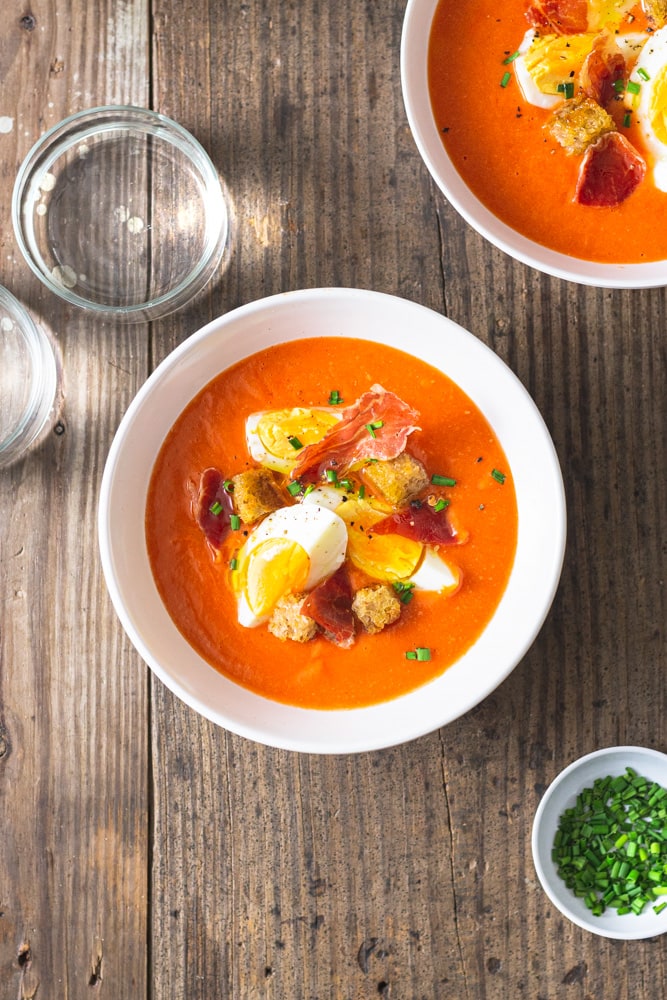
- Stunning to serve: That deep, jewel-red color in a bowl with colorful garnishes is genuinely show-stopping at any table.
Key Ingredients
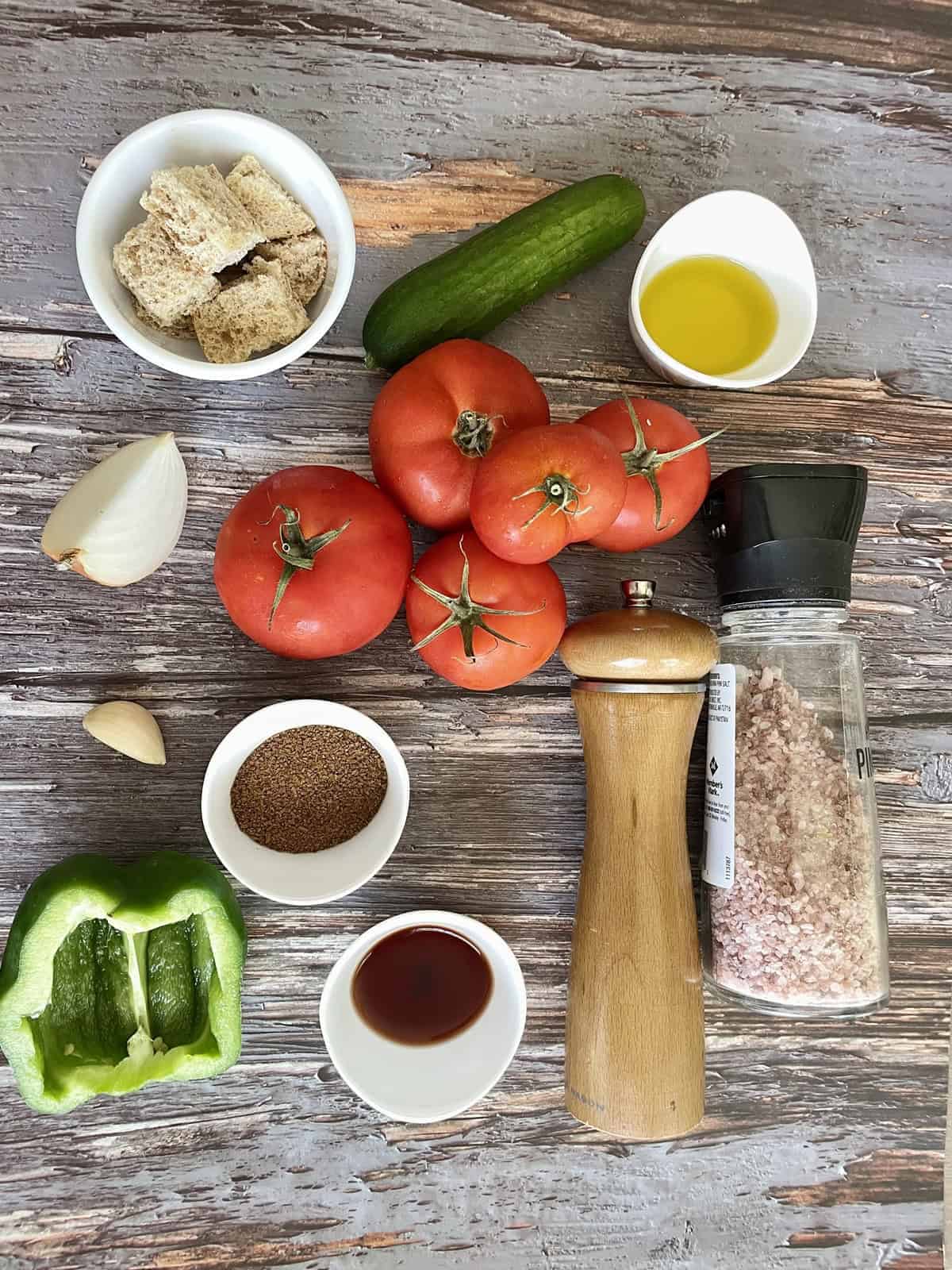
The soul of any great chilled gazpacho lives and dies with the quality of your tomatoes. You want them ripe to the point of bursting — deeply red, fragrant at the stem, and so juicy they practically fall apart when you cut them. Roma tomatoes work beautifully for their low water content and intense flavor, but peak-season heirloom varieties will send this soup into an entirely different stratosphere. Alongside the tomatoes, a full English cucumber adds refreshing, hydrating bulk and a gentle green sweetness that balances the tomato’s acidity without overpowering it. One large red bell pepper contributes body, natural sweetness, and a significant dose of vitamin C — it is also responsible for deepening the soup’s gorgeous color. A generous pour of good extra-virgin olive oil is non-negotiable here; it emulsifies into the blended vegetables and creates the silky, almost luscious texture that separates a truly great gazpacho from a watery vegetable puree. Sherry vinegar — the traditional Andalusian choice — provides a nuanced, slightly nutty acidity that brightens every other flavor in the bowl. Finally, a small clove or two of raw garlic brings pungent depth and, as a bonus, all the immune-supporting, anti-inflammatory properties that make garlic one of the most celebrated ingredients in wellness cooking. Together, these six elements create something that is far more than the sum of its parts.
Pro Tips & Variations
Making exceptional chilled gazpacho is mostly about understanding a few key principles, and once you do, this recipe becomes nearly foolproof.
Tip 1 — Season in layers, taste at the end. Add your salt at the start of blending to help break down the vegetables, but always do a final taste after chilling. Cold temperatures mute salt and acid, so your gazpacho will almost certainly need a little more of both after it comes out of the refrigerator.
Tip 2 — Chill everything before you blend. For the coldest, most refreshing result, refrigerate your tomatoes, cucumber, and bell pepper overnight before making the soup. This is especially helpful when you are serving immediately rather than allowing a long chill time after blending.
Tip 3 — Blend in stages for the best texture. Start on low speed and gradually increase to high, blending for a full 2 minutes. If you prefer a silkier texture — which is more traditional in Spain — strain the blended soup through a fine-mesh sieve. For a more rustic, hearty texture with visible bits of vegetable, skip the straining entirely.
Tip 4 — Use good bread for body (optional). Many classic recipes include a slice of day-old crusty bread soaked in water and blended into the soup. This is traditional and adds a subtle creaminess without dairy. If you are keeping the recipe gluten-free, simply omit it — the olive oil provides enough body on its own.
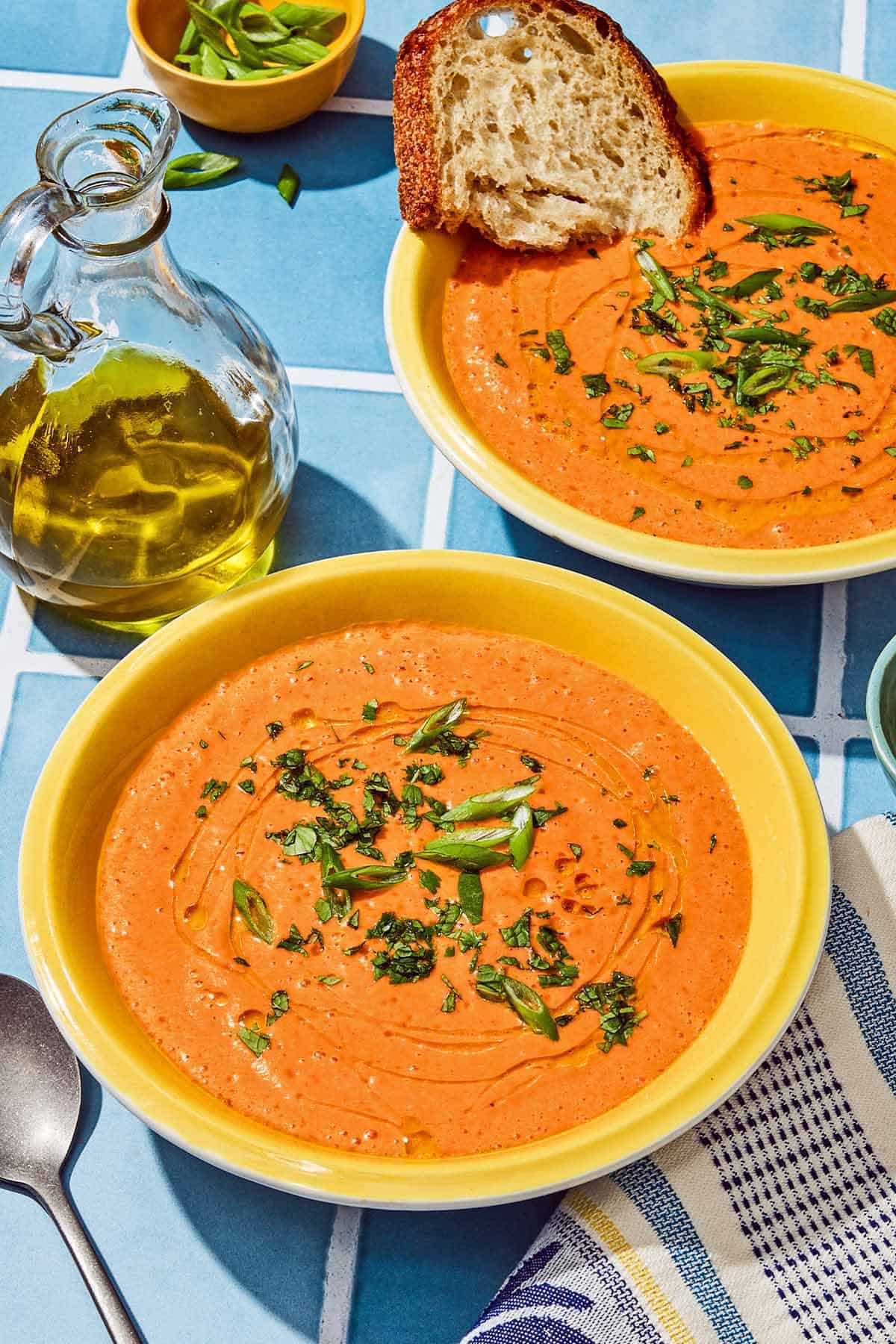
Tip 5 — Garnish generously and thoughtfully. The garnish is not an afterthought — it is part of the eating experience. Finely diced cucumber, tomato, and red onion add textural contrast. A drizzle of your best olive oil adds richness. Fresh herbs like basil or chives add brightness. Croutons add crunch. Consider putting out a small garnish board and letting guests customize their own bowls.
Variations to explore:
- Spicy Gazpacho: Add half a jalapeño or a pinch of cayenne when blending for a welcome kick of heat.
- White Gazpacho (Ajo Blanco): A stunning variation made with blanched almonds, white grapes, and sherry vinegar — no tomatoes at all. Serious Eats has a wonderful deep-dive into ajo blanco if you want to explore this Spanish cousin of the classic.
- Watermelon Gazpacho: Replace about a third of the tomatoes with seedless watermelon for a sweeter, more playful summer version. If you love creative chilled summer recipes like this, you will also adore our Watermelon Lime Granita — another brilliant no-cook way to beat the heat.
- Avocado Gazpacho: Blend in half a ripe avocado for a creamier, more filling version with a gorgeous color shift and added healthy fats.
- Chunky Gazpacho: Pulse rather than fully blend, and stir in extra diced vegetables at the end for a soup that eats almost like a chilled salsa.
If you love the idea of no-cook, fresh-forward recipes that make summer eating feel effortless, you might also love our Healthy Thai Papaya Salad Som Tam — another vibrant, produce-forward dish that celebrates raw vegetables at their finest.
Nutritional Highlights
Chilled gazpacho is one of those rare dishes that manages to be both deeply satisfying and exceptionally good for your body — a true win-win. Tomatoes are arguably the star from a nutrition standpoint, loaded with lycopene, a powerful antioxidant linked to reduced risk of heart disease and certain cancers, and research consistently shows that lycopene from cooked or blended tomatoes is actually more bioavailable than from raw whole tomatoes, which means your blender is doing important work here. The extra-virgin olive oil provides heart-healthy monounsaturated fats and fat-soluble vitamins, and crucially, it helps your body absorb the fat-soluble antioxidants from the vegetables more efficiently. Red bell pepper contributes more vitamin C per gram than a citrus fruit, supporting immune health and collagen production. Cucumber is over 95% water, making it one of the most hydrating foods you can eat — perfect in a soup meant to cool you down on a hot day. Garlic brings allicin, a well-studied compound with anti-inflammatory and antimicrobial properties. At around 120–140 calories per generous serving, this soup is a nutritional powerhouse that leaves you feeling nourished, light, and genuinely energized rather than weighed down. It is a perfect example of the kind of clean, ingredient-forward eating that we celebrate here at Eating Happiness every single day.
For another make-ahead, no-cook meal that sets you up for a great day, check out our Overnight Oats Summer Berry Recipe — a breakfast that shares gazpacho’s beautiful philosophy of letting great ingredients do the heavy lifting while you sleep.
Planning a full summer spread? Gazpacho makes a stunning first course before something heartier from the grill. Consider pairing it with our rustic Grilled Vegetable and Goat Cheese Tart for a meal that is colorful, nourishing, and genuinely impressive. And for those who want even more gazpacho inspiration and technique, Epicurious offers a wonderful classic gazpacho reference worth bookmarking alongside this one.
Frequently Asked Questions
Can I make chilled gazpacho ahead of time?
Absolutely — and in fact, you should. Gazpacho is one of those magical recipes that genuinely improves with time. As it rests in the refrigerator, the flavors from the garlic, vinegar, olive oil, and vegetables meld together and deepen considerably. A minimum of two hours of chilling is recommended, but making it the night before and serving it the next day is truly ideal. The texture also becomes slightly more cohesive after resting. Simply give it a good stir or a brief pulse in the blender before serving, taste for seasoning (cold temperatures dull salt and acid, so you may want to add a small pinch of each), and garnish fresh right before it hits the table.
What kind of tomatoes work best for gazpacho?
The short answer: the ripest, most flavorful tomatoes you can find. In terms of variety, Roma (plum) tomatoes are a reliable workhorse — they have thicker flesh, less water, and concentrated flavor that blends beautifully. Vine-ripened tomatoes from your local farmers’ market or garden are extraordinary when in season. Heirloom tomatoes — especially deep red varieties like Brandywine or Cherokee Purple — produce a gazpacho with extraordinary complexity and depth. What you absolutely want to avoid are hard, pale, out-of-season supermarket tomatoes, which will produce a bland, watery result no matter how much seasoning you add. If peak-season fresh tomatoes are not available, high-quality canned San Marzano tomatoes, well-drained, can be used as a substitute — the result will be slightly different in texture but still very good in flavor.
How long does chilled gazpacho keep in the refrigerator?
Stored in an airtight container or sealed jar, gazpacho keeps beautifully in the refrigerator for up to four days. Because it contains no animal products and no cooked starches, it is quite stable — the vinegar and olive oil actually act as mild preservatives. You may notice some separation after a day or two, with the olive oil rising to the top and some liquid pooling at the bottom; this is completely normal. Simply stir or shake vigorously before serving. Do not freeze gazpacho — the high water content of the vegetables causes ice crystals to form and break down the emulsion, resulting in a watery, separated texture upon thawing that no amount of re-blending will fully fix.
Make It, Share It, Save It
Chilled gazpacho is one of those recipes that genuinely changes how you think about summer eating. It proves that nourishing yourself does not have to mean spending time at the stove — that sometimes the most vibrant, satisfying, and beautiful food comes from simply trusting the ingredients. Every bowl is a celebration of what summer produce can do when you get out of its way.
If you make this recipe, we would absolutely love to see it. Share your bowl on Instagram and tag us — we especially love seeing how people garnish theirs, because the creative toppings our community comes up with never cease to amaze us. Save this post to your summer recipes board on Pinterest so it is there for you every time the mercury rises, and share it with the people in your life who need a reason to put down the takeout menu and pick up a blender instead. This is the kind of recipe that becomes a summer ritual, and rituals are worth sharing.
Find the complete recipe card below ↓

Chilled Gazpacho
Ingredients
- 2 lbs ripe Roma or vine-ripened tomatoes roughly chopped, about 6–7 medium tomatoes
- 1 large English cucumber peeled and roughly chopped, reserve a small piece for garnish
- 1 large red bell pepper seeds and core removed, roughly chopped
- 2 cloves garlic peeled
- ¼ cup extra-virgin olive oil plus more for drizzling
- 3 tablespoons sherry vinegar or red wine vinegar
- ½ small red onion roughly chopped
- 1 teaspoon fine sea salt plus more to taste
- ½ teaspoon freshly ground black pepper
- 1 slice day-old crusty bread optional, for body; omit for gluten-free
- ¼ teaspoon smoked paprika optional
- finely diced cucumber
- finely diced tomato
- finely diced red onion
- fresh basil or chives
- drizzle of extra-virgin olive oil
- crusty croutons (optional)

Instructions
- Roughly chop the tomatoes, cucumber, red bell pepper, and red onion into large chunks. No need to be precise — everything is going in the blender. If using the optional bread, tear it into pieces and soak it in a small bowl with 2 tablespoons of water for 5 minutes.
- For the coldest, most refreshing result, refrigerate your chopped vegetables for at least 30 minutes before blending, or use vegetables that have been chilled overnight in the fridge.
- Add the chopped tomatoes, cucumber, red bell pepper, red onion, garlic, and soaked bread (if using) to a high-powered blender. Start blending on low speed, then gradually increase to high. Blend for a full 90 seconds to 2 minutes until very smooth.
- With the blender running on low, slowly stream in the extra-virgin olive oil through the blender lid opening. This helps emulsify the oil into the soup for a silkier texture.
- Add the sherry vinegar, sea salt, black pepper, and smoked paprika (if using). Blend for another 20–30 seconds. Taste and adjust seasoning as needed.
- For a silky, restaurant-style texture: pour the blended soup through a fine-mesh sieve into a large bowl or pitcher, pressing gently with a spatula. Discard the solids. For a heartier, more rustic texture, skip this step entirely.
- Transfer the gazpacho to a sealed container or pitcher and refrigerate for a minimum of 2 hours, or ideally overnight. The flavor improves significantly as it rests.
- Before serving, stir the gazpacho well and taste again — cold temperatures dull seasoning, so add a little more salt and a small splash of vinegar if needed.
- Pour into chilled bowls or glasses. Top with finely diced cucumber, tomato, and red onion. Finish with a generous drizzle of your best extra-virgin olive oil, a few fresh basil leaves or snipped chives, and croutons if using. Serve immediately.