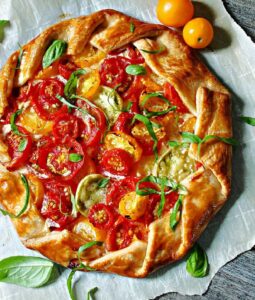
Heirloom Tomato Galette
Ingredients
- 1.5 cups all-purpose flour plus more for rolling
- 0.5 tsp kosher salt
- 1 tsp granulated sugar
- 0.5 cup unsalted butter cold, cut into small cubes (1 stick / 8 tbsp)
- 3-4 tbsp ice water added one tablespoon at a time
- 1 tsp apple cider vinegar keeps crust tender
- 1.75 lbs heirloom tomatoes mixed colors and sizes, sliced ¼-inch thick
- 1 tsp kosher salt for drawing moisture from tomatoes
- 0.75 cup whole milk ricotta drained if watery
- 1 tbsp Dijon mustard optional but recommended
- 1 clove garlic finely grated or minced
- 2 tbsp extra-virgin olive oil divided
- 1 tbsp fresh thyme leaves stems removed
- 0.25 cup Parmesan cheese freshly grated
- 0.25 tsp black pepper freshly ground
- 1 large egg beaten with 1 tbsp water for egg wash
- 0.5 tsp flaky sea salt such as Maldon, for sprinkling on crust
- 0.25 cup fresh basil leaves torn, for serving

Instructions
- Whisk together flour, salt, and sugar in a large bowl. Add the cold butter cubes and work them into the flour using a pastry cutter or your fingertips until the mixture resembles coarse, pea-sized crumbles with some larger butter pieces remaining — these streaks of butter create flaky layers.
- Mix the apple cider vinegar into 3 tablespoons of ice water. Drizzle over the flour mixture one tablespoon at a time, tossing with a fork after each addition, until the dough just begins to come together when pressed. It should look shaggy, not smooth. Do not overwork.
- Turn the dough onto a lightly floured surface, press together into a flat disc, wrap tightly in plastic wrap, and refrigerate for at least 45 minutes or up to 2 days.
- Slice the heirloom tomatoes approximately ¼-inch thick. Lay them in a single layer on paper towels or a wire rack set over a baking sheet. Sprinkle generously with 1 teaspoon kosher salt and let sit for 20 to 30 minutes to draw out excess moisture.
- After resting, pat the tomato slices thoroughly dry with additional paper towels. This step is critical for preventing a soggy crust.
- In a small bowl, combine the ricotta, grated garlic, Dijon mustard (if using), half the Parmesan, 1 tablespoon of olive oil, fresh thyme leaves, and black pepper. Stir well to combine and season to taste with salt.
- Preheat your oven to 400°F (205°C). Place a baking sheet in the oven while it preheats — a hot baking sheet helps crisp the bottom crust.
- On a lightly floured piece of parchment paper, roll the chilled dough into a rough 13 to 14-inch circle about ⅛-inch thick. It does not need to be perfectly round — irregular edges are part of the galette's rustic charm.
- Spread the ricotta mixture evenly over the dough, leaving a 2-inch border around the edges. Arrange the dried tomato slices over the ricotta in a single, slightly overlapping layer, alternating colors for visual effect.
- Drizzle the remaining tablespoon of olive oil over the tomatoes and sprinkle with the remaining Parmesan.
- Fold the pastry border up and over the edges of the tomatoes, pleating as you go to create a rustic folded crust. Press the folds gently to help them hold their shape.
- Brush the folded crust edges generously with the egg wash. Sprinkle flaky sea salt over the crust edges.
- Carefully slide the parchment with the assembled galette onto the preheated baking sheet. Bake at 400°F for 38 to 42 minutes, until the crust is deeply golden brown and the tomatoes are roasted, slightly caramelized, and fragrant.
- Remove from the oven and allow the galette to cool on the baking sheet for at least 10 minutes before slicing. Scatter torn fresh basil leaves over the top just before serving.
Notes
Tomato moisture tip: Salting and thoroughly patting dry the tomatoes is the single most important step — do not skip it. Crust tip: For the flakiest results, ensure butter is very cold throughout the process. Make ahead: Dough can be refrigerated up to 2 days or frozen up to 1 month. Storage: Store leftover galette loosely covered in the refrigerator for up to 2 days. Reheat in a 350°F oven for 8-10 minutes to restore crust crispness. Serving: Best enjoyed warm or at room temperature. Pairs beautifully with a simple arugula salad dressed with lemon and olive oil.