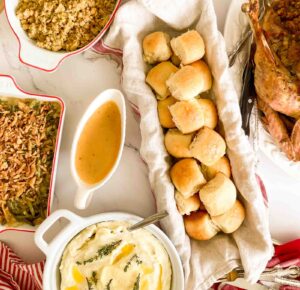
Golden Gravy from Turkey Drippings
Equipment
- Roasting pan
- Fat separator
- Medium saucepan
- Whisk
- Measuring cups and spoons
- Fine mesh strainer
Ingredients
Gravy Base
- 2 cups turkey pan drippings separated from fat using a fat separator; supplement with stock if needed
- 2 tablespoons reserved turkey fat skimmed from drippings; or substitute unsalted butter
- 3 tablespoons all-purpose flour or arrowroot powder for gluten-free
- 2 cups low-sodium turkey or chicken stock warmed — this is key for lump-free gravy
- 2 tablespoons dry white wine optional but recommended; or dry sherry
- 1 teaspoon fresh thyme leaves or ½ tsp dried
- 1 teaspoon fresh sage finely chopped; or ½ tsp dried
- 1 tablespoon unsalted butter added at the end for gloss; optional
- kosher salt and freshly ground black pepper to taste — season at the end

Instructions
Separate the Drippings
- Pour all pan drippings from your roasting pan into a fat separator. Let stand for 1–2 minutes so the fat rises to the top. Pour off the defatted drippings (from the bottom spout) into a measuring cup — you need about 2 cups total. Reserve 2 tablespoons of the fat separately.
- If the roasting pan has browned bits (fond) stuck to the bottom, place it over a burner on medium heat, add a splash of white wine or stock, and scrape up all those bits with a wooden spoon. Add this liquid to your drippings — it's pure flavor.
Make the Roux
- In a medium saucepan over medium heat, combine the 2 tablespoons of reserved turkey fat (or unsalted butter). Once melted and shimmering, add the flour all at once.
- Whisk constantly for 2 full minutes until the roux turns a light golden color and smells slightly nutty. This step is essential — it cooks out the raw flour taste and builds flavor.
- If using white wine, add it now and whisk vigorously for 30 seconds until absorbed into the roux.
Add Stock and Drippings
- While whisking constantly, slowly pour in the warm stock in a thin, steady stream — about ½ cup at a time. Whisk thoroughly between additions to prevent lumps.
- Once all the stock is incorporated, whisk in the defatted turkey drippings. The mixture should be smooth and fluid at this point.
- Add the fresh thyme and sage. Increase heat slightly to medium-high and bring the gravy to a gentle boil, whisking frequently.
Simmer and Finish
- Reduce heat to medium-low and simmer for 3–5 minutes, whisking occasionally, until the gravy reaches your desired consistency. It will continue to thicken slightly as it cools.
- Remove from heat and whisk in the tablespoon of cold unsalted butter (if using) for extra gloss and richness.
- Taste and season generously with kosher salt and freshly ground black pepper. For extra brightness, add a small splash of apple cider vinegar (¼ teaspoon) or a tiny squeeze of lemon juice.
- For an ultra-smooth gravy, pour through a fine mesh strainer before serving. Transfer to a warmed gravy boat and serve immediately.
Notes
Make Ahead: Store cooled gravy in an airtight container in the refrigerator for up to 4 days. Reheat gently in a saucepan over low heat, whisking in warm stock as needed to loosen. Freezes well for up to 3 months.
Gluten-Free: Replace the all-purpose flour with arrowroot powder. Instead of making a roux, make a slurry (1 tablespoon arrowroot + 2 tablespoons cold water) and whisk it into the simmering drippings and stock mixture at the end. Cook for 1–2 minutes until thickened.
Dairy-Free: Omit the butter finish — the gravy is delicious without it. A light drizzle of good olive oil can add a similar sheen.
Not enough drippings? Use all you have and supplement with additional warm low-sodium turkey or chicken stock to reach 4 cups of total liquid.
Seasoning tip: Always taste and adjust salt at the very end — drippings vary significantly in saltiness depending on how the turkey was seasoned.
Nutrition
Calories: 72kcalCarbohydrates: 5gProtein: 2gFat: 5gSodium: 210mg