

When Comfort Food Is Also Good for You
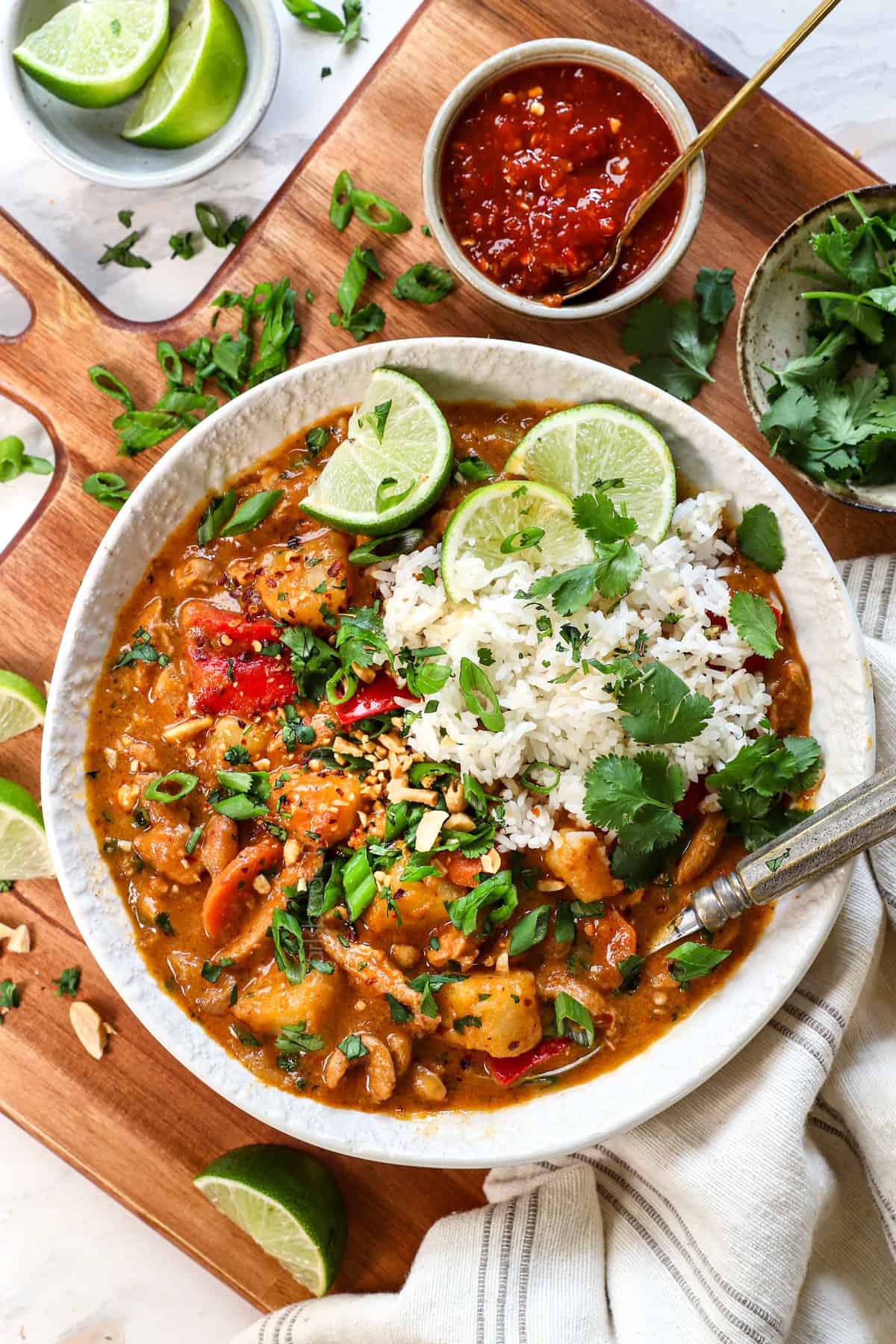
There’s a particular kind of weeknight magic that happens when a bowl of something warm, golden, and deeply aromatic lands on the table — and everyone goes quiet in that satisfied way. That’s exactly what this Faux-Massaman Vegetable Curry does. It borrows all the soul-warming personality of Thailand’s beloved Massaman curry — the gentle hum of spice, the silky coconut richness, the way it makes the whole kitchen smell like somewhere you want to be — and builds it entirely from vegetables. No compromise. Just pure, layered, nourishing flavor that fills you up in all the right ways.
The “faux” in the name is an honest nod: a traditional Massaman curry is built on a complex, slow-toasted paste with dried chilies, lemongrass, galangal, and often fish sauce or shrimp paste. This version takes a smarter shortcut — quality yellow curry paste as the flavor backbone — and layers in the warm, sweet-spiced notes that define Massaman’s signature character: peanut butter for richness and depth, a whisper of cinnamon and allspice for that slightly sweet, almost exotic warmth, and a bright squeeze of lime to pull everything into focus at the very end. The result is a curry that tastes like it took half a Sunday afternoon when it actually comes together in under an hour.
At Eating Happiness, we believe the most nourishing meals aren’t the ones that sacrifice flavor for health — they’re the ones where the two are completely inseparable. This curry is exactly that. It’s built on whole vegetables, plant-based fats, and clean pantry staples. It’s naturally gluten-free, easily vegan, and packed with fiber, vitamins, and slow-burning complex carbohydrates. This is the kind of dinner you feel good eating and feel good after. And it reheats beautifully, which means tomorrow’s lunch is already handled.
Why You’ll Love This Recipe
- One pot, minimal cleanup. Everything except the broccoli comes together in a single wide pot. The broccoli gets a quick blanch and folds in at the end — no extra mess, just smart technique.
- Genuinely plant-based and genuinely satisfying. Between the potatoes, sweet potato, carrots, broccoli, and optional chickpeas, this curry is loaded with substance. No one is leaving the table hungry.
- Built-in meal prep. This recipe serves 3–4 generously and gets better as it sits. Make it Sunday, eat it Tuesday, and it still tastes incredible.
- A curry technique worth learning. Splitting the coconut cream and frying the paste is the real secret to any great curry. Master it here and you’ll use it forever.
- Endlessly adaptable. Swap in whatever vegetables you have, add protein, dial the spice up or down — this recipe is a framework as much as it is a recipe.
- Deeply, genuinely nourishing. This isn’t a “healthy-ish” consolation dinner. It’s legitimately good for you — and it tastes like an indulgence anyway.
Key Ingredients
The foundation of this curry is full-fat coconut milk, and it’s worth insisting on the full-fat version here. The thick cream that rises to the top of an unshaken can is what you use to fry the curry paste — a technique Serious Eats describes beautifully as “cracking” the coconut milk, where the fat separates and creates the perfect medium to bloom spices and toast paste without scorching. Low-fat coconut milk simply doesn’t have enough fat to make this happen, and you’ll end up with a thinner, flatter result. Full-fat is the non-negotiable here.
Yellow curry paste is your flavor engine. Unlike red or green paste, yellow curry paste leans warmer and milder — it typically contains turmeric, coriander, cumin, and lemongrass — which makes it a natural partner for the Massaman-inspired spices this recipe layers on top. Frying the paste in the split coconut cream for a full 2–3 minutes is a step many home cooks skip, and it’s the single biggest difference between a curry that tastes bright and alive versus one that tastes like simmered paste. Don’t rush it.
Natural peanut butter is what gives this curry its Massaman soul. Traditional Massaman is made with whole roasted peanuts, but natural peanut butter — the kind with nothing but peanuts and maybe a little salt — integrates more smoothly into the sauce, giving it that unmistakable creamy, nutty backbone without any grittiness. It also adds a meaningful dose of plant-based protein and healthy monounsaturated fats.
The cinnamon and allspice are the quiet heroes of this dish. Just half a teaspoon of cinnamon and a pinch of allspice or clove transform a standard vegetable curry into something that tastes genuinely complex and layered — warm and slightly sweet in a way that coconut milk alone can’t achieve. These spices are the DNA of Massaman’s distinct character, and they’re what makes people ask, “Wait, what is that flavor?”
The vegetable combination of potatoes, sweet potato, and carrots isn’t accidental. These are all sturdy, slow-cooking roots that hold their shape through a 20-minute simmer and absorb the curry sauce deeply as they cook. The sweet potato adds natural sweetness that plays beautifully against the lime and peanut butter, while the regular potatoes provide that hearty, filling quality that makes this feel like a complete meal rather than a side dish.
Finally, the lime juice, added off the heat, is the finishing move that ties everything together. Adding it at the end preserves its bright acidity — heat dulls citrus quickly — and it functions as a flavor balancer as much as an ingredient. If the curry tastes flat, it needs the lime. If it tastes heavy, it needs the lime. The chef’s note here says it perfectly: flat means sugar, dull means salt, heavy means more lime. Trust that instinct and taste as you go.
Pro Tips & Variations
Don’t shake the coconut milk. Open the can gently and scoop the solid cream off the top with a spoon. This is your frying fat. The liquid goes in later. It’s a small habit that makes a big difference in the texture and depth of the final sauce.
Blanch the broccoli separately and add it last. This is the move that keeps your curry looking as good as it tastes. Broccoli overcooked in curry sauce turns khaki-gray and mushy. A 3–4 minute blanch, then folded in right before serving, means it stays bright green and tender-crisp — visually beautiful and texturally perfect.
The chickpea addition is highly recommended. If you’re looking to make this a higher-protein, more complete meal, a drained can of chickpeas added in the last five minutes of simmering is the easiest upgrade. They soak up the curry sauce, add wonderful texture, and contribute a meaningful amount of plant-based protein and fiber. Bon Appétit makes a compelling case for keeping canned chickpeas as a permanent pantry staple, and this recipe is a perfect example of why.
Adjust thickness without cornstarch. If your curry is too thin after the vegetables are cooked through, simply continue simmering uncovered for a few extra minutes. The liquid reduces and concentrates naturally. Adding cornstarch or flour changes the texture in ways that aren’t ideal here — the reduction method gives you a glossy, clean sauce rather than a starchy one.
Make it spicier. Yellow curry paste is mild to medium by nature. If you want more heat, add a teaspoon of red curry paste alongside the yellow, or stir in a pinch of cayenne with the spices. A sliced fresh chili on top at serving is another easy option that lets heat-sensitive diners customize their own bowls.
Swap the rice for something different. Jasmine rice is the classic partner here, but this curry is equally good over cauliflower rice for a lower-carb option, or spooned alongside warm naan for a more substantial meal. It also works beautifully over rice noodles if you want something a little lighter.
Add a protein for non-vegetarians. Tofu (pressed and pan-fried until golden before adding to the curry) works beautifully. For omnivores, this spice profile is also wonderful with shrimp stirred in during the last few minutes of cooking. If you love cooking with bold, warming spice profiles over one-pot dinners, you might also enjoy our Dutch Oven Lasagna for another satisfying, hands-off approach to a hearty dinner.
Meal prep and storage. This curry stores beautifully in the refrigerator for up to 4 days and actually improves as the spices continue to develop overnight. Store the rice separately for best results. It also freezes well — portion it into individual containers (without rice) and freeze for up to 2 months. Reheat gently on the stovetop with a splash of water or vegetable broth to loosen the sauce.
Nutritional Highlights
This Faux-Massaman Vegetable Curry is a genuinely impressive nutritional package dressed up in all the comfort of your favorite takeout order. A single serving (with the optional chickpeas, which we strongly recommend) delivers a meaningful amount of plant-based protein alongside complex carbohydrates from three different whole-food sources — potatoes, sweet potatoes, and carrots — that provide slow, steady energy rather than a quick spike and crash. The full-fat coconut milk contributes medium-chain triglycerides (MCTs), a form of saturated fat that the body metabolizes differently than long-chain fats and has been associated with sustained energy. Natural peanut butter adds heart-healthy monounsaturated fats and a dose of vitamin E. The broccoli brings folate, vitamin C, and sulforaphane — one of the most studied anti-inflammatory plant compounds. Cinnamon, beyond its warm flavor contribution, has a well-documented relationship with blood sugar regulation. And the lime juice ensures you’re getting a boost of vitamin C to help with iron absorption from all those plant-based ingredients. This is the kind of bowl that works hard for your body while feeling like pure, joyful comfort food — and that’s exactly the kind of eating happiness we’re here for. If you love meals that lean into wholesome, colorful ingredients without sacrificing flavor, this curry belongs in your regular rotation right alongside other nourishing weeknight staples on this site.
FAQ
Can I use red or green curry paste instead of yellow?
Yes, with some adjustments. Red curry paste will give you a bolder, spicier, more intensely flavored curry — still delicious, but further from the Massaman profile. Green curry paste is much brighter and herbaceous with a fresh heat that doesn’t pair as naturally with the cinnamon and peanut butter in this recipe. If you use either, reduce the cinnamon slightly, as those pastes already carry their own complexity. Yellow curry paste is the best match for this recipe’s warm, slightly sweet, nutty character, but any paste will produce a good curry — just a different one.
Is this curry suitable for meal prep? Can I make it ahead?
This is genuinely one of the best meal-prep curries you can make. The base — everything except the broccoli — can be made up to 3 days ahead and stored in the refrigerator. The flavors deepen and develop beautifully overnight, which means Day 2 is often even better than Day 1. When reheating, add a splash of water or vegetable broth to loosen the sauce, and heat gently over medium-low to avoid scorching the coconut milk base. Add the broccoli fresh when you’re ready to serve, or fold in pre-blanched broccoli in the last minute of reheating. Rice should always be stored and reheated separately for best texture.
How do I make this curry fully vegan and gluten-free?
This recipe is almost entirely vegan and gluten-free as written, with just a couple of things to verify. Check your yellow curry paste label — most are vegan (no fish sauce or shrimp paste in the paste itself), but some brands do include these, so read the ingredient list carefully. For the salt adjustment at the end, use tamari (gluten-free soy sauce) or coconut aminos instead of regular soy sauce if you need to be strictly gluten-free. Brown sugar is vegan by most standards, but if you prefer to avoid sugars processed with bone char, coconut sugar works as a direct swap. With those quick checks, this is a fully plant-based, gluten-free dinner that doesn’t compromise on a single thing.
Make It, Share It, Save It
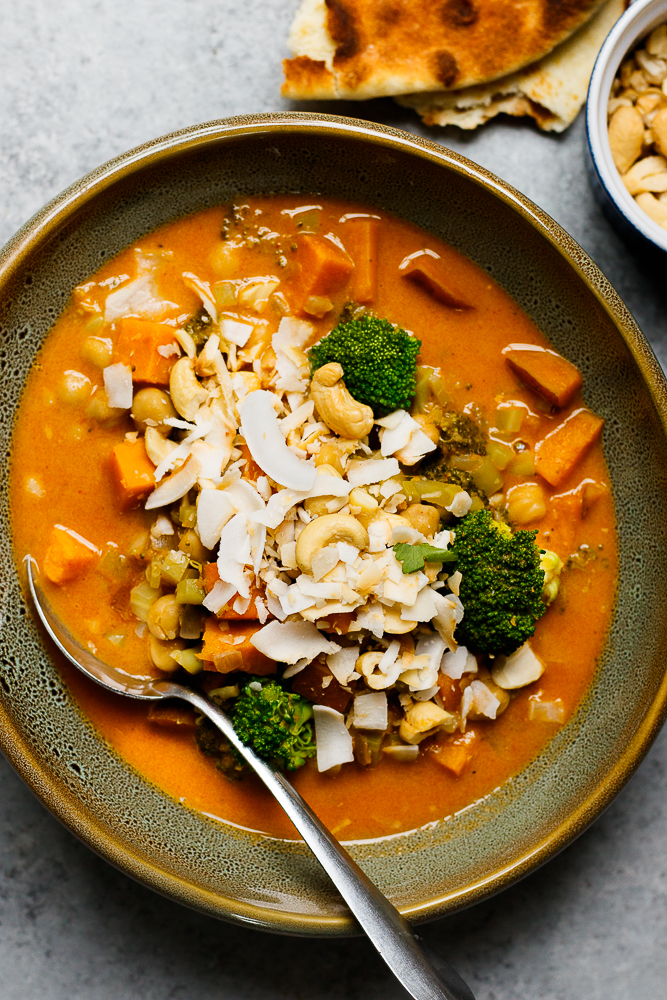
This Faux-Massaman Vegetable Curry is the recipe that earns a permanent spot in your weeknight rotation — the one you’ll find yourself craving on a cold Tuesday, pulling up on a Sunday afternoon when you want to fill the kitchen with something that smells like warmth. It’s nourishing without trying, indulgent without guilt, and impressive without effort. That’s a rare combination, and it’s worth celebrating.
If you make this curry, we genuinely want to see it. Tag us on Instagram or Pinterest — bowls this golden deserve to be shown off. And if you’re cooking for someone who’s been on the fence about plant-based dinners, this is the recipe to make them a convert. Save it, pin it, send it to a friend who needs a good weeknight dinner idea. And if the rich, warming flavors of this dish leave you wanting to round out your meal planning, something bright and cool like our No Bake Cheesecake makes a perfect, low-effort dessert to follow — a genuinely worth-it treat to close out a dinner this satisfying.
Find the complete recipe card below ↓

Faux-Massaman Vegetable Curry
Ingredients
- 1 can (13.5 oz) full-fat coconut milk do not shake before opening
- 3 Tbsp yellow curry paste
- 1 cup water or vegetable broth
- 2 Tbsp natural peanut butter no added sugar or oil
- 1 Tbsp brown sugar
- 1/2 tsp cinnamon
- 1 pinch allspice or ground clove
- 1/2 lime, juiced added off the heat
- salt or soy sauce to taste
- 2 medium potatoes cut into 1-inch chunks
- 1 medium sweet potato cut into 1-inch chunks
- 1 medium onion cut into thick wedges
- 2 large carrots cut on the diagonal into thick slices
- 1 head broccoli cut into large florets, blanched separately
- 1 can (15 oz) chickpeas drained and rinsed, optional but recommended
- jasmine rice (cooked, to serve)

Instructions
- Steam or blanch the broccoli florets for 3–4 minutes until just tender-crisp. Drain and set aside. Do not add to the curry pot yet — it goes in at the very end.
- Open the coconut milk without shaking the can. Scoop the thick cream from the top into a wide pot over medium heat. Cook for 3–4 minutes, stirring occasionally, until the cream splits and looks oily — this is the fat separating, and it's exactly what you want.
- Add the yellow curry paste to the split coconut cream. Fry for 2–3 minutes, stirring constantly, until the paste darkens slightly and smells sharp and toasty. Don't rush this step — it's the foundation of a deeply flavored curry.
- Stir in the peanut butter, cinnamon, and allspice or clove. Cook for 30 seconds, stirring until fully incorporated.
- Pour in the remaining coconut milk (the liquid from the can) and the water or vegetable broth. Add the brown sugar and stir until completely smooth.
- Add the potato chunks, sweet potato chunks, carrot slices, and onion wedges to the pot. Stir to coat in the curry sauce. Bring to a simmer.
- Simmer uncovered for 20–25 minutes, stirring occasionally, until a knife slides easily into the potatoes with no resistance.
- If using chickpeas, add them now and simmer for an additional 5 minutes.
- Remove the pot from the heat. Stir in the lime juice. Taste and adjust: if it tastes flat, add a little more brown sugar; if it tastes dull, add salt or soy sauce; if it tastes heavy or one-dimensional, add more lime juice.
- Fold in the blanched broccoli gently right before serving so it stays bright green and tender-crisp.
- Serve immediately over cooked jasmine rice. If the curry is too thin, simmer uncovered for a few extra minutes to reduce. If it's too thick, add a small splash of water to loosen.