

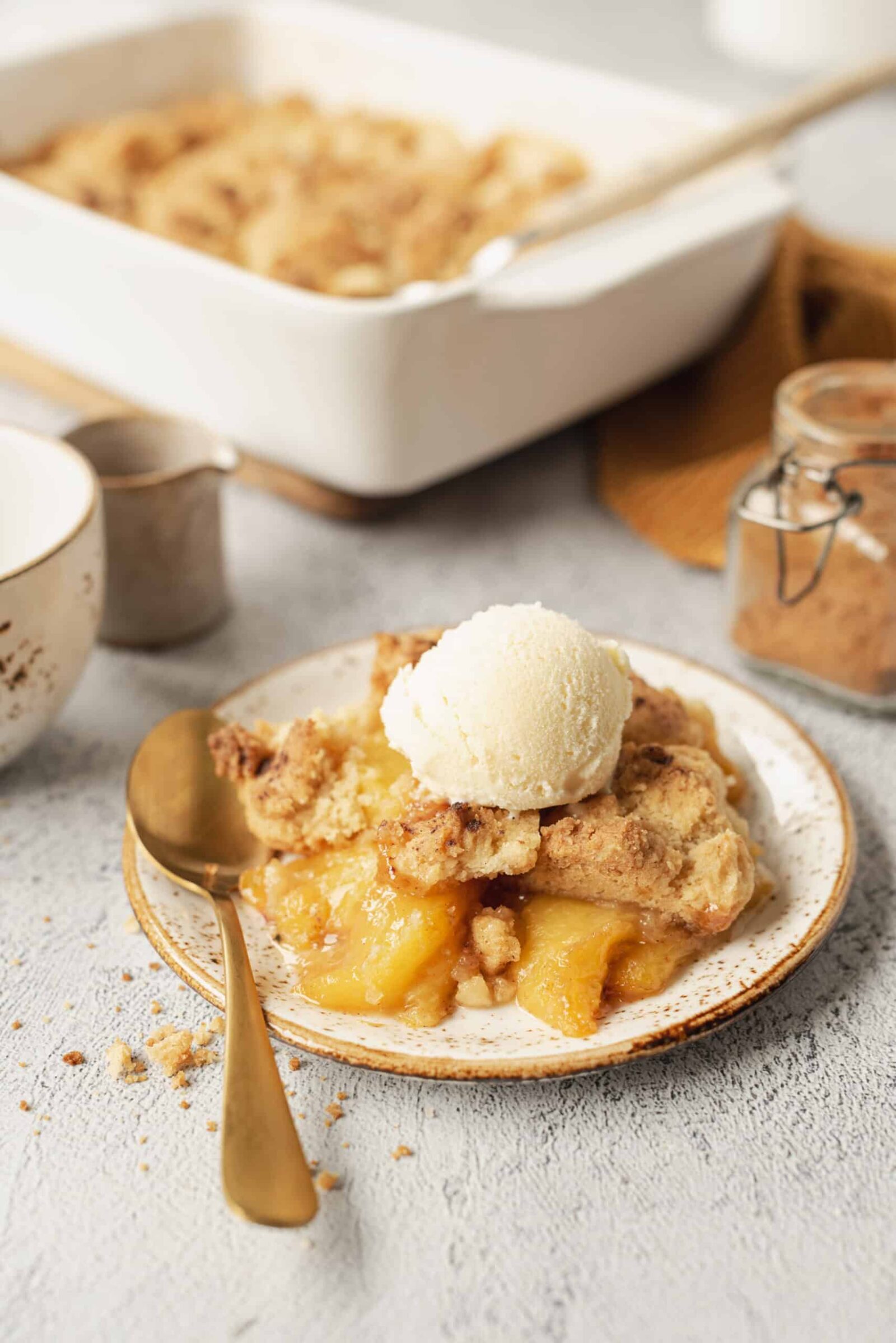
When Summer Peaches Deserve a Standing Ovation
There are certain recipes that don’t just feed you — they carry you somewhere. For me, peach cobbler is the taste of a July evening on the back porch, the kind of dessert that gets passed around in a cast iron skillet while everyone’s still full from dinner but somehow finds room anyway. It’s the recipe that makes you close your eyes after the first bite. That contrast of bubbling, cinnamon-kissed peach filling against a golden, buttery biscuit crust is one of the most satisfying things summer has to offer — and I mean that without a single ounce of exaggeration.
Here at Eating Happiness, we believe in real food that genuinely nourishes you — most of the time. And then there are those worth-it moments. Peach cobbler is the definition of a worth-it moment. Made with ripe, fresh peaches loaded with vitamins and antioxidants, a biscuit topping built from simple pantry staples, and a restrained amount of sugar that lets the fruit shine, this isn’t mindless indulgence. It’s a seasonal celebration baked into a dish. You’re eating something that could only taste this good for a few months out of the year, and that makes every serving feel a little more intentional — a little more special.
Whether you’re hosting a summer cookout alongside something hearty like our Instant Pot Pulled Pork for Camping or simply wrapping up a quiet weeknight dinner, this peach cobbler brings that effortless warmth that makes people linger at the table. It comes together in under an hour, requires no special equipment, and scales beautifully for a crowd. Let’s get into it.
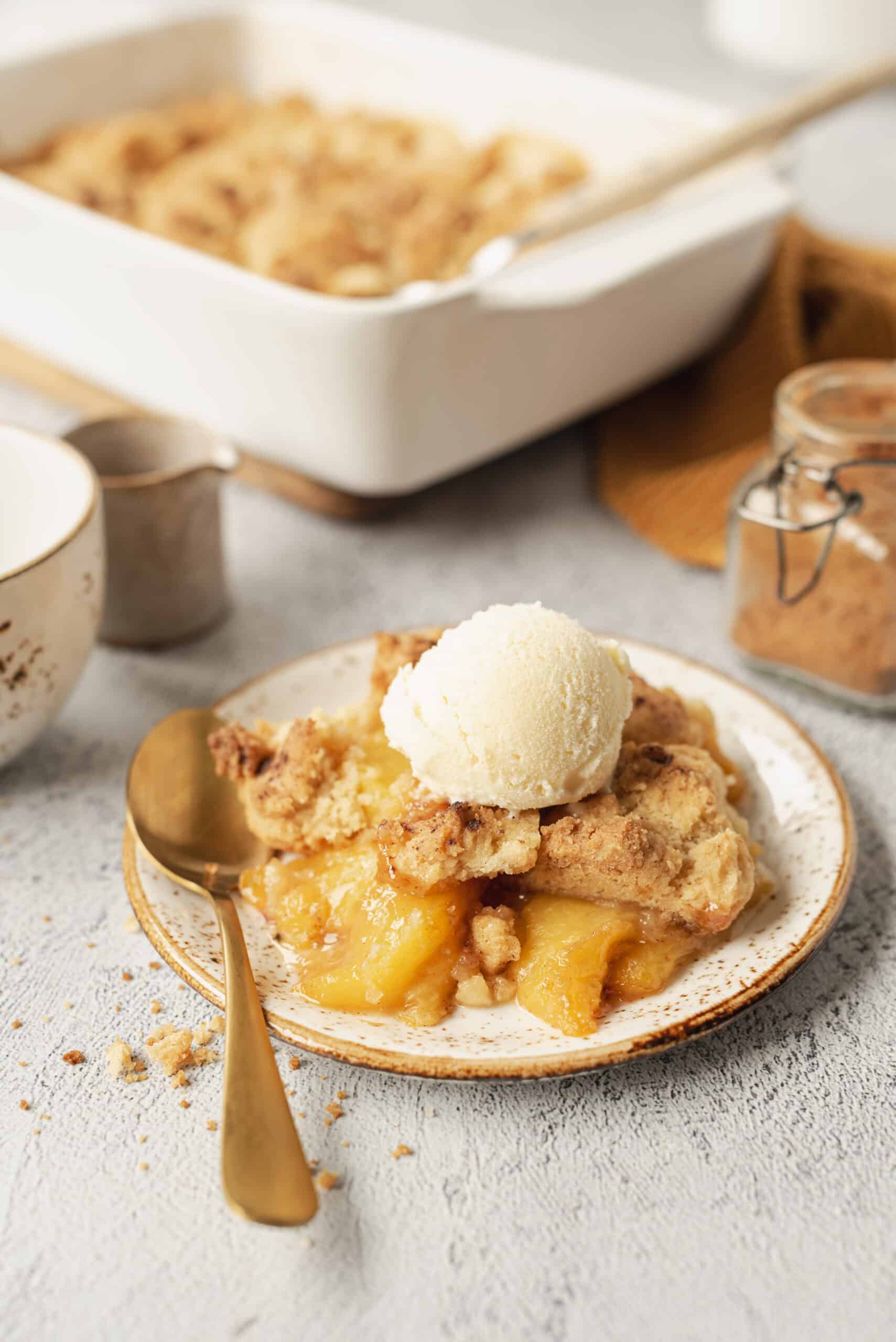
Why You’ll Love This Peach Cobbler Recipe
- Real fruit, real flavor. Fresh or frozen peaches bring genuine nutritional value — antioxidants, vitamin C, and fiber — and they taste incomparably better than canned when you can get them.
- Simple biscuit topping, no fuss. No rolling, no chilling, no finicky pastry work. This drop-biscuit style topping comes together in one bowl and goes straight onto the fruit.
- Perfectly balanced sweetness. We use just enough sugar to enhance the peaches without drowning out their natural flavor, keeping the dessert from feeling cloying or heavy.
- Crowd-pleasing and scalable. Double the recipe for a 9×13 and feed a party. Keep it as written for a cozy family dessert.
- Seasonal and intentional. This is a recipe built around peak-season produce — the kind of cooking that feels connected to the world outside your window.
- Ready in under an hour. With about 15 minutes of prep and 45 minutes in the oven, this is weeknight-friendly indulgence.
Key Ingredients: Why Each One Matters
The magic of a truly great peach cobbler lies in understanding what each ingredient brings to the table — and why you shouldn’t cut corners on the ones that matter most. Fresh, ripe peaches are the undisputed star here. When peaches are in season — usually June through August depending on your region — they’re naturally sweet, fragrant, and packed with juice that forms the most incredible bubbling sauce as they bake. Ripe peaches also contain meaningful amounts of vitamin C, potassium, and beta-carotene, which means this dessert has more going for it nutritionally than it might get credit for. If fresh peaches aren’t available, high-quality frozen sliced peaches (thawed and drained) are a perfectly respectable substitute. As Serious Eats notes, the quality of your fruit is the single most important factor in cobbler success.
Unsalted butter is non-negotiable in the biscuit topping. Cold, cubed butter creates those flaky, layered pockets that make a good cobbler topping feel like something between a biscuit and a scone — tender inside, slightly crisp on top. We’re not using a pound of it; just enough to create richness and that gorgeous golden color. All-purpose flour gives the biscuit topping its structure, while baking powder is the leavening agent responsible for that beautiful rise and lift you want in every bite. A touch of cinnamon woven into both the peach filling and the biscuit dough acts as the aromatic bridge between the two layers, giving the whole dish that unmistakable warmth that signals comfort. Finally, brown sugar used in the peach filling does double duty — it sweetens the fruit while also deepening into a light caramel as it bakes, creating a sauce that’s complex and deeply satisfying rather than one-dimensionally sweet.
Pro Tips & Variations for the Best Peach Cobbler
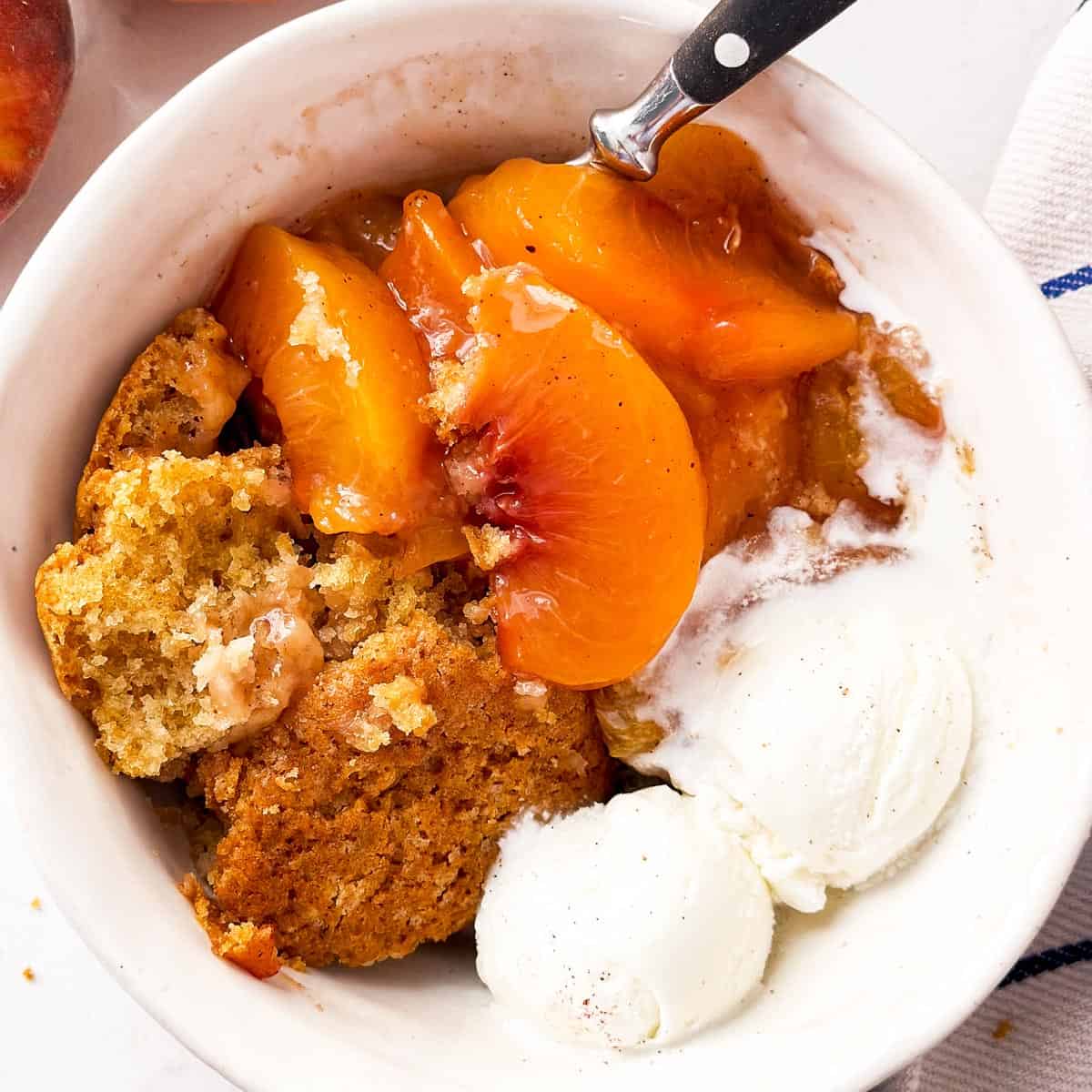
Tip 1: Don’t skip the maceration step. Tossing your sliced peaches with sugar and letting them sit for 10–15 minutes before baking draws out their natural juices and gives you a more saucy, luscious filling rather than a dry or starchy one. This is one of those small steps that makes a noticeable difference.
Tip 2: Keep your butter cold. This is biscuit-making 101 — cold butter is what creates steam pockets as it bakes, resulting in a flaky, layered topping. Work quickly and if your kitchen is warm, pop the diced butter back in the freezer for five minutes before incorporating it.
Tip 3: Don’t overwork the biscuit dough. Mix until just combined and shaggy. Overworking develops gluten, which makes the topping tough instead of tender. A few floury spots are perfectly fine — they’ll bake out.
Tip 4: Vent your biscuit topping. When you drop spoonfuls of dough over the filling, leave small gaps between them. This allows steam to escape, preventing a gummy underbelly, and creates those gorgeous golden edges all around each biscuit piece.
Tip 5: Bake until deeply golden. Many home bakers pull their cobbler too early. You want the biscuit topping to be a deep amber gold and the filling to be visibly bubbling around the edges. If the topping colors too quickly, tent loosely with foil for the last 10 minutes.
Variation — Peach Mango Cobbler: Swap out one-third of your peaches for diced fresh mango and add a squeeze of lime juice to the filling. The result is a tropical twist that pairs beautifully with coconut whipped cream. If you love fruity flavor combinations, you’ll also love our Peach Mango Salsa for a savory spin on these same fruits.
Variation — Gluten-Free Cobbler: Substitute a 1:1 gluten-free all-purpose flour blend in equal measure for the flour in the biscuit topping. Add an extra half teaspoon of baking powder to compensate for reduced lift. The texture will be slightly more dense but still wonderfully delicious.
Variation — Healthier Cobbler: For a lighter version, replace half the all-purpose flour with whole wheat pastry flour for added fiber and a nuttier flavor. Reduce the sugar in the filling by 25% and use coconut sugar instead of brown sugar for a lower glycemic option with a deeper, more complex sweetness.
Variation — Spiced Cobbler: Add a pinch of cardamom and a tiny grating of fresh nutmeg to the peach filling alongside the cinnamon. These warm spices are particularly beautiful with stone fruit and give the dish a slightly exotic, sophisticated edge that guests always comment on.
For more inspiration on building a summer spread around this dessert, the team at Food Network has great ideas for pairing summer desserts with seasonal menus.
Nutritional Highlights
Let’s be real — peach cobbler is dessert, and a good one at that. But it’s worth appreciating that this version is built on a foundation of genuine, whole ingredients with real nutritional merit. Fresh peaches bring vitamin C, potassium, and beta-carotene to every serving, along with a surprising amount of dietary fiber that helps slow the absorption of the dessert’s natural sugars. The biscuit topping is made with real butter and real flour — not hydrogenated fats or artificial ingredients — which means your body knows exactly what to do with it. One generous serving of this peach cobbler comes in around 385 calories, which for a from-scratch, seasonal dessert made with quality ingredients feels entirely reasonable as an occasional indulgence. We’ve kept the added sugar intentionally moderate throughout this recipe, allowing the natural sweetness of ripe summer peaches to carry most of the flavor load. Serve it with a small scoop of good vanilla ice cream or a dollop of plain Greek yogurt to add a little protein to your bowl and balance the sweetness beautifully.
Frequently Asked Questions
Can I make peach cobbler ahead of time?
Yes, with a bit of strategy. The peach filling can be prepared up to 24 hours in advance and stored covered in the refrigerator — in fact, the flavors deepen and improve overnight. The biscuit topping, however, is best made fresh and baked just before serving. You can pre-mix your dry biscuit ingredients and store them separately, then cut in the butter and add liquid right before baking. If you do bake the full cobbler ahead of time, it reheats beautifully at 350°F for 15–20 minutes until warmed through. Just know that the biscuit topping will soften slightly upon refrigeration — still delicious, just not as crisp-topped as it was fresh from the oven.
Can I use canned or frozen peaches instead of fresh?
Absolutely. This is one of the most flexible things about peach cobbler — it’s forgiving and adaptable. Frozen sliced peaches are an excellent choice year-round; simply thaw them completely and drain off excess liquid before using so your filling doesn’t become watery. If using canned peaches, choose peaches packed in juice rather than syrup, and reduce the added sugar in your filling by about half since canned fruit tends to be already quite sweet. Fresh, peak-season peaches will always give you the brightest, most vibrant result, but a well-made cobbler with frozen fruit still brings enormous joy, especially in the middle of February when you need a taste of summer most.
How do I know when my peach cobbler is done baking?
There are three reliable visual cues that tell you your cobbler is perfectly baked and ready to come out of the oven. First, the biscuit topping should be a deep, golden amber color — not pale yellow or light gold, but genuinely deep and bronzed. Second, the peach filling should be actively bubbling around the edges and through any gaps in the biscuit topping; if it’s not bubbling, it needs more time regardless of how the top looks. Third, insert a toothpick or cake tester into the thickest part of a biscuit — it should come out with just a few moist crumbs, not wet batter. If your topping is browning faster than the filling is cooking, loosely tent the dish with aluminum foil and continue baking until the filling bubbles. Internal temperature of the biscuit topping should reach around 200°F if you’re using an instant-read thermometer.
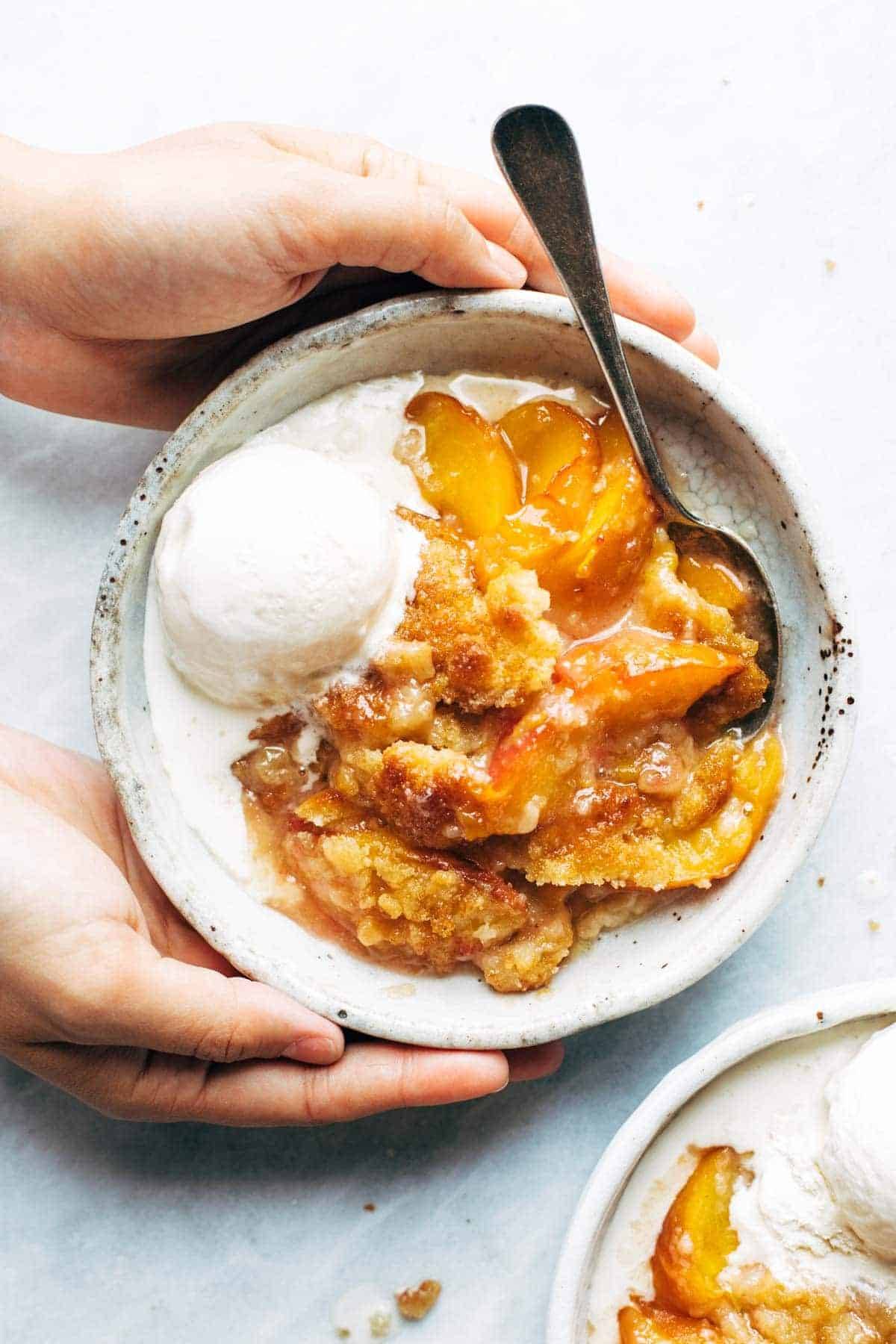
The Kind of Recipe That Becomes a Tradition
There’s something quietly powerful about a recipe this simple making this much of an impression. Peach cobbler doesn’t require a culinary degree, a stand mixer, or an afternoon of your time. It asks only for good fruit, a little patience while it bakes, and a table full of people you love to share it with. In a world full of overcomplicated dessert trends, this one has persisted for generations because it simply cannot be improved upon in any meaningful way. It is, in its own humble fashion, perfect.
We hope this becomes your go-to summer dessert — the one you make for the first cookout of the season and the last lazy Sunday before the peaches disappear from the farmers market. If you make this recipe, we’d genuinely love to hear about it. Leave a comment below, rate the recipe, and share a photo on Instagram and tag us at @EatingHappiness. Pin this recipe to your Summer Desserts board so you can find it again when the peaches are at their peak — because trust us, you will want to come back to this one.
Find the complete recipe card below ↓
Peach Cobbler
A classic summer peach cobbler with juicy cinnamon-spiced peach filling and a golden, buttery drop-biscuit topping — easy to make, impossible to resist, and on the table in under an hour.
Ingredients
- 3 lbs fresh ripe peaches (peeled, pitted, and sliced about 1/2 inch thick (about 6–7 medium peaches); frozen sliced peaches, thawed and drained, may be substituted)
- 1/3 cup brown sugar (packed; reduce to 3 tablespoons if peaches are very sweet)
- 2 tablespoons granulated sugar
- 1 tablespoon fresh lemon juice
- 1 teaspoon pure vanilla extract
- 1 teaspoon ground cinnamon
- 1/4 teaspoon ground nutmeg
- 2 tablespoons cornstarch (helps thicken the filling)
- 1 pinch kosher salt
- 1 1/2 cups all-purpose flour
- 3 tablespoons granulated sugar (plus 1 extra tablespoon for sprinkling on top)
- 1 1/2 teaspoons baking powder
- 1/2 teaspoon baking soda
- 1/2 teaspoon ground cinnamon
- 1/4 teaspoon kosher salt
- 6 tablespoons unsalted butter (cold, cut into 1/2-inch cubes)
- 2/3 cup whole milk or buttermilk (cold; buttermilk adds a pleasant tang)
- 1 teaspoon pure vanilla extract
Instructions
- Preheat your oven to 375°F (190°C). Lightly butter a 9×13-inch baking dish or a 12-inch cast iron skillet and set aside.
- In a large bowl, combine the sliced peaches, brown sugar, granulated sugar, lemon juice, vanilla extract, cinnamon, nutmeg, cornstarch, and a pinch of salt. Toss gently until the peaches are evenly coated.
- Let the peach mixture sit and macerate for 10–15 minutes, stirring once or twice, until the peaches release their juices and the mixture looks syrupy and fragrant.
- Pour the peach filling into the prepared baking dish, spreading it into an even layer. Set aside while you make the biscuit topping.
- In a large bowl, whisk together the flour, 3 tablespoons of granulated sugar, baking powder, baking soda, cinnamon, and salt until well combined.
- Add the cold, cubed butter to the flour mixture. Using your fingertips or a pastry cutter, work the butter into the flour until the mixture resembles coarse crumbs with some pea-sized pieces of butter remaining — this is what creates a flaky topping.
- Add the cold milk (or buttermilk) and vanilla extract. Stir with a fork until the dough just comes together and is shaggy — do not overmix. A few floury spots are perfectly fine.
- Using a large spoon or a 1/4-cup measure, drop rounded spoonfuls of biscuit dough over the peach filling, leaving small gaps between each drop so steam can escape. You should have roughly 8–10 biscuit mounds.
- Sprinkle the tops of the biscuit mounds evenly with the remaining 1 tablespoon of granulated sugar for a lightly crisp, sparkling crust.
- Bake at 375°F for 42–48 minutes, until the biscuit topping is deep golden brown and the peach filling is visibly bubbling around the edges and through the gaps. If the topping browns too quickly, tent loosely with aluminum foil for the final 10 minutes.
- Remove from the oven and allow the cobbler to rest for at least 10 minutes before serving. This allows the filling to thicken and set slightly so it scoops cleanly.
- Serve warm, topped with a scoop of good vanilla ice cream or a generous dollop of whipped cream or plain Greek yogurt.
